

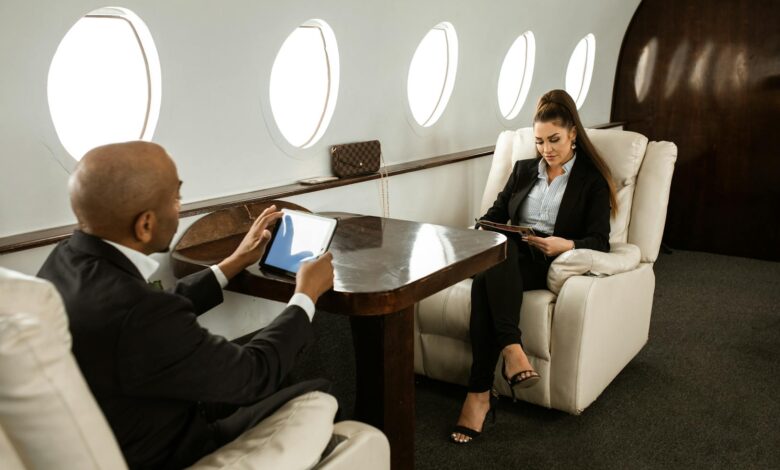
The Sky-High Office Revolution
Corporate executives are transforming their private jets into sophisticated mobile offices, complete with high-speed internet, video conferencing capabilities, and ergonomic workspaces that rival any corner office. This aviation trend reflects the post-pandemic shift toward remote work, even among the ultra-wealthy who traditionally conducted business from Manhattan skyscrapers or Silicon Valley campuses.
The conversion process typically costs between $2 million and $15 million, depending on the aircraft size and technology package. Companies like Jet Aviation, Duncan Aviation, and Greenpoint Technologies report unprecedented demand for these aerial office transformations. The modifications go far beyond adding Wi-Fi – they’re creating fully functional business environments at 40,000 feet.
Marc Benioff of Salesforce reportedly uses his private jet for transcontinental board meetings, while other tech CEOs conduct earnings calls from cruising altitude. The appeal extends beyond convenience: these mobile offices offer unparalleled privacy and security for sensitive business discussions, away from corporate espionage and paparazzi.
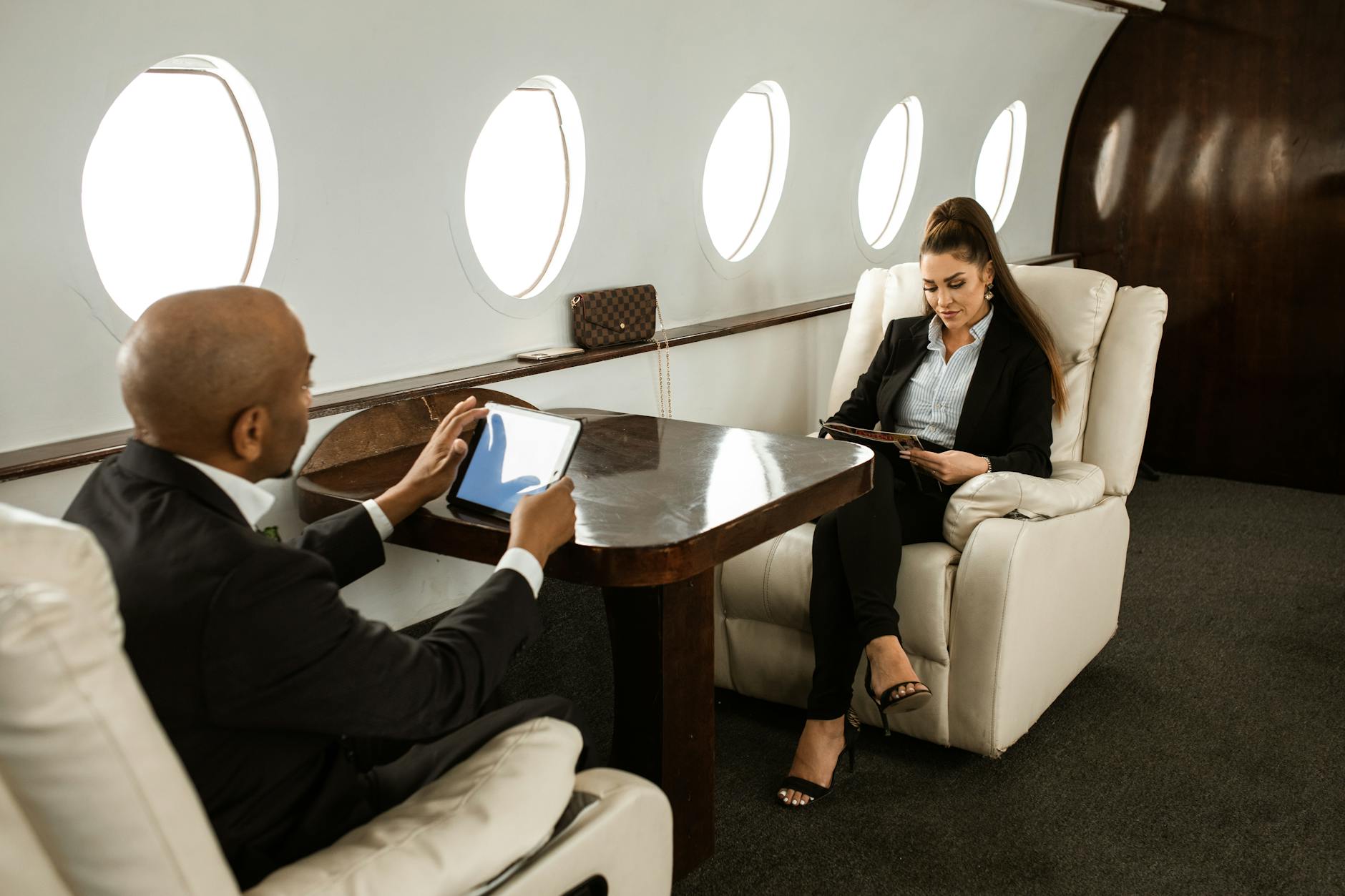
Technology That Defies Gravity
The backbone of these airborne offices is satellite internet technology. Providers like Viasat, Inmarsat, and Starlink deliver broadband speeds comparable to ground-based connections. The latest systems can handle multiple simultaneous video conferences, cloud computing applications, and real-time data analysis – essential tools for modern executives who can’t afford to disconnect during long flights.
Aircraft modification specialists install advanced noise-cancellation systems, allowing for crystal-clear communication during calls. Some jets feature soundproof phone booths or conference rooms with 360-degree cameras for immersive virtual meetings. The Gulfstream G650 and Bombardier Global 7500 are particularly popular platforms for these conversions due to their spacious cabins and long-range capabilities.
Security represents another crucial element. These mobile offices include encrypted communication systems, secure document storage, and sometimes even portable safes for sensitive materials. The technology integration mirrors what ultra-rich families are implementing in their private island retreats, creating secure environments for conducting business away from prying eyes.
Design Meets Functionality
Interior designers are reimagining aircraft cabins as productive workspaces. Traditional leather recliners give way to adjustable standing desks, ergonomic office chairs, and multiple monitor setups. Some conversions include dedicated spaces for different work modes: quiet zones for focused work, collaboration areas for team meetings, and relaxation spaces for decompressing between time zones.
Lighting plays a crucial role in these designs. Circadian rhythm lighting systems help executives combat jet lag by mimicking natural daylight patterns. Some aircraft feature specialized LED systems that adjust color temperature throughout the flight, maintaining alertness during work hours and promoting rest when needed.

Storage solutions in these aerial offices rival those found in high-end corporate headquarters. Custom-built filing systems, secure document storage, and even small libraries allow executives to access physical materials during flight. Some conversions include dedicated spaces for displaying awards, artwork, or branded materials for client presentations.
The galley areas often transform into coffee bars or meeting spaces, complete with premium espresso machines and presentation screens. These spaces facilitate informal discussions and networking opportunities, particularly valuable for executives who frequently travel with business partners or advisors.
The Economics of Elevation
The financial justification for these conversions extends beyond luxury considerations. Time-conscious executives calculate that productive flight time can offset the substantial modification costs. A CEO traveling coast-to-coast can complete a full workday during the flight, potentially justifying the expense through increased productivity and faster decision-making.
Operating costs remain significant, with fuel, maintenance, crew, and insurance typically running $3,000 to $10,000 per flight hour depending on the aircraft. However, executives argue that the ability to conduct secure, uninterrupted meetings while traveling provides competitive advantages that traditional commercial flights cannot match.
The resale value of these modified aircraft depends heavily on the quality of modifications and their appeal to future buyers. Well-executed office conversions can maintain or even increase aircraft value, particularly if the technology installations remain current and transferable to new owners.
Some executives are exploring shared ownership models for these mobile offices, similar to how family offices are pooling resources for alternative investments. These arrangements allow multiple companies to share conversion costs and operating expenses while maintaining access to airborne office capabilities.
The Future of High-Altitude Business

The mobile office trend shows no signs of slowing as remote work becomes permanently embedded in corporate culture. Aircraft manufacturers are beginning to offer factory-installed office packages, recognizing the growing demand for business-ready interiors. These purpose-built solutions promise better integration and potentially lower costs than retrofit modifications.
Emerging technologies like 5G connectivity and improved satellite networks will further enhance the capabilities of these airborne offices. Virtual reality and augmented reality applications may soon allow executives to conduct immersive presentations or walk through remote facilities while flying between destinations.
The environmental impact remains a consideration as sustainability becomes increasingly important to corporate reputation. Some executives are exploring sustainable aviation fuels and carbon offset programs to mitigate the environmental costs of their mobile offices.
As the line between personal and professional space continues to blur, these sky-high offices represent the ultimate expression of executive mobility. The ability to conduct business from anywhere – including 40,000 feet above the ground – may become as essential to corporate leadership as traditional boardrooms once were.
Frequently Asked Questions
How much does it cost to convert a private jet into a mobile office?
Conversions typically cost between $2 million and $15 million depending on aircraft size and technology package.
What technology is used for internet connectivity on private jet offices?
Satellite internet providers like Viasat, Inmarsat, and Starlink deliver broadband speeds comparable to ground-based connections.