

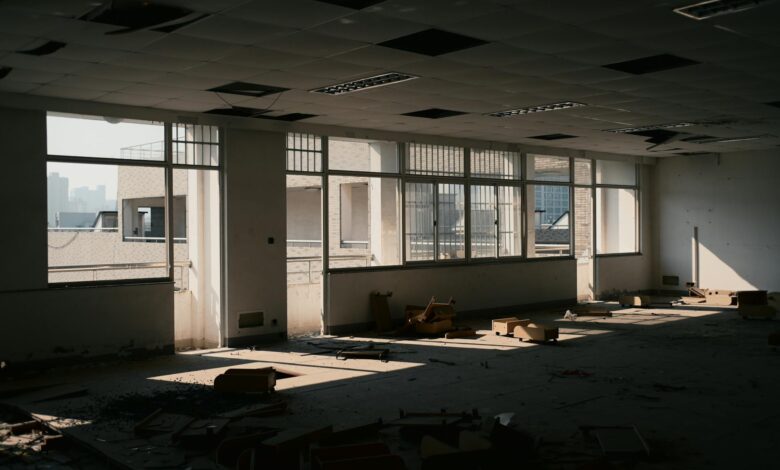
Downtown office towers that once commanded premium rents now sit partially empty, their gleaming facades hiding a fundamental shift in how Americans work. The pandemic didn’t just change where people work – it rewrote the economics of commercial real estate across the nation.
Office vacancy rates in major metropolitan areas have climbed to levels not seen since the early 1990s recession. Cities like San Francisco report vacancy rates exceeding 30%, while even traditionally stable markets like Atlanta and Dallas are seeing double-digit increases. Property values have followed suit, with some Class A office buildings selling for 40% less than their pre-2020 valuations.
The numbers tell a stark story. According to commercial real estate firm CBRE, office leasing activity remains 35% below pre-pandemic levels, and companies are actively downsizing their footprints. Tech giants like Meta and Twitter have shed millions of square feet of office space, while consulting firms and financial services companies negotiate shorter lease terms with expansion clauses rather than committing to large, permanent spaces.
The Flight from Central Business Districts
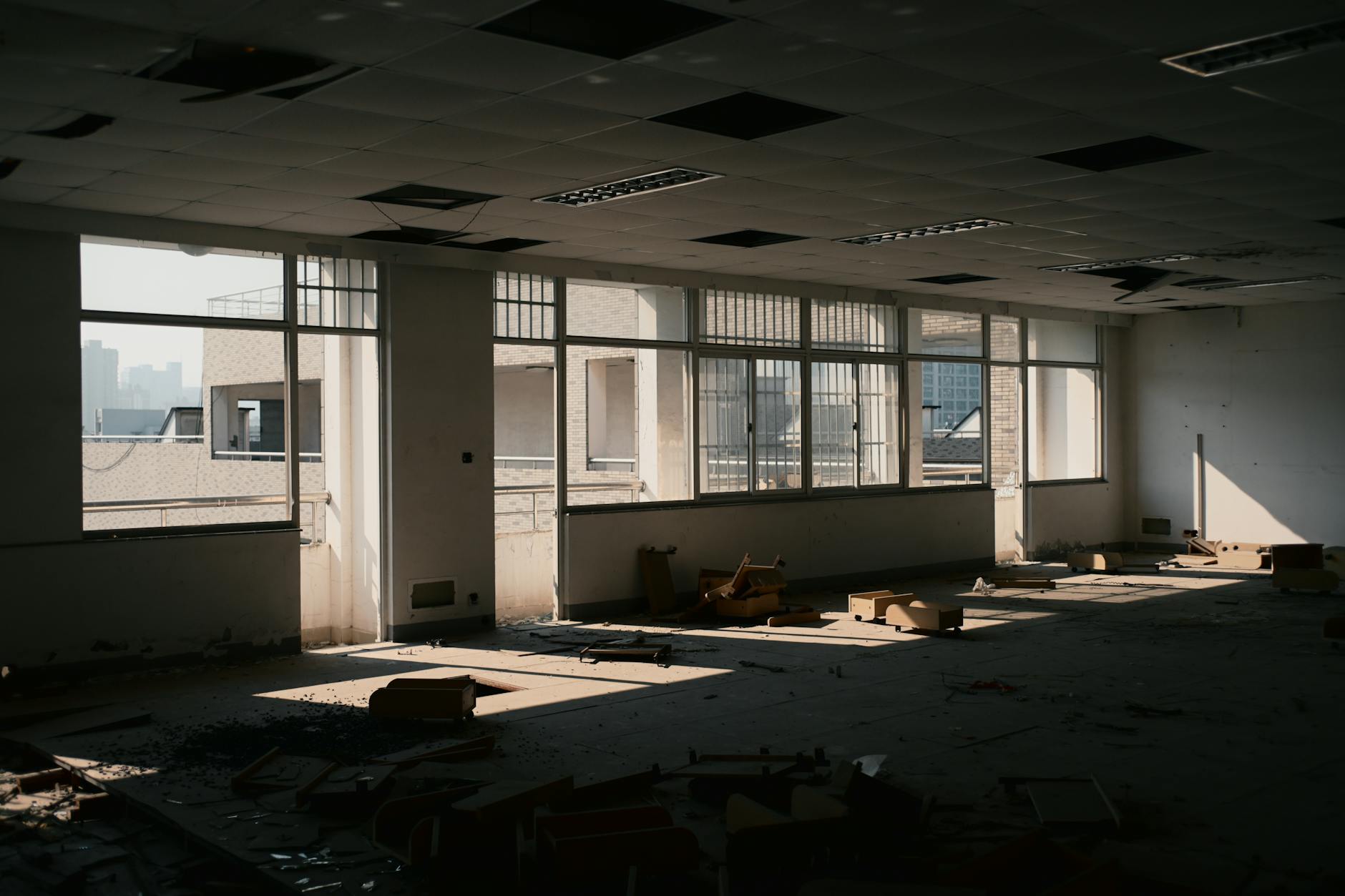
Central business districts, once the crown jewels of commercial real estate portfolios, face the steepest declines. Manhattan office values have dropped by an estimated 20-30% since 2020, with similar patterns emerging in Chicago’s Loop, Seattle’s downtown core, and Los Angeles’ financial district.
The ripple effects extend beyond office buildings themselves. Retail spaces that depended on office worker foot traffic – from coffee shops to dry cleaners – are shuttering at unprecedented rates. Ground-floor retail rents in downtown areas have fallen by 15-25% in many markets, creating a cascade effect that further reduces overall property values.
Parking structures present another challenge. With fewer commuters, parking revenues have plummeted, making these assets less attractive to investors. Some cities are already exploring conversions of parking facilities to residential or mixed-use developments.
Transit-oriented development, once a sure bet for commercial real estate investors, now faces uncertainty. Properties near subway stations and bus terminals that commanded premium prices due to commuter convenience are reassessing their value propositions as remote work reduces daily travel patterns.
Winners and Losers in the New Geography
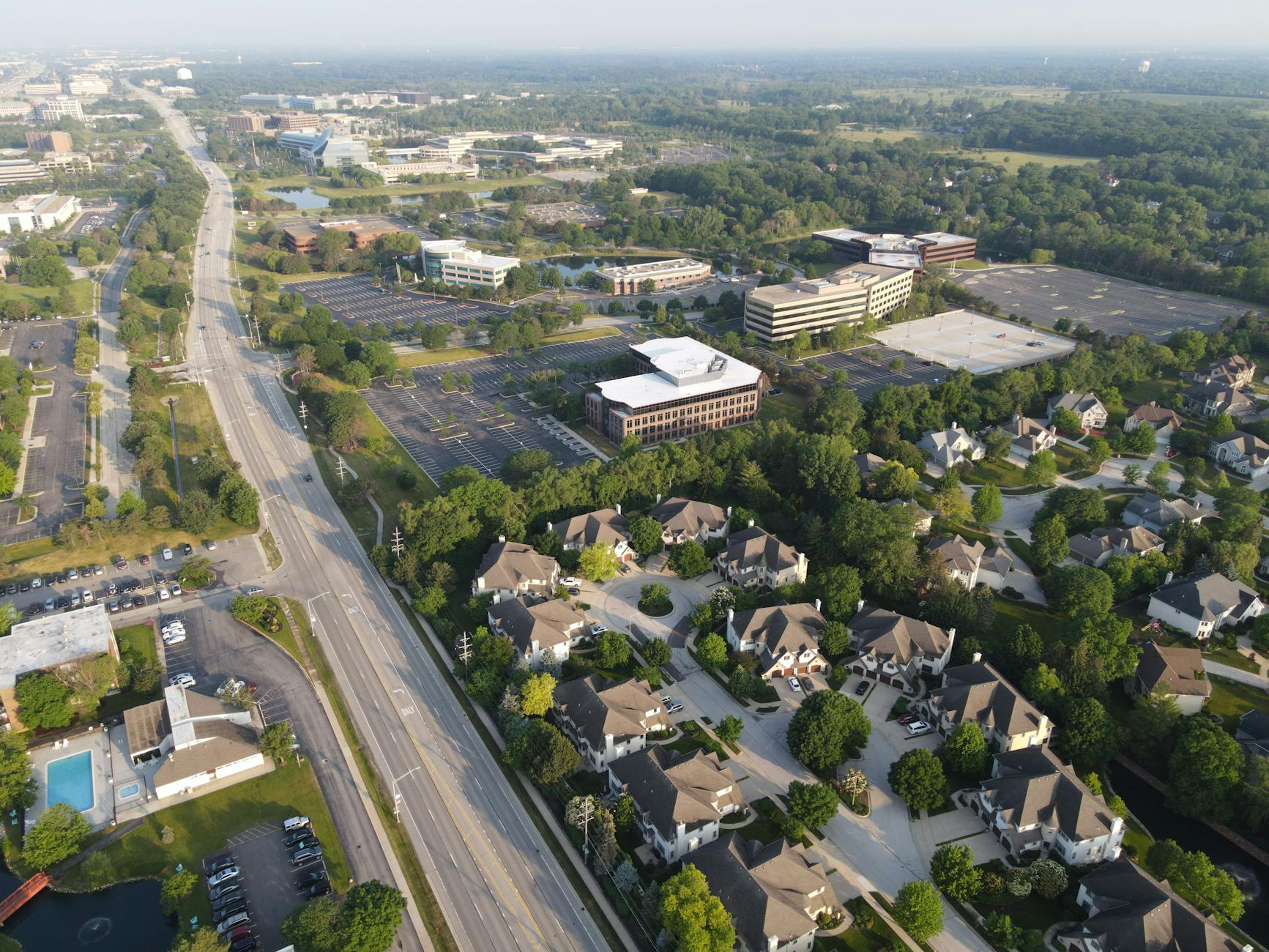
While urban cores struggle, suburban office parks and co-working spaces are experiencing unexpected demand. Companies are establishing satellite offices closer to where employees live, creating a distributed work model that favors smaller, flexible spaces over massive headquarters.
Secondary cities are emerging as beneficiaries of this shift. Austin, Nashville, and Raleigh have seen increased interest from companies seeking lower costs and better work-life balance for employees. These markets are attracting both relocating businesses and new construction, though at a more measured pace than the pre-pandemic boom.
Industrial real estate continues its surge, driven by e-commerce growth that accelerated during remote work adoption. Warehouse and distribution centers command premium rents, with some markets seeing industrial property values increase 20-30% over the past three years. Last-mile delivery facilities, in particular, have become highly coveted assets.

The healthcare sector presents a mixed picture. While traditional medical office buildings maintain steady occupancy, telehealth’s rise has reduced demand for some specialized medical spaces. However, urgent care centers and outpatient facilities continue expanding to serve distributed patient populations.
Adaptive reuse has become a critical strategy for property owners. Former department stores are being converted to fulfillment centers, while older office buildings are being repurposed as residential lofts or mixed-use developments. Cities like Detroit and Cleveland are leading innovative conversion programs, offering tax incentives for office-to-residential projects.
Financial Market Implications
Real Estate Investment Trusts focused on office properties have seen dramatic value declines. Several major office REITs trade at significant discounts to their net asset values, reflecting investor skepticism about future cash flows. Loan defaults on commercial office properties have increased, with some lenders reporting default rates approaching 8-10% for office-focused portfolios.
Regional banks, which hold substantial commercial real estate loan portfolios, face particular pressure. Smaller community banks that concentrated lending in local office markets are reassessing their risk models and loan-to-value ratios. Some institutions are requiring additional collateral or higher interest rates for office property loans.
Insurance companies and pension funds, traditional long-term holders of commercial real estate, are diversifying away from office properties toward industrial, residential, and specialized healthcare facilities. This shift in institutional investment patterns is accelerating the repricing of office assets.
The broader economic implications reach beyond real estate. Cities dependent on property taxes from commercial buildings face budget shortfalls, particularly affecting education funding and municipal services. This challenge is forcing local governments to reconsider their revenue models and explore alternative funding sources.
Long-term Outlook and Market Evolution
The commercial real estate market is undergoing a permanent structural shift rather than a temporary disruption. Companies are adopting hybrid work models as permanent policies, not pandemic responses. This means office space demand will likely stabilize at levels 20-30% below historical norms, according to workplace strategy consultants.
New construction has already adapted to these realities. Developers are focusing on flexible, amenity-rich buildings that can accommodate changing tenant needs. Buildings with outdoor spaces, advanced air filtration systems, and modular layouts command premium rents in the current market.
The concept of “work-life integration” is driving demand for mixed-use developments that combine office, residential, and retail spaces. These projects, sometimes called “18-hour environments,” aim to create communities where people can live, work, and play without extensive commuting.
Technology infrastructure has become a key differentiator for commercial properties. Buildings with robust high-speed internet, advanced telecommunications capabilities, and smart building systems are maintaining higher occupancy rates and rental premiums.
Looking ahead, the commercial real estate market will likely bifurcate into two distinct segments: premium, amenity-rich spaces that justify bringing employees together, and flexible, cost-effective spaces for distributed teams. The middle market – standard office buildings without distinctive features – faces the greatest challenges in finding new relevance.
Urban planners and policy makers are responding with zoning changes that facilitate conversion of office buildings to residential use, addressing both the office vacancy crisis and urban housing shortages. These initiatives represent a fundamental reimagining of city centers from business-only districts to mixed-use communities.
The transformation of commercial real estate reflects broader changes in American work culture that extend far beyond the pandemic. As companies and employees settle into new patterns of work and life, the physical spaces that house economic activity will continue evolving to match these new realities.
Frequently Asked Questions
How much have office property values declined due to remote work?
Office property values have dropped 20-40% in major markets, with some buildings selling for significantly less than pre-2020 valuations.
Which types of commercial real estate are benefiting from remote work trends?
Industrial warehouses, suburban office parks, and flexible co-working spaces are seeing increased demand and higher values.