
Factory Floors Come Home as Companies Flee Overseas Dependencies
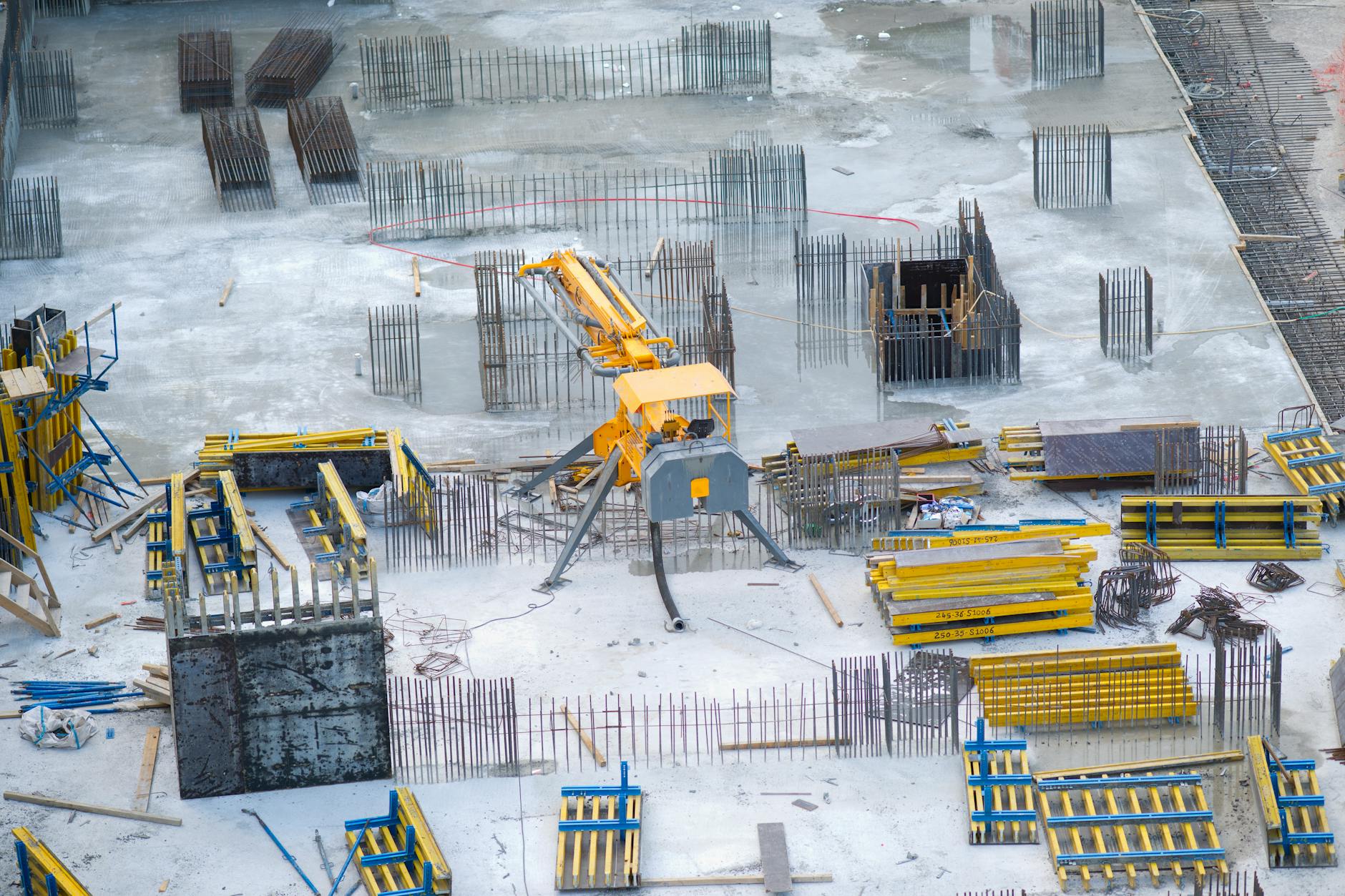
The steel beams are rising again in Ohio’s Mahoning Valley, where shuttered factories once symbolized America’s industrial decline. This time, the construction crews are building semiconductor facilities, battery plants, and advanced manufacturing centers-all funded by companies determined to reduce their reliance on overseas suppliers.
Trade tensions between the United States and China have accelerated a manufacturing renaissance in states long written off as Rust Belt casualties. From Michigan’s battery corridors to Texas semiconductor hubs, companies are investing billions in domestic production capacity, driven by supply chain vulnerabilities exposed during the pandemic and ongoing geopolitical uncertainties.
The reshoring wave represents more than just economic policy-it’s reshaping the political and social landscape of industrial America. States that hemorrhaged manufacturing jobs for decades are suddenly competitive again, attracting investment from multinational corporations seeking to hedge against tariff risks and supply disruptions.
Supply Chain Sovereignty Drives Investment Surge
Intel’s announcement of a $20 billion semiconductor facility in Ohio epitomizes the broader trend. The chip giant cited supply chain security and government incentives as primary factors, but industry analysts point to trade tensions as the underlying catalyst. Similar logic drives Ford’s $11.4 billion investment in Kentucky and Tennessee battery plants, designed to reduce dependence on Chinese lithium suppliers.
Manufacturing employment in traditionally industrial states has rebounded faster than economists predicted. Ohio added 23,000 manufacturing jobs in the past year, while Michigan gained 18,000 positions. These numbers reflect not just returning production, but entirely new industries taking root in regions with existing manufacturing infrastructure and skilled workforces.
The pharmaceutical sector shows particularly dramatic reshoring patterns. Generic drug manufacturers, heavily concentrated in China and India, are establishing facilities in states like North Carolina and West Virginia. Bristol Myers Squibb’s $2 billion investment in New Jersey represents one of dozens of domestic pharmaceutical projects announced since supply chain disruptions highlighted America’s drug dependency.
Regional development authorities report unprecedented interest from companies seeking manufacturing sites. Site selection consultant John Boyd notes that clients increasingly prioritize proximity to domestic markets over labor cost advantages. “The calculus has fundamentally changed,” Boyd explains. “Companies are willing to pay higher wages for supply chain predictability.”
State Incentive Wars Heat Up Competition
Manufacturing states are deploying increasingly aggressive incentive packages to capture reshoring investments. Michigan’s $1 billion economic development fund specifically targets companies relocating from overseas operations. Texas offers property tax abatements and workforce training programs tailored to manufacturers fleeing Asian supply chains.
The competition extends beyond traditional manufacturing centers. States like Arizona and South Carolina are marketing themselves as alternatives to both overseas production and established industrial regions. Arizona’s semiconductor cluster has attracted companies seeking geographic diversification from California’s Silicon Valley, while South Carolina’s automotive manufacturing base provides infrastructure for electric vehicle component production.
Federal policy amplifies state-level incentives through programs like the CHIPS Act and Inflation Reduction Act manufacturing tax credits. These federal subsidies effectively subsidize state economic development efforts, creating powerful incentives for companies to establish domestic operations. The combination of federal and state support can offset traditional overseas cost advantages, particularly when factoring in shipping, inventory, and risk management expenses.
However, incentive competition raises concerns about corporate welfare and interstate economic warfare. Critics argue that states are essentially bidding against each other with taxpayer funds, potentially reducing overall economic efficiency. The Mercatus Center’s analysis suggests some incentive packages exceed the economic value companies actually provide to recipient communities.
Workforce Challenges and Infrastructure Gaps
Manufacturing reshoring faces significant constraints despite political enthusiasm and financial incentives. Skills gaps plague multiple industries, with companies struggling to find workers qualified for advanced manufacturing processes. The National Association of Manufacturers estimates 2.1 million manufacturing positions remain unfilled, hampering expansion plans across industrial states.
Community colleges and universities are rapidly expanding manufacturing-focused programs, but workforce development takes years to address immediate hiring needs. German apprenticeship models are gaining traction in states like Alabama and Tennessee, where automotive manufacturers have established training partnerships with technical schools.
Infrastructure limitations compound workforce challenges. Semiconductor manufacturing requires massive electrical capacity and ultra-pure water systems that many regions lack. Battery production demands specialized transportation networks for hazardous materials. These infrastructure investments often require years of planning and construction, slowing the pace of manufacturing relocations.
Housing shortages in many manufacturing regions further complicate workforce recruitment. Years of population decline left many industrial communities with inadequate housing stock for sudden employment growth. Toledo, Ohio, and Youngstown face particular challenges housing new manufacturing workers, with apartment vacancy rates near historic lows.
The complexity of modern supply chains also limits complete reshoring. Even companies establishing domestic final assembly operations often rely on components produced overseas. Tariff threats are forcing many manufacturers to stockpile raw materials, adding inventory costs that partially offset reshoring benefits.

Political and Economic Implications for Industrial States
Manufacturing reshoring is altering the political dynamics of swing states crucial to national elections. Ohio, Michigan, Pennsylvania, and Wisconsin are experiencing economic revitalization that could influence voter attitudes toward trade policy and industrial policy. Early polling suggests manufacturing workers in these states support continued trade restrictions despite concerns about consumer price impacts.
The geographical distribution of reshoring investments also reflects political considerations. Companies increasingly consider regulatory environments, labor laws, and political stability when selecting domestic manufacturing sites. Right-to-work states continue attracting foreign manufacturers, while established industrial states leverage existing infrastructure and workforce experience.
Long-term economic impacts remain uncertain. Manufacturing reshoring creates high-paying jobs and generates substantial economic multiplier effects, but also increases production costs that consumers ultimately bear. The Peterson Institute estimates complete supply chain reshoring could increase consumer goods prices by 3-5% annually, though most companies are pursuing partial rather than complete domestic relocation.
Regional economic disparities may also intensify as manufacturing investments concentrate in states with existing industrial infrastructure. Rural communities and non-industrial regions risk being left behind in the reshoring wave, potentially exacerbating existing geographic inequalities.
As trade tensions persist and supply chain vulnerabilities remain exposed, manufacturing reshoring appears likely to accelerate rather than plateau. The success of these investments in creating sustainable domestic manufacturing capacity will ultimately determine whether America’s industrial renaissance proves permanent or represents another cyclical shift in global production patterns.
Frequently Asked Questions
What is driving manufacturing reshoring to US states?
Trade tensions with China, supply chain vulnerabilities, and federal incentives are encouraging companies to relocate production domestically.
Which states are benefiting most from manufacturing reshoring?
Ohio, Michigan, Texas, and other traditional industrial states are seeing major investments in semiconductors, automotive, and pharmaceutical manufacturing.