

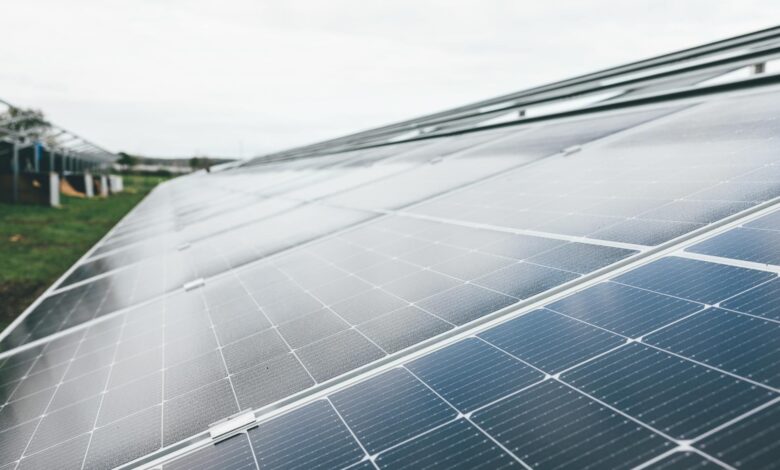
Republican governors across multiple states are implementing unprecedented restrictions on Chinese-manufactured solar panels, creating a new battleground in America’s energy transition. From Florida to Texas, state leaders cite national security concerns while critics argue the moves could derail renewable energy goals and increase consumer costs.
The surge in state-level restrictions represents a dramatic shift from federal trade policy to grassroots resistance. Governor Ron DeSantis signed legislation in May prohibiting government entities in Florida from purchasing solar equipment from Chinese companies, while Texas Governor Greg Abbott issued an executive order requiring state agencies to divest from Chinese energy infrastructure within two years.
These actions extend beyond symbolic gestures. The restrictions affect billions in planned solar installations across red states, forcing developers to scramble for alternative suppliers and potentially delaying projects that could power hundreds of thousands of homes.
National Security Concerns Drive Policy Changes
The primary justification centers on cybersecurity vulnerabilities and supply chain dependence. Republican governors argue that Chinese-manufactured solar panels and inverters could contain backdoors allowing foreign surveillance or grid manipulation during geopolitical tensions.
“We cannot allow hostile foreign nations to control critical infrastructure that powers American homes and businesses,” said Governor Abbott during a press conference announcing Texas restrictions. The state’s Public Utility Commission now requires detailed cybersecurity assessments for any energy equipment manufactured in China or other countries deemed national security risks.
Florida’s approach targets both current purchases and existing installations. The legislation requires state universities and government buildings to replace Chinese solar equipment within five years, creating an estimated $200 million compliance burden. Private installations remain unaffected, but many contractors report clients requesting non-Chinese alternatives despite higher costs.
Intelligence officials have raised legitimate concerns about solar equipment vulnerabilities. A Department of Energy report from 2022 identified potential risks in smart inverters that could theoretically be exploited to destabilize electrical grids. However, cybersecurity experts note that proper network segmentation and monitoring can mitigate most risks without blanket equipment bans.
Economic Implications Ripple Through Energy Markets
The restrictions create immediate challenges for solar developers who have relied on Chinese manufacturers for cost-effective panels and components. Chinese companies currently supply approximately 80% of the world’s solar panels, with significantly lower prices than American or European alternatives.
Project developers report installation costs increasing 20-30% when sourcing panels exclusively from non-Chinese manufacturers. These premium costs ultimately reach consumers through higher electricity rates or delayed renewable energy projects that could have provided cheaper power than fossil fuel alternatives.
Texas utility companies express mixed reactions to the new requirements. While some support reducing foreign dependence, others warn that restrictions could slow the state’s renewable energy expansion at a time when grid reliability remains a political priority following winter storm disasters.
The ripple effects extend to manufacturing jobs within Republican-led states. Several Chinese solar companies operate assembly facilities in states like Ohio and Georgia, employing thousands of American workers. These facilities face uncertain futures as governors weigh economic benefits against security concerns.
Some energy companies are adapting by reshoring manufacturing or partnering with approved suppliers. First Solar, based in Ohio, has seen increased demand for its American-made panels, though the company cannot immediately scale production to meet surging demand from restricted markets.
Political Calculations Meet Climate Reality
The solar restrictions highlight complex political dynamics as Republican governors balance multiple constituencies. Rural voters often support renewable energy for economic benefits, while national security hawks prioritize reducing Chinese influence regardless of costs.
These state-level actions contrast sharply with approaches taken by bipartisan climate coalitions that focus on technology-neutral solutions. Purple state mayors have generally avoided equipment restrictions, instead emphasizing grid modernization and cybersecurity improvements that work with existing infrastructure.
The restrictions also create potential conflicts with federal climate goals. The Biden administration’s renewable energy targets assume continued deployment of cost-effective solar technology, much of which currently comes from Chinese manufacturers. State-level restrictions could slow deployment rates needed to meet federal decarbonization timelines.
Republican governors defend their approach as protecting long-term American interests even at short-term economic cost. They point to similar restrictions on Chinese telecommunications equipment and argue that energy infrastructure deserves equivalent protection.
Critics within the renewable energy industry argue that blanket restrictions ignore technological solutions that could address security concerns without eliminating cost-effective equipment. Advanced monitoring systems and isolated network architectures could provide security benefits while preserving supply chain flexibility.
Federal Response and Industry Adaptation
The Department of Energy has taken a more measured approach, focusing on supply chain diversification rather than outright bans. Federal programs now provide incentives for domestic solar manufacturing while maintaining flexibility for existing Chinese equipment with proper cybersecurity protections.
Industry associations report that many developers are proactively diversifying suppliers to avoid potential future restrictions. This strategic shift could reduce Chinese market dominance over time, though the transition period may feature higher costs and supply constraints.
The restrictions also intersect with broader trade policies, as some Republican governors coordinate with state treasurers pushing back against federal regulations they view as insufficiently protective of American interests.
International solar manufacturers from South Korea, India, and European countries report increased inquiries from American developers seeking alternatives to Chinese suppliers. However, scaling production to meet potential demand remains a significant challenge given the current market dominance of Chinese manufacturers.
Looking Ahead: Balancing Security and Sustainability
The Chinese solar restrictions represent a new phase in state-federal energy policy tensions. Republican governors appear committed to prioritizing national security over short-term cost savings, even as renewable energy becomes increasingly popular with their constituents.
Industry experts predict that market forces will eventually drive domestic manufacturing expansion, potentially resolving the security versus cost dilemma. However, the transition period could last several years, during which higher costs may slow renewable energy adoption in restricted states.
The ultimate test will be whether these restrictions achieve their stated security goals without significantly undermining America’s clean energy transition. As more states consider similar measures, the balance between national security and climate progress will likely define energy policy debates for years to come.
Frequently Asked Questions
Why are Republican governors blocking Chinese solar panels?
They cite national security concerns about potential cybersecurity vulnerabilities and supply chain dependence on foreign manufacturers.
How do these restrictions affect solar installation costs?
Costs increase 20-30% when developers must source panels from non-Chinese manufacturers, ultimately affecting consumer electricity rates.