


When Federal Money Dries Up, Municipalities Pay the Price
The municipal bond market is entering unfamiliar territory. For decades, the financing calculus for state and local governments depended on a reliable assumption: federal infrastructure dollars would flow, supplementing what municipalities could raise on their own through bond issuance. That assumption is now under serious pressure, as Washington signals appetite for deep cuts to transportation grants, water system funding, and broadband buildout programs that have long backstopped local project budgets.
The consequences are not abstract. When federal grants shrink, municipalities either cancel projects, delay them indefinitely, or fill the gap by issuing more debt. More debt means more bonds. More bonds, particularly from issuers with already-stretched balance sheets, can push yields higher and compress prices across the broader muni market. Investors who have parked capital in tax-exempt bonds as a stability play are now reassessing whether that stability holds if the federal safety net thins out.
This is a structural problem, not a short-term blip.

How Federal Grants Became Load-Bearing Walls for Muni Finance
State and local governments have relied on federal matching programs since the interstate highway era. Over time, that reliance deepened. The Infrastructure Investment and Jobs Act of 2021 accelerated the pattern by injecting hundreds of billions into roads, bridges, rail, water infrastructure, and broadband, with much of it distributed as grants that required no repayment. Cities and counties built project pipelines around those funds, hiring engineers, locking in contractors, and in many cases issuing anticipatory debt with the expectation that federal dollars would arrive on schedule to cover a portion of total costs.
When that expectation breaks down mid-project, the math gets ugly fast. A water treatment upgrade budgeted at $200 million with $80 million expected from a federal grant suddenly requires $200 million in local financing. For a mid-size city already carrying significant general obligation debt, that shortfall often lands in the revenue bond market, sometimes at higher spreads than the original issuance because the credit profile looks different without the federal backstop.
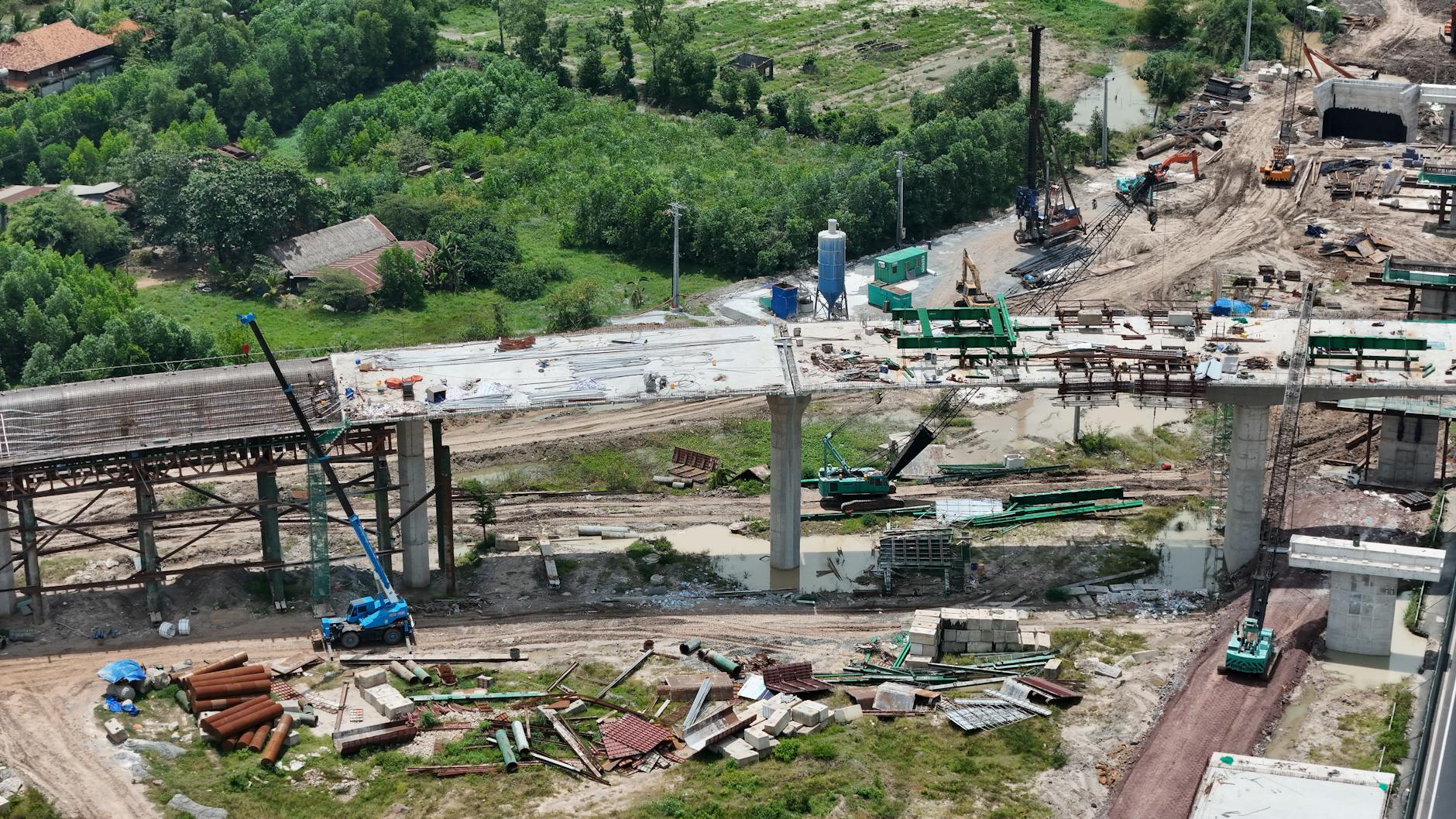
Smaller municipalities face the sharpest exposure. Rural counties that lack the tax base to absorb federal funding gaps have fewer options. They can defer maintenance and let infrastructure deteriorate, they can approach state revolving funds that are themselves strained, or they can go to capital markets and pay whatever spread investors demand. In some cases, projects simply stop, leaving half-built facilities and stranded bond proceeds sitting in construction accounts while legal teams sort out whether the issuer triggered any covenants.
What Spread Widening Actually Signals
Muni spreads relative to comparable Treasuries have been a quiet warning indicator through much of this year. The spread on lower-rated general obligation bonds has widened measurably in states and metros where federal grant dependency is highest. This is not panic – the muni market is not in freefall – but the directional movement matters because muni spreads tend to move slowly and then suddenly.

The credit differentiation story is becoming more pronounced. High-grade issuers – think large state general obligation bonds from states with diverse revenue bases – continue to attract demand, particularly from high-bracket individual investors seeking tax-exempt income. Retirees fleeing bond market volatility have found certain segments of the muni market relatively stable, but that stability is concentrated in the upper credit tiers. The middle and lower rungs of the market, where federal funding cuts hit hardest, are where the pressure is building.
Revenue bonds tied to specific infrastructure assets carry a particular kind of risk that deserves attention right now. A toll road revenue bond or an airport facility bond assumes a certain utilization pattern and a certain capital improvement schedule. If federal grants that were supposed to fund a terminal expansion or a highway interchange get pulled, the project either gets shelved or financed entirely through additional revenue bonds. That adds leverage to an asset that was underwritten at a different debt load, which can trigger rating agency reviews and, in some cases, downgrades that force institutional holders to sell.
Portfolio Considerations in a Grant-Scarce Environment
Investors managing muni exposure need to think more granularly about geographic and sector concentration than they may have in prior cycles. A muni bond fund with heavy allocation to smaller issuers in states that ran aggressive infrastructure buildout plans on the assumption of continued federal matching is carrying more risk than the fund’s average credit rating suggests. The rating is a lagging indicator. The grant dependency is a forward-looking risk factor that does not always show up immediately in bond ratings.
Sector selection within the muni universe matters more now. Essential service bonds – water, sewer, electric utility – tend to hold up better because the underlying revenue streams are non-discretionary. Households pay water bills even in recessions. That predictability gives revenue bond investors a degree of insulation that, say, a convention center bond or a sports facility bond does not offer. Transportation bonds sit somewhere in between, since road and bridge usage has some correlation with economic activity but is generally more resilient than discretionary infrastructure.
Duration management is the other variable. In an environment where credit quality at the lower end of the muni market is under pressure, longer-dated paper from marginal issuers carries compounding risk. The longer the bond, the more exposure to the issuer’s fiscal trajectory over time, and a city whose budget was premised on federal grants that no longer exist will face compounding fiscal stress over a 20-year horizon in ways that are difficult to model precisely today.
The munis that investors thought were the boring part of the portfolio – steady, tax-advantaged, predictable – are now the part that requires the most active credit homework, and the window for repositioning before spread widening becomes a serious drag on returns is narrowing by the quarter.