

When Trees Become a Hedge
Timber real estate investment trusts have spent decades as a quiet corner of institutional portfolios – reliable, unglamorous, and easy to overlook when equity markets are running hot. That calculus is shifting. With inflation proving stickier than central banks projected and fixed-income returns still struggling to keep pace with rising costs, pension fund managers are returning to hard assets with renewed seriousness. Timberland is getting a second look not because it is fashionable, but because the underlying math keeps working.
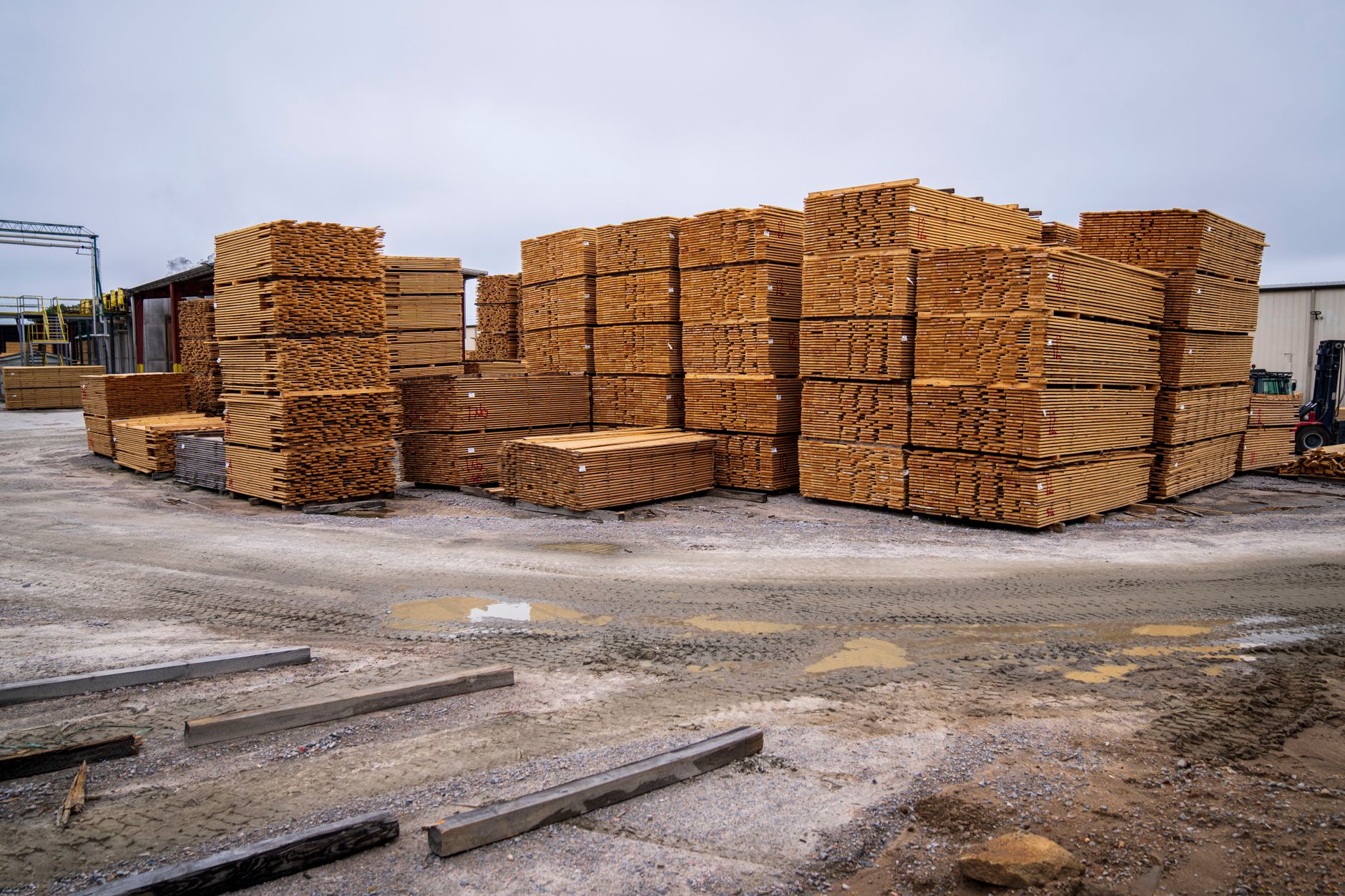
The core appeal is straightforward. Trees grow whether markets cooperate or not. A timber REIT does not need a favorable interest rate cycle or a consumer spending boom to generate biological returns – the asset literally accumulates value over time through natural growth. When timber prices are low, managers can simply hold inventory in the ground and wait. That optionality is rare in any asset class, and pension managers navigating a decade of compressed yields have started treating it as structurally valuable rather than incidental.

The Inflation Argument, Spelled Out
Inflation erodes fixed cash flows. It does not erode standing timber. Wood product prices have historically moved with construction costs, housing demand, and general commodity inflation – all of which tend to rise in inflationary environments. That correlation means timberland returns often accelerate precisely when the purchasing power of bond coupons is declining fastest. For a pension fund with long-dated liabilities denominated in real terms, that inverse relationship with inflation’s damage is the central argument for allocation.
The supply side reinforces this. Domestic timberland acreage in the United States is not expanding in any meaningful way. Environmental regulations, competing land uses, and the slow biology of forest maturation create a natural constraint on new supply. When homebuilding activity picks up – which it does during inflationary cycles driven by wage growth and population movement – demand for structural lumber and engineered wood products rises against a supply curve that cannot respond quickly. Timber REIT revenue responds to that squeeze, often before broader commodity indices register the movement.

How Pension Funds Are Approaching Allocation
Most large pension funds that have moved into timber have done so through one of two routes: direct ownership of timberland through private vehicles, or publicly traded timber REITs. The private route offers deeper control and potentially higher returns, but it requires scale, long lock-up periods, and internal expertise that smaller funds simply cannot staff. Publicly traded REITs offer liquidity that timberland as a direct asset never can, which makes them accessible to a broader range of institutional investors, including mid-sized state pension systems that cannot commit capital for fifteen-year horizons.
The REIT structure itself carries tax advantages that matter at the institutional level. REITs pass through income without corporate-level taxation, and timber harvesting income can qualify for favorable treatment under current IRS rules. For pension funds that are already tax-exempt, this benefit may be less decisive than for taxable investors, but the pass-through structure does tend to support higher dividend distributions, which matters for funds managing regular benefit payment obligations.
Allocation sizing has been a point of real debate. A typical institutional portfolio might hold real assets – including infrastructure, real estate, and commodities – at somewhere between five and fifteen percent of total assets. Within that bucket, timber has historically competed with farmland, energy royalties, and infrastructure. The case being made now is that timber deserves a dedicated sub-allocation rather than being lumped into a general real assets pool, because its return drivers are distinct enough to provide diversification even within a hard-asset allocation. Pension funds examining toll road concessions as a separate infrastructure play are applying the same logic – real assets are not monolithic, and their correlation properties differ enough to warrant separate treatment.
Carbon credit revenue is adding a new dimension to timber REIT economics that did not exist at scale a decade ago. Managed forests that maintain or increase carbon sequestration can generate credits that corporate buyers purchase to offset emissions. This revenue stream is still maturing and subject to regulatory uncertainty, but several large timber operators have begun treating it as a meaningful supplement to traditional harvest income. For pension managers evaluating long-duration assets, the possibility of a durable secondary revenue stream tied to climate policy creates an interesting forward-looking component in what is otherwise a very old-fashioned investment.
Risks That Do Not Disappear
The case for timber REITs is real, but the risks deserve the same candor. Wildfire exposure is the most obvious and the most difficult to fully hedge. Catastrophic fire seasons in the western United States have demonstrated that even professionally managed timberland can suffer irreversible loss. Insurance costs have risen accordingly, and some timber operators have had to rethink geographic concentration in fire-prone regions. A pension fund with a significant timber allocation needs to understand where those acres are located and what mitigation practices are in place – generic exposure to “timber” is not sufficient diligence.
Housing market cycles also matter more than the inflation argument might suggest. While the long-term correlation with inflation is favorable, short-term revenue depends heavily on lumber demand, which is directly tied to residential construction starts. When the Federal Reserve raises rates aggressively to fight inflation – exactly the environment that makes inflation protection attractive in the first place – housing starts typically fall, and with them, near-term timber pricing. The long-term thesis can remain intact while short-term income disappoints, which creates duration mismatch risk for funds that need steady cash distributions to meet benefit payments.
What Institutional Interest Actually Looks Like
The renewed attention from pension managers has not yet translated into a flood of capital that would distort valuations. The publicly traded timber REIT sector remains relatively small compared to other real estate categories, which means that even a modest uptick in institutional interest can move the needle on share prices. Several publicly traded timber-focused REITs have seen their institutional ownership percentages climb over recent reporting periods, a pattern that tends to precede more formal allocation decisions as investment committees formalize policies.
Consultants advising pension boards have increasingly added timber to standard asset-liability modeling exercises, which a few years ago would have grouped it loosely under “alternatives” without serious analysis of its specific duration and inflation characteristics. That methodological shift – treating timber as a distinct asset class with its own return decomposition – is how allocation decisions eventually get made. Once it is on the modeling sheet, it competes on its merits rather than on novelty.
The question pension managers have not fully answered is how much of timber’s appeal is structural and how much is a response to a specific macroeconomic moment that may not persist. If inflation moderates durably and bond yields settle at levels that restore fixed-income attractiveness, the urgency fades. What would remain is a low-correlation real asset with biological return characteristics and growing carbon revenue potential – which is either enough to sustain serious institutional interest on its own, or not quite enough to justify the operational complexity relative to a plain-vanilla bond ladder.