

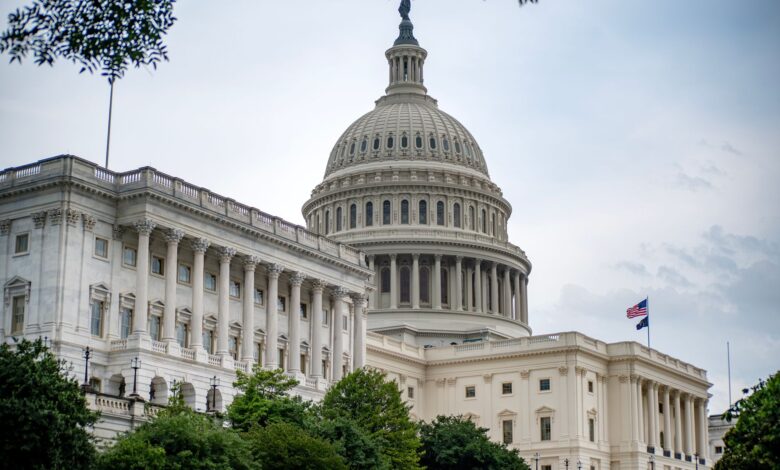
Sixty is the number that decides what the Senate can actually do, and a growing list of lawmakers wants to change it.
How a Procedural Rule Became a Governing Threshold
The filibuster appears nowhere in the Constitution. It grew out of Senate rules that allowed unlimited debate, which for much of the chamber’s history made ending a debate nearly impossible. A cloture rule adopted in 1917 let the Senate cut off debate with a two-thirds vote, and in 1975 the threshold dropped to three-fifths, or 60 of 100 senators.
What changed most over the decades was behavior, not text. Senators once had to hold the floor and speak to block a bill, a physical ordeal that discouraged casual use. Today the Senate largely runs on the threat alone, so a signal of objection is enough to require 60 votes. When obstruction costs almost nothing, it becomes routine.
The practical result is that most major legislation now needs a supermajority to move forward, even when a simple majority supports it. Leaders often skip votes on measures they know will fail cloture, so a large share of the gridlock never shows up on the record. It lives in the bills that never reach the floor.
The Senate has also shown it can route around the rule when it wants to. Budget reconciliation, created by the Budget Act of 1974, lets certain fiscal measures pass with a simple majority. In 2013 the majority party eliminated the 60-vote requirement for most executive and judicial nominations, and in 2017 the Senate extended that change to Supreme Court nominees. So the real argument is not whether the chamber can change its rules, but which subjects deserve the exception.
The Options on the Table
Current proposals fall into a handful of camps. Some lawmakers want to abolish the legislative filibuster outright. Others prefer carve-outs for specific subjects, such as voting rights or budget-related deadlines. A third group favors restoring the “talking filibuster,” and a fourth would lower the cloture threshold from 60 to something like 55. Each version assumes a different diagnosis of what is broken, which is part of why none has gathered enough support.
The talking filibuster has an intuitive appeal because it restores a cost. If senators had to hold the floor to block a bill, they would have to decide whether a given fight is worth days of exhaustion and public attention. The weakness is the calendar. A determined minority can run out the clock, and every day spent on one stalled bill is a day not spent on nominations, appropriations, or anything else waiting in line.
Carve-outs look modest, and the Senate has used them before. In late 2021 it adopted a one-time workaround so a debt limit increase could pass with a simple majority, a maneuver tied to the recurring standoff described in Why the Debt Ceiling Fight Keeps Returning to Washington’s Calendar. The trouble is that exceptions rarely stay narrow. A rule that bends for voting rights under one majority can bend for immigration, taxes, or abortion under the next.

A quieter proposal would flip the burden. Instead of requiring 60 senators to end debate, the minority would need 41 senators present and voting to sustain it. Obstruction would become visible and take effort, but the minority would keep its core power to block.
Full abolition draws the sharpest arguments on both sides. Supporters say a majority elected to govern should be able to govern, and be judged on the results. Opponents say the 60-vote threshold forces negotiation and guards against policy whiplash, since a lower bar would let laws pass one cycle and be repealed the next. Both arguments rest on the same fact: the value of the filibuster depends on whether a party expects to be in the majority or the minority. Each party has tended to defend it more fiercely when it is out of power. The math is also stubborn, because changing the rule by precedent takes only a simple majority, and in early 2022 two Democratic senators publicly refused to support changes for voting rights legislation, which was enough to stop the effort.
What Changing the Rule Would and Would Not Fix
Even a weakened filibuster would leave other chokepoints in place. A bill still has to clear the House, where narrow margins can be as paralyzing as the Senate’s 60-vote bar. It still has to survive committee bottlenecks and, in the end, a presidential signature. In a divided government, lowering the Senate threshold changes little, because the opposing party in the other chamber or the White House can still stop the bill.

That leaves the filibuster’s critics with an uncomfortable calculation. A change delivers the most when one party holds the House, the Senate, and the presidency, a condition that has been brief and rare in recent decades. And any senator weighing a vote to weaken the rule has to picture the same tool in the other party’s hands. The mechanism for change is also oddly low-barrier: it would take just 50 votes plus the vice president’s tiebreaker, a smaller number than the 60 the rule itself demands.
Frequently Asked Questions
What is the Senate filibuster?
It is a procedural tactic that lets a minority of senators block a bill by preventing debate from ending. Ending debate on most legislation requires 60 votes through a process called cloture.
Can the Senate change the filibuster with a simple majority?
Yes. The Senate has changed its rules by setting new precedents with a simple majority, as it did for executive and judicial nominations in 2013 and for Supreme Court nominees in 2017.
What is a talking filibuster?
It is a proposal that would require senators opposing a bill to hold the floor and speak continuously to block it. Supporters say it would restore the cost of obstruction.