
Water rights are becoming the quiet obsession of the ultra-wealthy. Family offices – the private investment arms managing the fortunes of billionaire clans and multi-generational dynasties – are steadily building positions in water rights trusts, treating access to fresh water the way prior generations treated oil fields: as a finite resource worth owning long before the broader market catches on.
The Logic Behind the Accumulation
Water rights trusts are legal structures that hold entitlements to draw from specific water sources – rivers, aquifers, reservoirs – and lease or sell that access to agricultural operators, municipalities, and industrial users. The trust structure separates the underlying right from the physical infrastructure, which means investors can own the entitlement without building a pipeline. For family offices allergic to operational complexity, that distinction matters enormously.
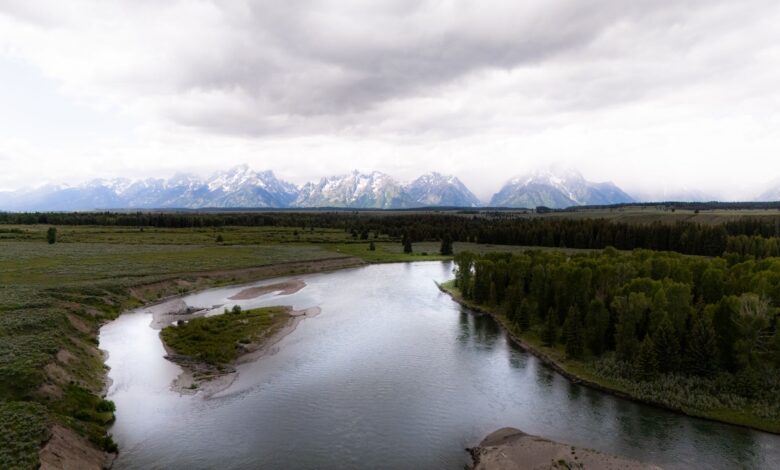
The western United States is where most of this activity concentrates. States like Colorado, Arizona, and Nevada operate under the prior appropriation doctrine, a legal framework that grants water rights on a “first in time, first in right” basis. Rights that were established in the 19th century carry a priority status no amount of money can replicate from scratch. Acquiring existing rights through trust structures is the only way to access that seniority – and senior rights are the ones that survive drought-year curtailments when junior holders get cut off entirely.
Family offices are drawn to this asset class for reasons that go beyond scarcity. Water rights in many jurisdictions produce income through lease arrangements with farmers and ranchers who need the water to operate but lack the capital or legal standing to own the underlying right outright. That lease income is steady, indexed in many cases to commodity or CPI benchmarks, and largely uncorrelated with equity market volatility. For wealth preservation mandates – which is what most multi-generational family offices are running – that profile is nearly ideal.
The trust structure also provides a useful layer of discretion. Unlike real estate investment trusts or publicly traded infrastructure funds, water rights trusts are typically private instruments with minimal disclosure requirements. A family office can accumulate a meaningful position across several western river basins without triggering any of the public filing thresholds that would attach to a comparable equity stake. That opacity is a feature, not a side effect.

Why This Moment, and Why Water
The acceleration in family office interest tracks closely with two converging pressures: prolonged drought across the American West and the increasing difficulty of finding yield in traditional fixed-income markets. When a 10-year treasury was returning less than 2%, the steady lease income from a senior water right looked very different than it did in a higher-rate environment. Even now, with rates elevated, water rights offer something bonds cannot – appreciation tied to physical scarcity rather than monetary policy cycles.
Agriculture is the dominant consumer of fresh water in the western United States, accounting for the vast majority of consumptive use across most river basins. As drought conditions compress the available supply, farmers with junior rights face the prospect of zero allocation in dry years. That vulnerability pushes them toward lease arrangements with senior rights holders, often accepting unfavorable terms simply to guarantee access. Family offices sitting on senior trust positions are on the advantaged side of that negotiation.
Municipal demand adds another layer. Cities across the Southwest are expanding their water portfolios as population growth continues to outpace local aquifer replenishment. Phoenix, Las Vegas, and the surrounding metro areas have all been in active acquisition mode, purchasing agricultural water rights and retiring the land from production to redirect the water toward residential and commercial use. A well-positioned trust holding senior rights in a basin adjacent to a growing metro area has an exit option that purely agricultural leases do not.
Climate modeling has reinforced the investment thesis in ways that pure market analysis cannot. Projections for the Colorado River Basin, which supplies water to roughly 40 million people across seven states and Mexico, consistently point toward reduced average flows through the second half of this century. The 2023 shortage declarations on Lake Mead and Lake Powell were not anomalies – they were early demonstrations of a structural supply gap that is expected to widen. Owning a legal entitlement to a share of a shrinking resource is not a subtle bet.
There is also a less discussed but financially significant dynamic around water marketing – the practice of selling conserved water back into the market rather than applying it to land. Some western states have liberalized their water marketing rules over the past decade, making it easier for rights holders to sell or lease water they choose not to use. That flexibility converts a passive entitlement into an active trading position, which suits family offices willing to staff the legal and agronomic expertise needed to manage it. The trusts doing this well are beginning to look less like passive royalty vehicles and more like commodity trading operations with a legal moat around the core asset. This trajectory bears some resemblance to how sovereign wealth funds have approached toll road concessions – acquiring a regulated entitlement and then optimizing the income stream over decades.
Risks the Prospectus Will Not Emphasize
The political risk embedded in water rights ownership is real and rarely priced accurately. Water is not crude oil – its allocation is a matter of public welfare, and state legislatures under drought pressure have shown willingness to revisit, restrict, or outright condemn private water entitlements when political conditions demand it. Arizona’s groundwater management overhaul in recent years and ongoing debates in Colorado over instream flow requirements demonstrate that the legal framework governing these rights is not static. A senior right is only as durable as the regulatory environment that recognizes it.

There is also the question of what happens when corporate ownership of water rights moves from a quiet accumulation story to a public controversy. Agricultural communities in water-stressed regions have already begun pushing back against outside investors purchasing local water entitlements and leasing them back to farmers at rates that threaten the economic viability of small operations. A family office can tolerate reputational ambiguity in ways that a public pension fund cannot – but if federal legislation targeting speculative water ownership gains traction, the trust structure that provides current opacity could become the first thing regulators scrutinize.