Sovereign Wealth Funds Quietly Accumulate Stakes in Liquid Natural Gas Royalties

The Quiet Accumulation Nobody Is Talking About
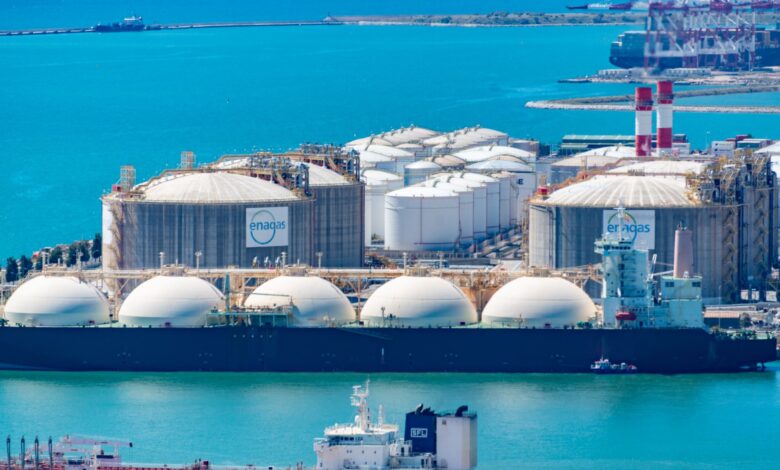
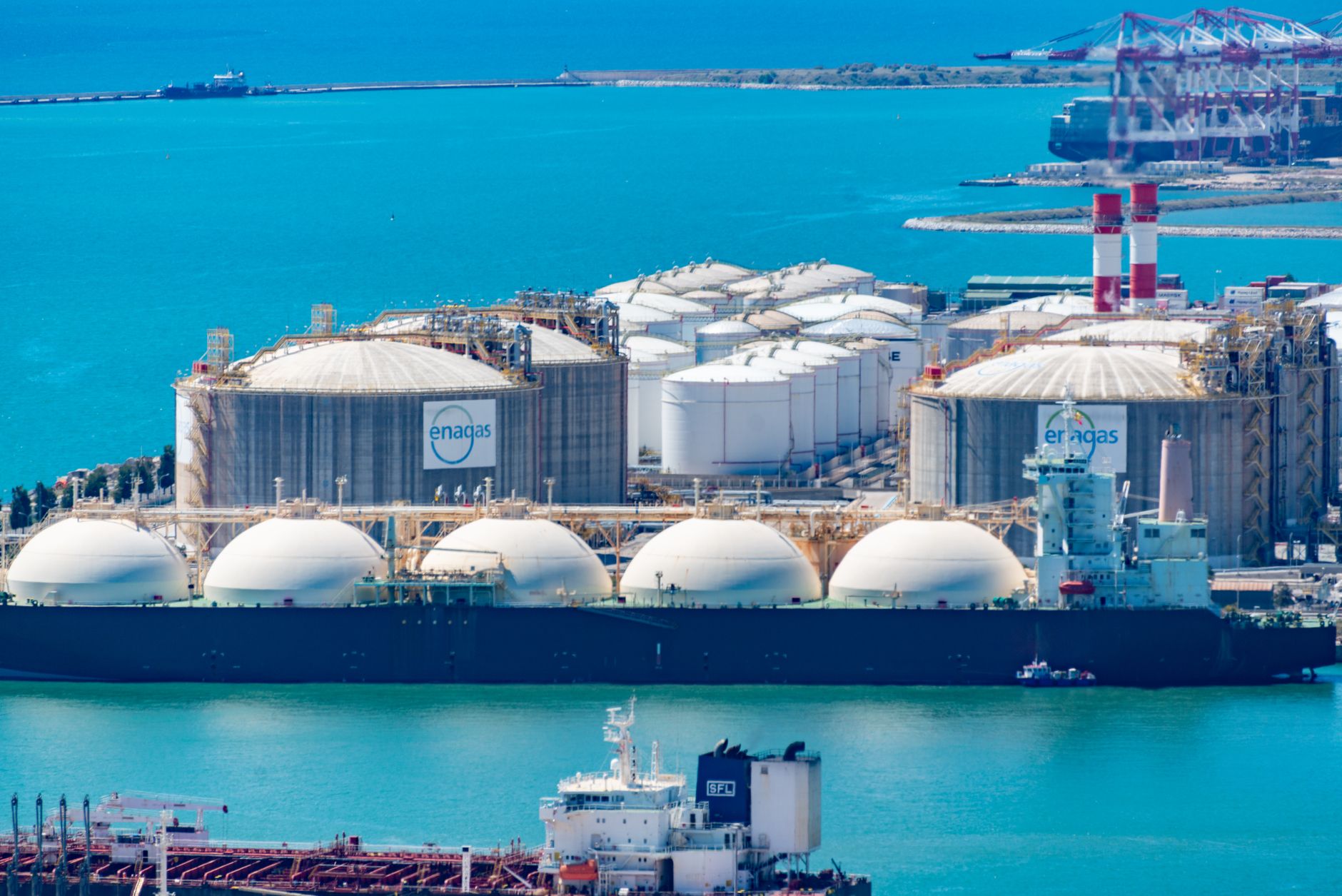
Sovereign wealth funds, the state-controlled investment giants managing trillions in national savings from Norway to Abu Dhabi to Singapore, have been quietly shifting a portion of their energy allocations away from direct commodity exposure and toward something considerably more durable: royalty interests in liquefied natural gas production. Rather than owning the gas itself or betting on spot prices, these funds are acquiring the rights to collect a percentage of revenues from LNG production for decades at a time. The distinction matters enormously, and it explains why this move has received so little mainstream attention despite its scale.
Royalty structures sit at the top of the capital stack. The royalty holder collects before operating costs, before debt service, before any profit distribution reaches equity investors. In an energy sector defined by cost overruns, price swings, and geopolitical risk, that position is as close to a guaranteed cash flow as energy investing gets. For sovereign funds with 30- and 50-year investment horizons, that quality of income is exactly what they are mandated to find.
Why LNG Royalties, Why Now
The global energy transition has created a paradox that most coverage ignores. While renewable capacity additions set records each year, natural gas demand – particularly for LNG – continues to grow across Asia, Europe, and parts of the developing world. Countries phasing out coal are replacing baseload capacity with gas. Countries that relied on Russian pipeline supply are scrambling to lock in long-term LNG contracts. That demand certainty creates an unusually long runway for royalty cash flows, which is precisely what makes the asset class attractive to funds that think in generational terms rather than quarterly cycles.
LNG royalties are also largely disconnected from the operational risk that kills returns in direct energy investment. A royalty holder does not pay for drilling campaigns that come in over budget. They do not absorb the cost of a plant outage or a shipping disruption. They collect a percentage of what comes out of the ground or out of the liquefaction terminal, and that percentage continues flowing as long as production continues. The operating company bears all the execution risk; the royalty holder simply waits for the check.
There is also a scarcity dimension. LNG royalty interests in established, producing basins do not come to market frequently. The original mineral rights holders, land trusts, and early-stage developers who monetized royalty positions years ago created a finite pool of high-quality assets. As sovereign funds compete with pension managers and specialized royalty companies for access, deal flow has become constrained enough that some funds are reportedly structuring bespoke arrangements directly with LNG project developers rather than acquiring existing royalty packages on the secondary market. This kind of bilateral deal-making keeps transactions away from public filings and out of the financial press entirely.
The Appeal of Inflation-Linked Income at Scale
Most LNG royalty agreements are structured as a percentage of production value, not a fixed dollar amount per unit. When LNG prices rise – as they did dramatically after 2021 – royalty income rises with them without any additional capital outlay by the holder. That automatic inflation linkage is a feature that bond markets cannot replicate and that equity dividends only approximate. For sovereign funds managing the long-term purchasing power of national savings, income that tracks energy price inflation rather than fighting it is a structurally superior instrument.
This dynamic also explains why the accumulation has been quiet rather than announced. When sovereign funds acquire publicly traded equities, they cross disclosure thresholds that trigger regulatory filings. Royalty interests, particularly those structured as private contractual arrangements rather than securities, often carry no equivalent disclosure obligation. A fund can build a multi-billion-dollar royalty portfolio across several LNG basins without a single public filing. The opacity is not accidental – it is a feature of the asset class that sophisticated buyers actively value, both to avoid driving up acquisition prices and to preserve negotiating leverage on future deals.

Geopolitics and the Long Duration Bet
The funds most active in this space are not random. Norway’s Government Pension Fund Global, the Abu Dhabi Investment Authority, and GIC of Singapore each operate with time horizons measured in decades and mandates that prioritize capital preservation alongside real returns. For funds like these, an LNG royalty interest with a 40-year production life is not a speculative bet on commodity prices – it is a long-duration bond substitute with an energy inflation kicker attached. The asset behaves like fixed income in stability while behaving like commodities in upside.
Geopolitics adds another layer of logic. Countries that produce LNG – Australia, Qatar, the United States, and increasingly Canada and Mozambique – represent relatively stable jurisdictions with rule-of-law protections for property rights. Royalty interests in those basins carry far less political risk than direct investment in frontier oil production or equity stakes in state-adjacent energy companies in more volatile regions. A sovereign fund from a Gulf state acquiring royalty rights in Australian LNG is effectively diversifying its own energy wealth into a separate, legally protected income stream in a foreign jurisdiction. The strategic value of that extends well beyond pure financial return.
The structural similarities to other long-duration real asset accumulation strategies are visible across institutional investing more broadly. Pension funds have pursued comparable logic in wireless tower ground leases, where the income stream is contractual, inflation-sensitive, and largely immune to the operational volatility of the underlying business. LNG royalties follow the same architecture: the asset generates income regardless of who operates the infrastructure above it.
What makes the current accumulation phase worth watching is the window. Several large LNG projects in the Gulf of Mexico export corridor, Western Australia, and East Africa are in late-stage development or early production, meaning royalty interests are still being structured and sold before decades of compounding production make them prohibitively expensive to acquire. Once a major LNG terminal reaches full utilization and proves its production life, the royalty interests attached to it become significantly harder to acquire at reasonable multiples. Sovereign funds moving now are betting that the cost of access today is a fraction of what it will be once the cash flow track record is established.
The buyers quiet enough to avoid press coverage are often the ones positioning best. By the time LNG royalty interests appear regularly in financial journalism, the most attractive entry points will almost certainly be gone – snapped up by funds whose job descriptions explicitly include thinking about returns that will not materialize for another generation.