The Quiet Land Play Beneath Carbon Capture
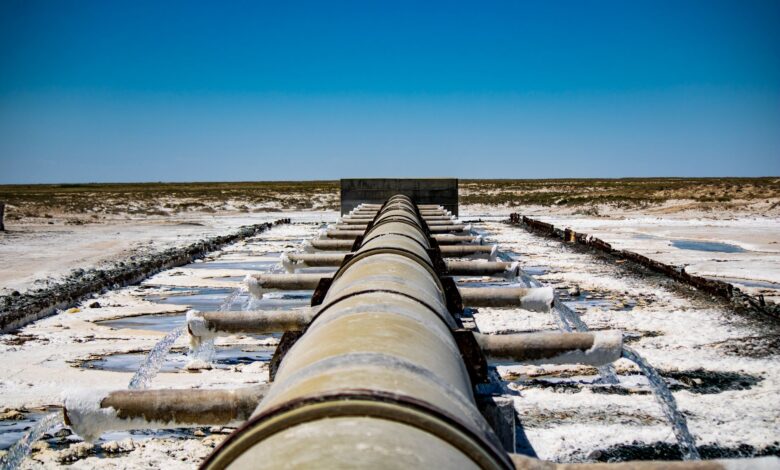
University endowments and foundation portfolios are moving into an asset class most retail investors have never heard of: the legal right-of-way strips that carbon dioxide pipelines must secure before construction can begin. These easements – narrow corridors of land access negotiated with property owners along proposed pipeline routes – are becoming a distinct investment category, separate from the pipelines themselves and from the carbon credits they eventually support. The asset is illiquid, obscure, and carries real regulatory risk. Institutional money is accumulating it anyway.
The logic runs like this: carbon capture infrastructure requires pipeline networks to move compressed CO2 from industrial emitters to sequestration sites. Before any pipe goes in the ground, developers must negotiate easements with potentially hundreds of individual landowners. Those agreements, once secured, represent a durable legal interest in the land corridor – one that retains value whether the original pipeline developer succeeds or fails, because any future project along that route starts from scratch without them. Endowments are buying into that structural position.
Why Endowments, and Why Now
Large endowments – the kind managing multi-billion-dollar pools for major research universities and private foundations – have long been comfortable with illiquid, long-duration assets. Timberland, farmland, private infrastructure equity: these are standard portfolio components for institutions that operate on 50-year time horizons and do not face the quarterly redemption pressure that shapes most fund behavior. Carbon pipeline easements fit naturally into that framework because their value is not tied to near-term cash flows but to long-term infrastructure necessity.
The policy environment also matters here. Federal investment in carbon capture infrastructure through recent climate legislation has increased the probability that large-scale CO2 pipeline networks actually get built in the United States over the next two decades. That legislative backdrop changes the risk calculus. An easement corridor that might have looked speculative five years ago now sits closer to the probable end of a government-backed infrastructure buildout. Endowment managers are positioning ahead of that construction cycle, not after it.
This is also a moment when endowments are under pressure to demonstrate climate alignment without sacrificing returns. Carbon pipeline easements offer a way to do both simultaneously – they support decarbonization infrastructure while generating returns through a genuine scarcity mechanism rather than through ESG marketing. A corridor that took three years to negotiate through disputed farmland in the Midwest cannot be replicated quickly, and that irreproducibility is where the investment value lives.

How the Easement Investment Actually Works
Endowments are not typically negotiating directly with Iowa corn farmers. The actual structure involves investment in private vehicles – often specialized infrastructure funds or real asset partnerships – that aggregate easement rights across large geographic corridors. These funds do the landowner negotiation work, handle title research, manage legal documentation, and then offer institutional investors a participation interest in the assembled portfolio. The endowment’s exposure is to the fund, not to any individual parcel.
The return profile looks different from most fixed income or equity positions. There is usually a small recurring payment tied to the easement agreement itself – landowners receive annual compensation, and a portion of that spread accrues to the fund – but the real return thesis is appreciation. If a pipeline corridor gets permitted and construction-ready, the assembled easement package becomes a prerequisite asset that the developer or its financing partners effectively must acquire or license. That negotiating position, built on years of patient land work, is where the capital gain sits.
Regulatory risk is the most legitimate concern with this asset class. Carbon pipeline projects face opposition from landowners who reject eminent domain use by private carbon companies, from environmental groups skeptical of sequestration permanence, and from state regulators who have moved to restrict pipeline routing in certain agricultural zones. A fund holding easements in a corridor that never gets permitted holds paper with limited alternative value – the land access right exists, but without a viable pipeline application, monetization pathways narrow considerably. Endowments entering this space are betting that regulatory resistance gets resolved over a multi-decade window, which is a reasonable institutional bet but not a certain one.
There is also a secondary market beginning to form. As more institutional capital chases assembled easement corridors, early-mover funds that completed their negotiation work two or three years ago now have buyers willing to pay a premium for the certainty of pre-assembled rights. This secondary activity is still thin – most transactions happen bilaterally rather than through any organized exchange – but it signals that the asset class is developing the liquidity infrastructure that makes broader institutional participation possible over time. This trajectory mirrors what happened with pension fund accumulation in hydrogen pipeline easements, where secondary market formation followed initial institutional entry by roughly two to three years.
The Concentration Risk Nobody Is Talking About
The geography of carbon sequestration creates a structural concentration problem that has not received enough attention. Viable geologic storage formations in the United States are not evenly distributed – they cluster in specific basins, primarily in parts of the Gulf Coast region, the Illinois Basin, and select areas of the Northern Plains. Pipeline corridors to reach those formations must pass through particular states and land types, which means easement funds are not diversified across the country. They are concentrated along a handful of high-probability routes, and adverse regulatory action in any one state can impair the value of the entire fund.
North Dakota’s legislative moves to restrict CO2 pipeline routing on certain agricultural land and ongoing permitting disputes in Illinois have already demonstrated that state-level politics can freeze corridor development for years. Endowments holding positions through 2023 and 2024 vintage funds already have exposure to that timeline uncertainty. The question is whether the financial model that justified the position – patient capital, long horizon, regulatory resolution over decades – holds up when state-level opposition proves more durable than initially modeled.
What makes the asset genuinely interesting, despite those risks, is that the problem it solves does not go away. Carbon dioxide from cement plants, steel production, and ethanol facilities continues to accumulate, and the industrial sectors producing it have limited decarbonization alternatives beyond capture and sequestration. The infrastructure requirement is real, the timeline is long, and the land rights are finite. An endowment that secured corridor positions in 2022 and can wait until 2035 is playing a different game than any developer trying to move a specific project through a specific permit cycle. That patience is the actual edge – and whether it pays off depends entirely on which states decide that carbon pipelines are infrastructure worth approving.