

A Quiet Pivot Toward Port Infrastructure Debt
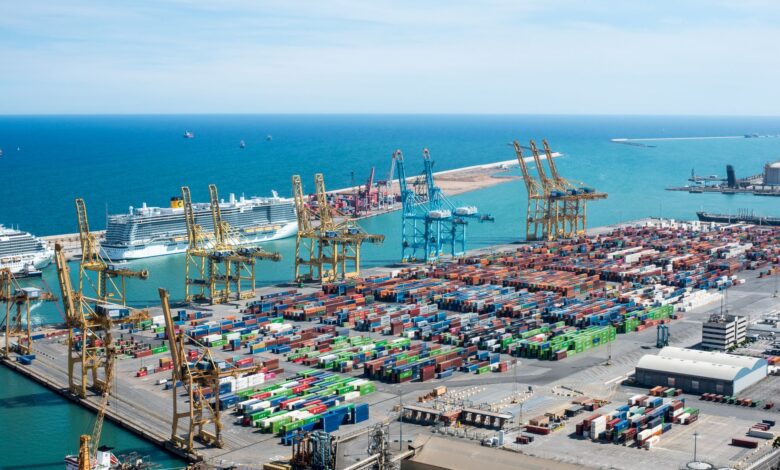
University endowments and charitable foundations have long held municipal bonds as a conservative counterweight to equities and alternative assets. What has changed over the past several years is which municipal bonds they are choosing. Seaport dredging revenue bonds – debt instruments issued by port authorities to finance the deepening and maintenance of shipping channels – are drawing sustained attention from institutional allocators who once treated them as niche paper better left to regional banks and insurance companies.
The logic is straightforward. Dredging projects generate fee-based revenue tied to vessel tonnage, berth usage, and cargo throughput. Those revenue streams are contractually structured, often backed by long-term shipping agreements, and insulated from the kind of political budget cycles that make general obligation bonds feel less predictable in tightening fiscal environments. For endowments managing billion-dollar portfolios with 30-year time horizons, that structure is genuinely attractive.
Why Dredging Bonds Appeal to Long-Term Institutional Capital
Most port authorities finance major dredging operations through project-specific revenue bonds rather than folding the cost into general capital programs. This separation matters to investors. When a bond’s repayment depends on a specific fee schedule tied to actual port usage rather than on a municipality’s general tax base, the credit story becomes more transparent and the cash flow more predictable. Endowments, which must generate annual distributions of roughly five percent while preserving principal, are drawn to assets that pay reliably without requiring constant tactical management.
Dredging itself is also a federally intertwined activity in the United States. The Army Corps of Engineers sets depth standards for federally maintained channels, and when ports issue revenue bonds to fund their share of deepening projects, those bonds often carry implicit policy support – not a guarantee, but a durable alignment of interests between the issuer and federal infrastructure priorities. That alignment reduces the likelihood of project abandonment mid-cycle, which is a real concern with purely private infrastructure debt. The Harbor Maintenance Trust Fund adds another layer of structural support, ensuring federal cost-sharing remains a standing feature of major port projects rather than a discretionary budget line.
The Allocation Mechanics: How Endowments Are Building Positions
Endowments rarely buy individual municipal bonds directly on the open market, particularly in specialty sectors with thin secondary liquidity. The more common path runs through separately managed accounts with fixed-income managers who specialize in infrastructure-adjacent municipal debt. A portfolio manager at a large endowment will set parameters – minimum credit rating, revenue coverage ratios, geographic diversification requirements – and delegate the actual bond selection to a specialist. This keeps the endowment’s internal team from needing deep expertise in port operations while still capturing the yield premium that dredging bonds carry over plain-vanilla muni paper.
The yield premium is real, though it varies. Dredging revenue bonds typically price wider than comparably rated general obligation bonds from the same state because they are less understood by the retail buyer base that dominates most of the municipal market. Institutional buyers who do the credit work benefit from that mispricing without taking on fundamentally worse credit risk.
Some endowments are also accessing this space through infrastructure-focused closed-end funds and interval funds that hold a mix of revenue bond types – toll roads, airport passenger facility charge bonds, seaport debt. This blended approach allows a smaller endowment, say a $500 million university fund, to hold dredging bond exposure without concentrating too much capital in a single port authority’s obligations. It also provides slightly better liquidity than holding individual bonds, since the fund structure creates periodic redemption windows even when the underlying bonds are thinly traded.
The appetite for port-related infrastructure debt broadly is not isolated to dredging bonds. Hedge funds have been accumulating stakes in freight rail royalty trusts along similar reasoning – toll-like revenue structures tied to physical cargo movement rather than economic sentiment. Endowments are arriving at a parallel conclusion through a different instrument class.

Credit Considerations That Make or Break the Trade
Not all seaport dredging bonds are alike, and the credit differentiation is significant. A bond issued by a major containerized cargo hub on the East Coast with a diversified shipping customer base and a 20-year take-or-pay agreement from a global logistics company sits in a completely different risk category than a bond issued by a regional Gulf Coast port dependent on a single commodity type. Endowment managers doing real credit work focus on revenue coverage ratios – how many times does the projected annual port fee income cover the annual debt service – and on the concentration of the top three or four tenants in the port’s cargo mix.
Weather and climate exposure also enters the analysis in ways it did not a decade ago. Ports in low-lying coastal areas face long-term questions about channel maintenance costs, storm surge risk, and the cost of hardening infrastructure. A dredging bond with a 30-year maturity issued by a port in a high-risk flood zone forces a genuine conversation about whether the revenue projections hold through the bond’s full life. Some endowments are explicitly screening for climate vulnerability as part of their due diligence, while others treat it as a pricing factor rather than an exclusion criterion.
Volume, Ratings, and Market Dynamics
The seaport revenue bond market is not enormous by municipal finance standards. Total outstanding debt across all U.S. port authorities amounts to a fraction of the general obligation bond market, and the subset specifically tied to dredging projects is smaller still. That scarcity creates a supply constraint that actually works in buyers’ favor on secondary market pricing – when a large new dredging bond deal prices, institutional demand often exceeds available supply, and bonds trade at a premium shortly after issuance.
Credit ratings on dredging revenue bonds tend to cluster in the A-range from major rating agencies, occasionally reaching AA for the largest and most diversified port authorities. That puts them firmly within investment-grade territory acceptable to most endowment investment policy statements, which typically prohibit or strictly cap below-investment-grade exposure in fixed income. The ratings also make these bonds eligible for inclusion in standard infrastructure bond indices, which increases their visibility to the separately managed account managers endowments rely on.
New issuance in this space has been driven partly by the federal infrastructure legislation passed in recent years, which unlocked federal cost-sharing for a wave of port deepening projects that had been in planning stages for a decade. Port authorities moving forward on those projects need to issue their share of project financing, and revenue bonds are the primary tool. That pipeline of new issuance gives endowments a consistent flow of primary market opportunities rather than forcing them to hunt exclusively in a thin secondary market – and it keeps competition from squeezing the yield advantage entirely out of the asset class before most allocators have even noticed it.