

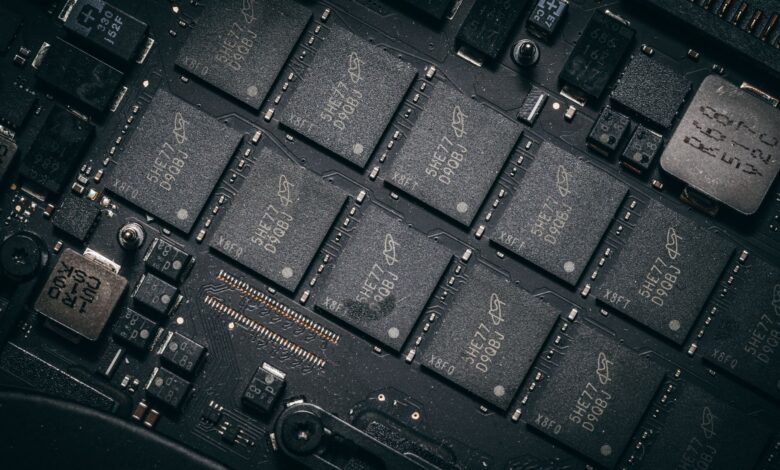
A Quiet Turn in Endowment Strategy
Semiconductor royalty trusts occupy a narrow but durable corner of the investment universe – structures that collect licensing fees on chip intellectual property rather than manufacturing anything themselves. For most of their existence, these instruments attracted retail income investors drawn to their distributions and largely stayed off the radar of institutional allocators. That is beginning to change. A growing number of university endowments and foundation investment offices are carving out explicit positions in semiconductor royalty trusts as part of broader efforts to access technology exposure without the volatility of publicly traded chip equities.
The logic is straightforward: royalty trusts generate cash flows tied to licensing agreements rather than quarterly earnings, which makes them behave more like fixed-income instruments than growth stocks. For endowments managing perpetual pools of capital, that combination of technology sector exposure and predictable distribution schedules is genuinely attractive. The shift is quiet – most endowments do not publicize granular allocation changes below the asset class level – but the pattern is visible enough in secondary market activity and trust volume data to be worth examining closely.

Why Royalties Fit the Endowment Model
Endowments operate under a specific set of constraints that differ from pension funds or sovereign wealth vehicles. They need to generate a reliable annual distribution – typically around five percent of assets under management – to fund university operations, scholarships, and research programs. This spending requirement means endowments cannot afford to hold assets that may appreciate handsomely over a decade but produce no current income. Semiconductor royalty trusts solve that problem by converting intellectual property value into a stream of periodic payments, something pure chip equity almost never does at any meaningful yield.
There is also a duration argument. Semiconductor IP portfolios tied to foundational process nodes or memory interface standards tend to have long contractual tails – licensing agreements that run for years or even decades. That duration profile aligns better with an endowment’s perpetual time horizon than a typical technology company whose competitive position can erode within a single product cycle. When an endowment allocates to a royalty trust backed by patents on widely adopted chip architectures, it is essentially purchasing a long-dated annuity on the adoption rate of that technology – a very different bet from owning the stock of the company that manufactures those chips.
The Mechanics Behind the Appeal
Royalty trusts in the semiconductor space generally work by holding a defined pool of intellectual property – process patents, interface standards, memory architecture licenses – and distributing the income generated when chip manufacturers pay to use those assets. The trust itself does not develop new IP; it monetizes what already exists. This structure creates a natural ceiling on upside but also a meaningful floor on cash generation, assuming the underlying technology remains in production use.
That floor is what endowment CIOs find most useful. In a rate environment where traditional fixed-income instruments compete on yield, a royalty trust backed by IP embedded in current-generation chips can offer distribution rates that exceed what comparably rated corporate bonds provide, with the added benefit of indirect exposure to semiconductor volume growth. When chip production scales up – whether driven by AI hardware buildout, automotive electrification, or consumer device refresh cycles – royalty trusts collecting per-unit or revenue-linked licensing fees benefit proportionally.
The tax treatment also matters for certain endowments, particularly those with specific pass-through income requirements or international pooling structures. Royalty trust distributions often carry a return-of-capital component that reduces current taxable income, which can help endowments managing their unrelated business taxable income exposure. This is a technical but meaningful advantage when stacking multiple alternative income sources inside a single endowment portfolio.
Endowments have spent the past decade expanding into private credit, infrastructure debt, and real asset royalties – particularly in energy and music IP. Semiconductor royalties represent a natural extension of that pattern. The underlying logic is the same: find a cash-flowing, asset-backed structure that behaves differently from public equity and provides yield without requiring a credit judgment on a single corporate borrower.

Where This Fits in the Broader Allocation Picture
Most endowments approaching semiconductor royalty trusts are not treating them as a standalone sleeve. Instead, they are being folded into existing real assets or alternative income buckets, alongside positions in midstream energy infrastructure debt and other yield-oriented alternatives. The portfolio construction rationale is correlation management: royalty trust returns have historically shown low correlation to both broad equity and traditional fixed income, which makes them a useful diversifier when rebalancing a large pool against a five-percent spending target.
The sizing being discussed in institutional circles is modest – typically one to three percent of total endowment assets. At that scale, the position does not meaningfully move the needle on total return, but it does contribute to income without adding the kind of drawdown risk that technology equity carries through a cycle downturn. That risk asymmetry is exactly what endowment investment committees tend to approve most readily.
Risks That Do Not Disappear
Royalty trusts are not immune to disruption. The core risk is technological obsolescence – if the chip architecture or process standard underlying a trust’s IP portfolio is displaced by a successor technology, licensing revenues can decline steeply over a relatively short window. Memory interface patents from ten years ago are worth considerably less today than they were at peak adoption, and endowments that entered late in a licensing cycle have absorbed those declines directly in their distributions.
There is also the question of trust structure itself. Most royalty trusts are finite vehicles – they do not reinvest or develop new IP, so they are by definition depleting assets. Endowment allocators who treat these instruments like perpetual income vehicles without modeling terminal value carefully are taking on a duration risk that does not show up in short-term yield screens. The distribution looks attractive until the IP pool thins out and the payments compress faster than the initial underwriting assumed.

Counterparty concentration adds another layer of risk. Many semiconductor royalty trusts derive the bulk of their licensing revenue from a small number of large chip manufacturers. If one of those manufacturers renegotiates its licensing terms, restructures its IP strategy, or litigates the validity of the underlying patents, the trust’s cash flow profile can shift abruptly. For endowments accustomed to the diversified cash flow streams of infrastructure funds or private credit vehicles, that concentration can feel uncomfortable – and it rarely becomes fully apparent until the first amendment to a licensing agreement hits the trust’s quarterly disclosure.