

The Quiet Accumulation Beneath the Surface
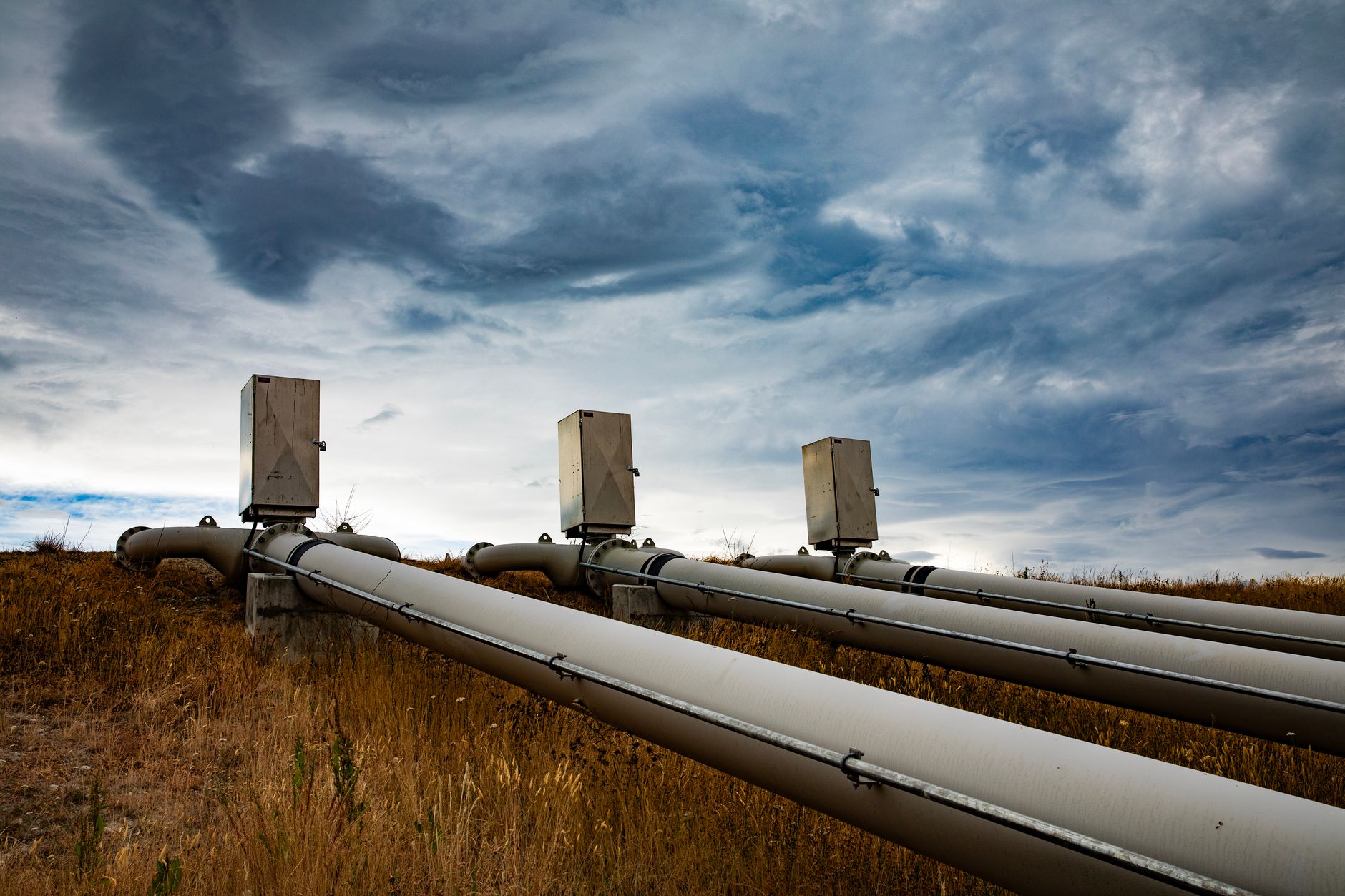
Pipeline easement royalties have existed for decades as a niche corner of real asset investing – payments made to landowners in exchange for the right to run oil, gas, or utility infrastructure across private property. For most of that time, these rights sat in the hands of farmers, ranchers, and inherited estates, treated as passive income rather than investable assets. That is changing. A growing number of hedge funds are quietly buying up these easement royalty streams, assembling portfolios of recurring payments that behave more like infrastructure annuities than traditional energy investments.
The appeal is structural. Easement royalties are not tied to commodity price swings the way a working interest in a well is. The pipeline operator pays the landowner – or whoever now holds the easement right – simply for access to the corridor, often on an inflation-linked or fixed-escalation schedule. As long as the pipeline runs, the payments come in. Hedge funds looking for yield that does not correlate with public markets have started recognizing what this means: a fragmented, illiquid asset class with steady cash flow and minimal competition from institutional buyers who prefer larger, more visible deals.
Why Easement Rights Attract Sophisticated Capital Now
The timing of this accumulation is not random. Two forces have converged to make pipeline easement royalties more interesting to hedge funds right now. First, energy infrastructure buildout continues across the United States regardless of broader energy transition debates – natural gas pipelines, carbon capture lines, and utility corridors are all expanding or being extended, creating new easement agreements regularly. Second, many original landowners or their heirs are aging, facing estate situations, or simply looking for lump-sum liquidity rather than decades of small annual checks. That supply of motivated sellers creates a buyer’s market for aggregators with patient capital.
The fragmentation of this market is both a problem and an opportunity. A single easement across a 500-acre ranch might generate a few thousand dollars per year. That is not a hedge fund-scale investment on its own. The strategy requires aggregation – building a large enough portfolio of easements, across multiple pipeline systems and geographies, to generate meaningful yield. Some funds have started doing exactly this, partnering with landowner consultants and title search firms to identify easements, approach holders, and close purchases quietly before the strategy becomes widely known.
Valuation remains genuinely tricky. Unlike a mineral royalty tied to production volume, a pipeline easement payment is often a flat annual fee or a small per-unit tariff. Capitalizing that stream requires assumptions about pipeline longevity, operator creditworthiness, and whether the easement agreement itself allows for assignment or transfer. Many older easement documents were drafted without assignment clauses in mind, requiring legal review and sometimes renegotiation. Funds that have built the infrastructure to handle that legal complexity at scale have a durable edge over casual buyers.
The credit quality of the underlying payer matters enormously. An easement payment backed by a major midstream operator with investment-grade debt is a very different asset from one tied to a smaller regional pipeline company operating on thin margins. Funds are spending significant time underwriting the counterparty risk embedded in these royalties, which is a step most individual landowners never thought to take when they originally signed the agreements. This asymmetry of analysis creates exactly the kind of mispricing that attracts hedge fund capital in the first place.

How the Cash Flow Profile Compares to Other Real Asset Royalties
Pipeline easement royalties sit in an interesting position relative to other royalty categories. Mineral royalties fluctuate with production and commodity prices. Copper royalty streams carry exposure to industrial demand cycles. Easement royalties, by contrast, are closer to pure access fees – the pipeline either runs through the property or it does not, and the payment schedule is typically defined by the contract rather than market conditions. This makes them behave more like a long-duration bond with a property rights wrapper than a resource extraction bet.
Duration is the defining characteristic. A pipeline easement can run for 25, 50, or even 99 years – occasionally in perpetuity. For a hedge fund building a portfolio with a 10-year holding horizon, the question is less about the full contract life and more about the value of a secure, predictable cash stream for the period they intend to hold. Secondary market liquidity for these rights, while thin today, is growing as more institutional buyers enter the space. That trajectory matters for exit strategy.
The Infrastructure Angle Most Investors Miss
There is a dimension to easement royalties that goes beyond the yield calculation. The physical corridor itself – the strip of land over which the pipeline runs – carries optionality that most buyers ignore. As infrastructure needs evolve, those same corridors can sometimes be used for fiber optic lines, utility conduits, or carbon capture pipelines. A fund that holds the easement royalty, and negotiated broad rights language in the transfer documents, may be positioned to capture additional payment streams from future uses of the same corridor. That embedded optionality is rarely priced into the purchase.
This point matters more in certain geographies than others. Easements crossing land near growing data center corridors, industrial zones, or renewable energy build-out areas carry more future-use optionality than those running through remote agricultural land. Funds that are mapping easement acquisitions against infrastructure development forecasts are approaching this as a multi-decade asset thesis, not just a yield trade. The immediate cash flow justifies the purchase price. The optionality is, in some cases, free.
There is also a regulatory angle worth tracking. Federal and state rules governing pipeline easement transfers are inconsistent and, in some cases, outdated. Several state legislatures have introduced bills that would require additional landowner disclosures when easement rights are sold to third-party financial buyers – a response to concerns that rural landowners are not fully aware of what they are selling. If such regulations pass, they could slow the accumulation strategy by adding compliance layers and cooling seller motivation. Funds currently building positions are aware of this risk.

The Exit Question
Hedge funds are not natural long-term holders of illiquid real asset royalties. Their investment model depends on being able to return capital to investors within a defined window. The exit strategy for pipeline easement royalty portfolios is still being written in real time. One path is sale to infrastructure-focused private equity firms or real asset funds that manage longer-duration capital. Another is aggregation to a scale where the portfolio could support a securitization structure – turning bundled easement cash flows into rated instruments for fixed income buyers.
Securitization of easement royalties would require standardization of documentation, consistent title insurance, and reliable counterparty data – none of which exist uniformly in this market today. The funds doing early aggregation work are, knowingly or not, building the infrastructure that would make securitization possible. That is not an accident. Creating the conditions for a future liquid market in an asset you bought at illiquidity discounts is a well-worn playbook in alternative investing.
What remains unresolved is whether the pipeline infrastructure underlying these easements will face increasing stranded asset risk as energy transition accelerates in specific corridors and regions. A fund holding an easement on a pipeline that gets decommissioned early does not simply see reduced cash flow – it may face legal questions about what happens to easement payments when the original use case disappears. That clause is buried somewhere in decades-old property agreements, and not every fund has read them carefully enough to know what it says.
Frequently Asked Questions
What are pipeline easement royalties?
They are recurring payments made to landowners – or whoever holds the easement right – in exchange for allowing a pipeline to cross their property, typically on a fixed or inflation-linked schedule.
Why are hedge funds interested in pipeline easement royalties now?
The combination of motivated sellers, fragmented ownership, low institutional competition, and predictable long-duration cash flows makes these assets attractive for funds seeking non-correlated yield.