The Underground Bet Pension Managers Are Making
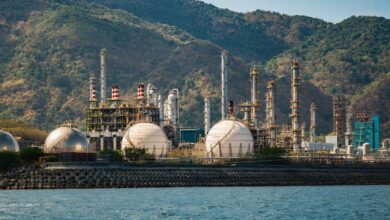
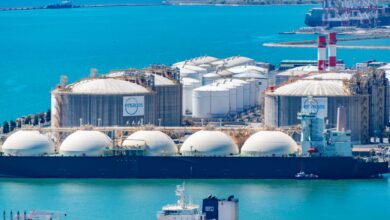
Propane storage caverns sit thousands of feet underground, carved into salt formations across the American Gulf Coast and Midwest. They hold liquefied petroleum gas under pressure, release it when demand spikes, and generate lease income that rarely makes headlines. That quiet profile is exactly what has drawn a growing number of pension funds to acquire minority stakes in the long-term lease agreements tied to these facilities – deals that look nothing like traditional infrastructure investments but behave with similar predictability.
The appeal is straightforward. Propane storage cavern leases carry multi-decade terms, often 20 to 40 years, with escalation clauses tied to inflation indices. Operators pay lease fees regardless of commodity price fluctuations because the underlying obligation is physical storage capacity, not the value of propane itself. For pension managers under pressure to match long-duration liabilities with long-duration assets, this structure hits several criteria at once without requiring direct ownership of the physical asset.

Why Salt Caverns Specifically
Not all propane storage is created equal. Above-ground tank farms and refrigerated bullet tanks exist across the country, but salt cavern storage offers a different economic profile. Caverns drilled into natural salt domes or created through solution mining can hold millions of barrels of product, can be pressurized and depressurized rapidly to respond to seasonal demand swings, and are geologically stable over long periods. This makes them genuinely difficult to replicate – a new salt cavern facility requires specific geology, permitting, and capital investment that typically spans a decade from planning to operation.
That scarcity factor is what makes the lease rights attached to these facilities attractive to institutional capital. When a pension fund acquires a stake in a cavern lease, it is not buying propane or betting on natural gas prices. It is buying a contractual right to income generated by physical infrastructure that the broader economy cannot easily bypass. Propane heats roughly 10 million American homes and is a critical fuel source for agricultural operations across the Midwest. Demand does not vanish in a downturn; it shifts timing slightly but remains durable.
The Lease Structure Behind the Strategy
Understanding why pension funds are interested requires understanding how these leases actually pay out. A typical salt cavern storage lease involves an operator – usually an energy logistics company or a midstream firm – paying annual or quarterly fees to the landowner or lease holder for the right to maintain and operate the underground facility. The fee structure often includes a base payment, a throughput component tied to volumes moved in and out of storage, and an escalator clause. Pension funds are acquiring partial interests in the lease receivable stream, not operational control.
This distinction matters. Pension funds are not becoming energy operators. They are functioning more like landlords holding a royalty-adjacent position, collecting income without managing the facility. The operational risk stays with the midstream company. The pension fund absorbs the credit risk of the operator and the lease counterparty, which in many cases is an investment-grade energy firm with decades of operating history.
The transaction structures used to transfer these interests have grown more standardized over the past several years. Special purpose vehicles are commonly used to isolate the lease interest, and some transactions have incorporated rated debt tranches that allow pension funds to invest at a specific risk level within the capital stack. This sophistication signals that enough deals have been done to develop repeatable legal and financial architecture around what was, not long ago, a bespoke transaction type.
For funds that have already been building exposure to related infrastructure income streams – pension funds quietly building exposure to liquid asphalt royalty streams represent a parallel playbook – propane storage leases are a natural extension of the same logic. Long-dated, inflation-linked, tied to physical infrastructure with genuine replacement barriers.
Geographic Concentration and Risk Concentration
The bulk of commercially significant salt cavern storage in the United States is concentrated in a handful of states – Louisiana, Texas, Kansas, and to a lesser extent Mississippi and Oklahoma. This geographic concentration creates a risk profile that pension fund investment committees have had to grapple with carefully. A single hurricane or flooding event along the Gulf Coast can affect operational access to multiple facilities simultaneously.
Most pension funds entering this space are acquiring stakes in geographically diversified portfolios of cavern leases rather than a single facility. Aggregator platforms have emerged that bundle lease interests across multiple states and multiple operators, giving institutional investors a more spread-out exposure. This also allows smaller pension funds to participate at ticket sizes that would be impractical for a single-asset deal.
Valuation, Liquidity, and the Catch That Doesn’t Go Away
The primary structural drawback is liquidity. Propane storage cavern lease interests do not trade on any exchange. There is no secondary market in any meaningful sense. A pension fund that acquires a stake in 2025 will likely hold that position for the full term of the lease or find a private buyer through a bilateral negotiation. For funds with stable liability profiles and long time horizons, this is acceptable. For funds facing demographic shifts that will increase near-term benefit payments, illiquid alternatives carry real cost.
Valuation is the secondary challenge. Without market prices, these interests are valued through discounted cash flow models using assumed discount rates, operator creditworthiness assessments, and assumptions about escalation clause performance. Different valuers applying different assumptions to the same cash flow stream can produce meaningfully different marks. This is not unique to propane storage – it applies across private infrastructure broadly – but it has regulatory implications as pension funds face increasing scrutiny over how they value illiquid holdings.
The carry looks attractive relative to investment-grade corporate bonds. Internal rate of return projections on these lease positions typically reflect a meaningful premium over comparable-duration public fixed income, which is what justifies the illiquidity premium in the first place. But that premium compresses when discount rates on public markets rise – something pension fund allocators learned the hard way across the broader private infrastructure space during the rate cycle that began in 2022.

What Draws Capital Here Now
The timing of this accumulation is not accidental. Pension funds that struggled to source long-duration, inflation-linked assets during the low-rate era built up a muscle for finding them in unconventional places. Propane storage cavern leases fit the profile almost precisely: long-dated, inflation-escalating, tied to essential infrastructure, not correlated to equity markets, and sourced through private channels that limit competition from retail investors. The market for these interests remains thin enough that institutional buyers are not bidding against one another at scale, which preserves the return premium.
There is also a supply dynamic working in institutional buyers’ favor. Some of the families and private entities that originally held these lease interests have held them for generations. Estate planning pressures, changing family circumstances, and the increasing complexity of managing long-term energy infrastructure positions are motivating some of these original holders to monetize. Pension funds, with their patient capital and willingness to structure bespoke transactions, are positioned to absorb that supply in ways that public market buyers simply cannot. The question is whether the volume of available interests can scale fast enough to absorb the institutional appetite that has developed around it.