


The Quiet Land Grab Reshaping Institutional Portfolios
University endowments and large nonprofit foundations have spent the past several years moving capital into an asset class most retail investors rarely encounter: timber cutting rights. These are not equity stakes in lumber companies or timber REITs traded on public exchanges. They are direct positions in the legal rights to harvest trees from specific tracts of land, often structured as long-term leases or deed-restricted agreements with landowners, timberland investment management organizations, or state forestry agencies. The contracts are obscure, illiquid, and deeply unglamorous – which is precisely why institutional capital finds them attractive.
The accumulation has been gradual enough to avoid public attention, but the volume of capital moving into this space has grown noticeably over recent years. Endowments managing assets in the multi-billion dollar range have been building these positions as part of broader real asset allocations, sitting alongside farmland, infrastructure, and natural resource royalties. The common thread is that all of these holdings generate returns that are loosely tied to inflation, produce income outside of public market cycles, and carry low correlation to equities. Timber cutting rights check every one of those boxes, and then add a biological growth premium on top.

Why Cutting Rights, Not Land Ownership
The distinction between owning timberland outright and holding cutting rights matters enormously for how these positions behave financially. A cutting rights agreement gives the holder the legal authority to harvest timber from a defined parcel over a set period – sometimes decades – without requiring full ownership of the underlying land. This structure dramatically lowers the capital required to enter a position while preserving most of the economic upside from timber harvesting. Endowments can gain exposure to timber price movements and biological growth without carrying the full balance sheet weight of land acquisition.
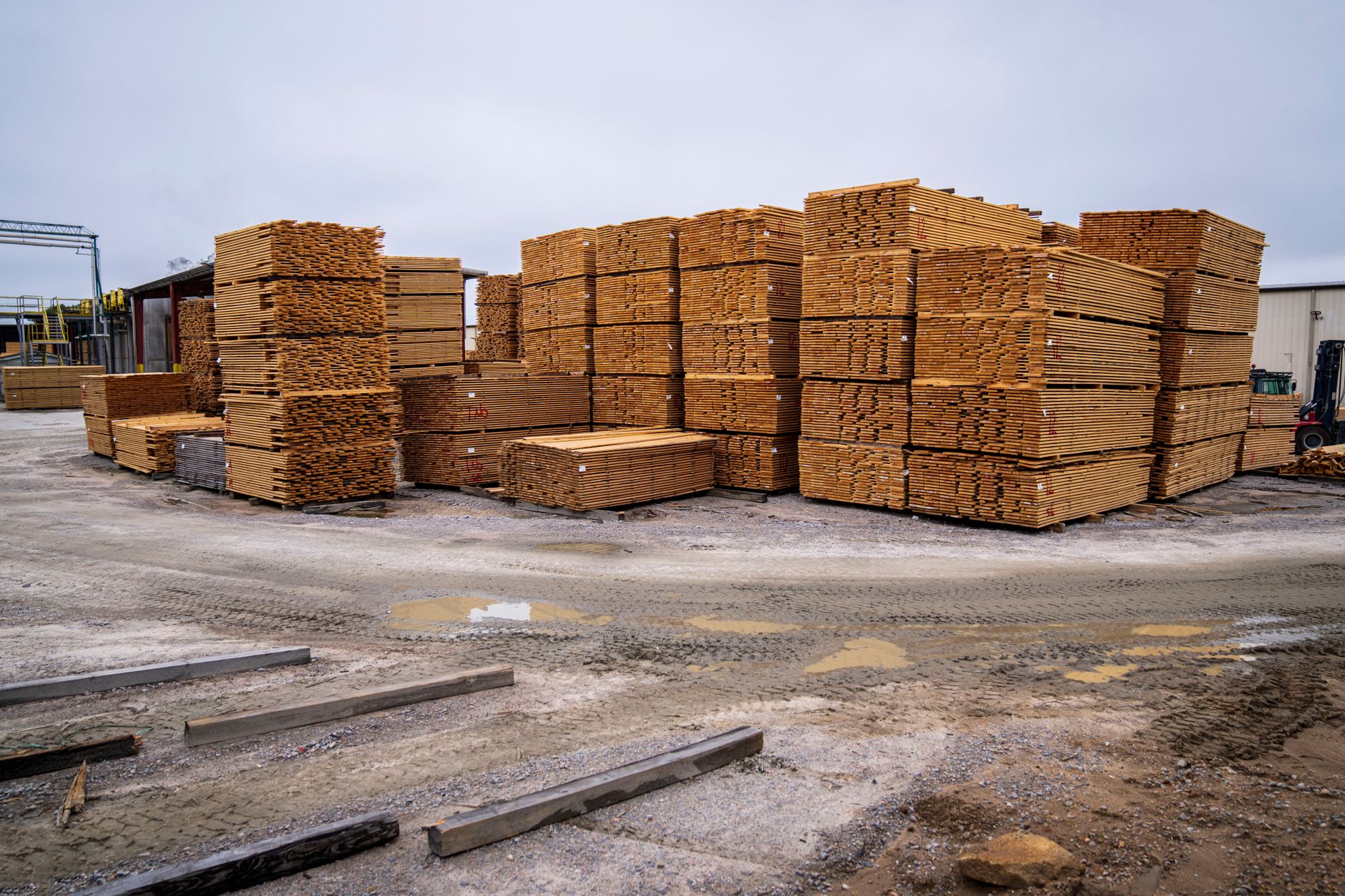
There is also a flexibility argument. Cutting rights can be structured with harvest schedules that allow the holder to time cuts strategically, banking on price cycles or waiting out soft lumber markets without penalty. When lumber prices are depressed, a rights holder can simply defer harvesting – the trees keep growing, increasing in both volume and value. This optionality is genuinely rare in fixed-income or even most real asset markets. The trees, in effect, act as a living inventory that self-appreciates while the holder waits for better pricing conditions.
The Return Profile That Endowments Actually Want
Endowments operate under a specific constraint that shapes every allocation decision: they must generate enough annual return to fund university operations and scholarships while preserving real capital in perpetuity. This requires outperforming inflation consistently over long time horizons – not in any single year, but across decades. Timber cutting rights are well-suited to this mandate because the return has two independent engines running simultaneously.
The first is biological growth. Trees do not stop growing when equity markets fall. A Douglas fir stand adds volume whether the S&P is up or down. For endowments with 30-year investment horizons, this kind of return that simply accumulates independent of market sentiment is genuinely valuable. The second engine is commodity price exposure. Lumber demand is tied to housing construction, renovation activity, and wood products manufacturing – sectors that move on their own cycle, not necessarily correlated with financial markets in the short run.
Beyond the dual return drivers, these positions carry a carbon credit optionality that endowments are increasingly factoring into their valuation models. A rights holder who defers harvesting can potentially generate certified carbon credits by leaving trees standing longer than a baseline harvest schedule would require. This creates a secondary income stream that did not exist for previous generations of timberland investors. Some endowments are structuring their positions specifically to capture this optionality, treating it as a hedge on future carbon pricing rather than a core return expectation.
The liquidity profile is a genuine trade-off. These positions are not easily sold mid-term, and secondary markets for cutting rights agreements remain thin. Endowments accept this because their liability structure – funding operations on a rolling annual basis from a much larger pool – means they do not need to exit positions on short notice. The illiquidity premium they capture is, in their view, compensation for a risk they are structurally positioned to absorb better than almost any other class of investor.
How These Positions Get Structured
Most endowments do not negotiate cutting rights agreements directly with landowners. Instead, they invest through specialized timberland investment management organizations, known in the industry as TIMOs, which pool capital, source agreements, manage harvest operations, and handle the legal and regulatory complexity. The endowment’s relationship is typically with the TIMO fund, not directly with the underlying land. This adds a layer of management fees but removes the operational burden of running what is, in practice, a forestry business.
Some larger endowments with sophisticated internal real asset teams have begun structuring co-investments alongside TIMO funds, taking direct stakes in specific parcels or cutting rights packages to reduce fee drag on their largest positions. This mirrors the co-investment strategies that endowments and sovereign wealth funds have long used in private equity – a trend worth noting given how sovereign wealth funds have applied similar co-investment logic to cobalt stream agreements and other long-dated commodity arrangements. The mechanics differ, but the portfolio logic is the same: take the fee savings on your biggest bets.

Regulatory and Environmental Friction Points
Accumulating cutting rights is not without complication. State forestry regulations vary significantly across regions, and harvest restrictions tied to endangered species habitat, watershed protection zones, or Indigenous land rights can materially affect when and how much timber a rights holder can actually cut. Endowments acquiring these positions through TIMOs are relying on due diligence processes to surface these restrictions before capital is committed, but regulatory environments do shift – sometimes mid-agreement.
Environmental advocacy groups have also begun scrutinizing institutional capital flows into timberland more closely. The argument from some conservation organizations is that financial investors optimizing for harvest timing and carbon credit generation are not the same as long-term stewards of forest ecosystems. Whether that friction translates into actual regulatory constraint depends heavily on jurisdiction, but it represents a political risk that endowments building larger positions in this space will need to monitor. A portfolio sized for a 30-year horizon can absorb a great deal – except the cancellation of the rights that underpin the entire investment.