
The Quiet Land Rush in Energy Storage
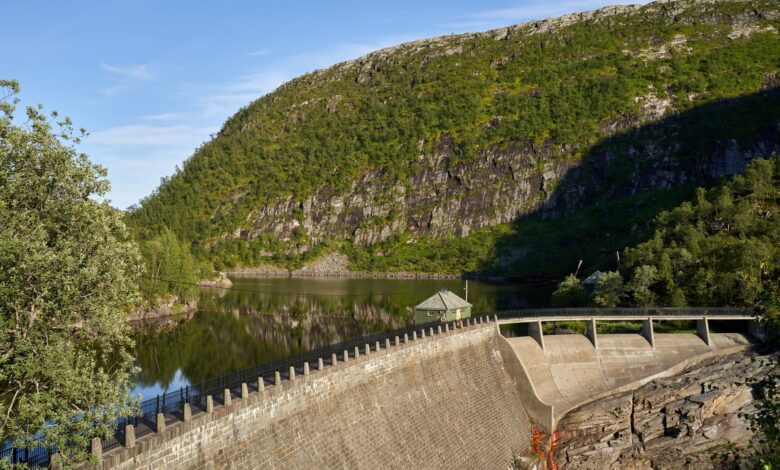
Pumped hydro storage – the practice of moving water uphill to store energy and releasing it downhill to generate power – is the oldest form of grid-scale energy storage in existence. It is also, quietly, becoming one of the more contested asset classes in private wealth management. Family offices managing generational capital are acquiring long-term lease positions on sites suitable for pumped hydro development, treating the underlying land rights less like infrastructure investment and more like mineral royalties: illiquid, patient, and potentially very valuable as electricity grid stress intensifies.
The mechanics are straightforward even if the timelines are not. A viable pumped hydro site requires significant elevation change, proximity to a water source, and grid interconnection access. Sites that meet all three criteria are geographically rare. Family offices are not building the plants – they are securing the ground under which future operators will need to build them, collecting lease income or option fees while waiting for the economics of storage to fully mature.
Why Leases and Not Equity
The distinction between owning a lease on a pumped hydro site and owning equity in a pumped hydro developer matters enormously from a risk management perspective. Developer equity carries construction risk, regulatory approval risk, financing risk, and operational risk. A lease, by contrast, pays regardless of whether the project ever breaks ground – the leaseholder collects option fees and, in developed projects, royalty-style payments tied to power output or wholesale electricity revenue. The downside is bounded. The upside scales with whatever the energy market does to the value of storage capacity over the next two or three decades.
Family offices are drawn to this structure partly because it fits their natural holding period. Institutional funds running on seven-to-ten-year cycles cannot comfortably sit on a site that may take fifteen years to fully develop and permit. A family office managing third-generation wealth has no such constraint. The lease sits on the balance sheet, generates modest cash flow from option payments, and appreciates quietly as grid operators grow more desperate for flexible storage assets. That patience is itself the competitive advantage.
This pattern has precedents in other extractive and energy royalty categories. The logic mirrors what some hedge funds have executed with crude oil royalty streams – acquire the underlying rights before developers crowd in, then collect structured payments over multi-decade horizons without bearing operational exposure. Pumped hydro leases apply the same framework to a storage asset rather than an extraction asset.
The Geographic and Regulatory Calculus
Not every mountain range qualifies. The western United States, parts of Scandinavia, mountainous regions of Australia, and select corridors in southern Africa hold the majority of identified sites that combine technical feasibility with existing transmission infrastructure nearby. Within those regions, families with existing agricultural landholdings or timber rights have sometimes found themselves in possession of sites they did not originally value for energy purposes. The reconceptualization of ranch land or forest tracts as potential energy storage sites is reshaping how some families think about entire inherited portfolios.
Permitting is the acknowledged complication. In the United States, Federal Energy Regulatory Commission licensing for pumped hydro is a notoriously slow process, with timelines measured in years and sometimes decades. That friction is both a deterrent and a moat. It discourages speculative retail capital while rewarding those with the staying power to outlast the approval process. Family offices that secure site leases early are effectively purchasing a queue position in a regulatory pipeline that cannot be shortened simply by throwing money at it.
Storage Economics and the Underlying Bet
The core thesis rests on what happens to grid storage value as renewable generation grows. Solar and wind generate power on nature’s schedule, not the grid’s. The more renewable capacity gets added to electricity systems, the larger the gap between when power is produced and when it is needed. Filling that gap requires storage at scales that battery technology, at current economics and material constraints, cannot fully address. Pumped hydro’s competitive position is not that it is new or exciting – it is that it is reliable, long-lived, and capable of storing far more energy than chemical battery systems at equivalent cost once you account for thirty-to-fifty-year asset lifespans.
A single large pumped hydro installation can store and discharge gigawatt-hours of electricity over daily cycles, functioning essentially as a giant rechargeable reservoir. The capital cost to build is substantial, but the operating cost once built is minimal, and the asset does not degrade the way lithium-ion batteries do over charging cycles. For lease holders, the argument is that any operator who controls a licensed, built pumped hydro facility will generate predictable, high-margin revenue from grid operators willing to pay for that stability – and a fraction of that revenue flows back up to the leaseholder under royalty-style provisions.
The structure also offers a quiet hedge against broader energy market volatility. When electricity spot prices spike – as they do during heat waves, cold snaps, or supply disruptions – storage assets that can dispatch on demand command premium compensation from grid operators. The lease economics, if structured with revenue participation rather than flat fixed payments, allow the leaseholder to participate in those spikes without managing any of the operational complexity that causes them. It is a passive position in a market that is anything but passive.

What makes this moment notable is the convergence of two separate pressures arriving simultaneously. Grid operators across North America, Europe, and Australia are publishing capacity need assessments that explicitly identify long-duration storage as a gap they cannot fill with current committed projects. At the same time, the universe of undeveloped but technically viable pumped hydro sites is not expanding – it is fixed by geography. Family offices reading both signals are moving before developers and utilities begin competing openly for the same sites. Once that competition becomes visible in the market, the quiet accumulation phase ends, and with it, the pricing advantage that comes from acting before consensus forms.