
The Quiet Pivot Into CO2 Infrastructure
Pension funds are not known for chasing novelty. They move slowly, favor long lease structures, and tend to avoid anything that still smells like a science project. Which is exactly what makes their growing interest in liquefied CO2 terminal leases worth watching. Across the infrastructure allocation space, a growing number of large institutional investors are adding exposure to CO2 liquefaction and storage terminal assets – not as a climate statement, but as a yield play wrapped in long-term contract structures.
The logic is straightforward: liquefied CO2 is already a commercial commodity with established industrial demand, and the terminal infrastructure that handles it bears more resemblance to a mid-stream energy asset than to any experimental green technology. For pension fund managers under pressure to generate stable, inflation-linked returns with minimal volatility, that combination is genuinely attractive.
What Makes a CO2 Terminal a Pension-Grade Asset
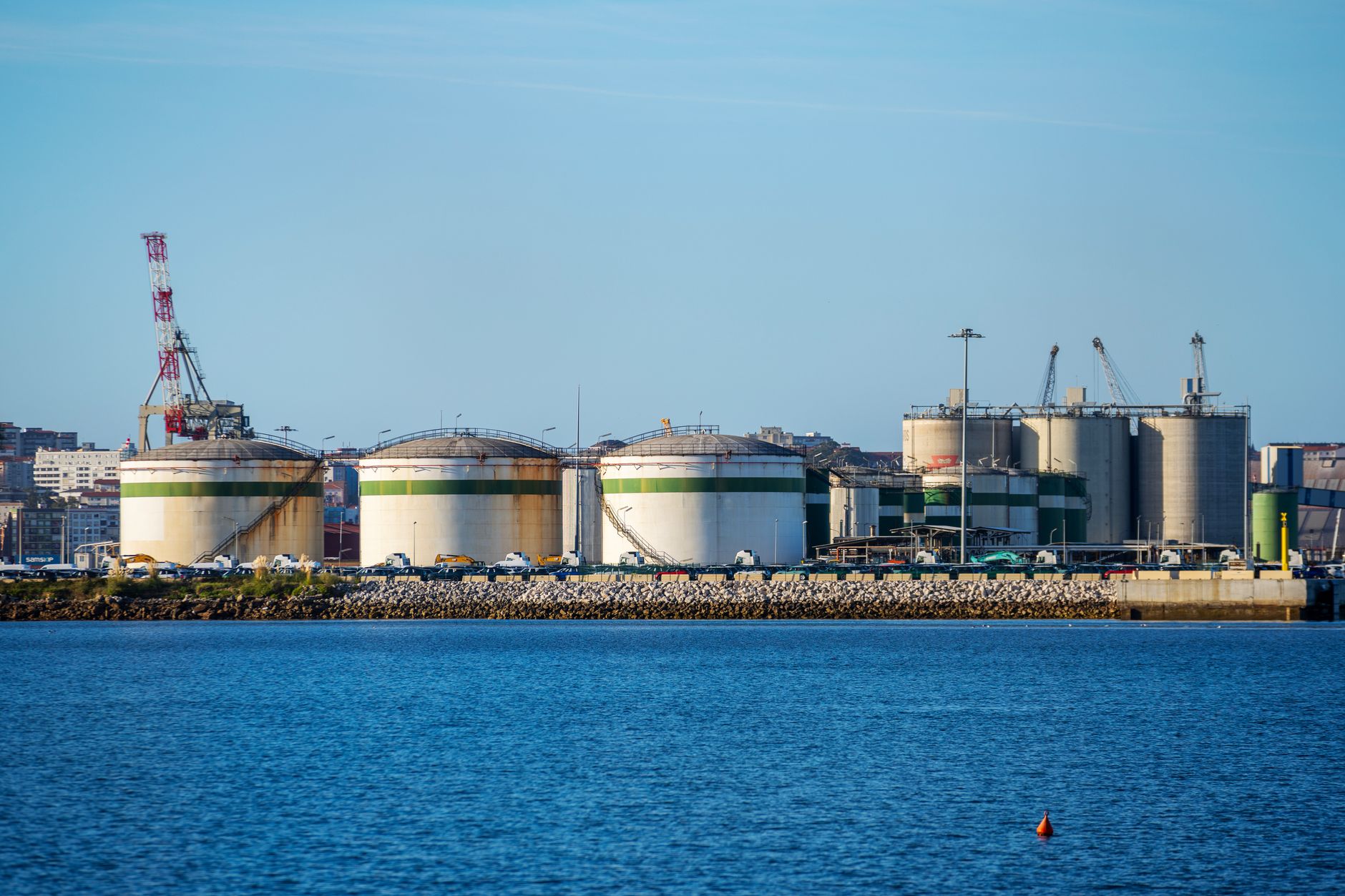
Liquefied CO2 terminals operate on take-or-pay lease agreements, where the counterparty commits to paying a fixed throughput fee regardless of whether they actually move product through the facility. That structure mirrors the contract architecture common in liquefied natural gas terminals, pipeline infrastructure, and bulk liquid storage – all of which have long histories as institutional-grade investment vehicles. The revenue is predictable, the contract duration is long (often 10 to 20 years), and the underlying demand comes from industries that are not going away: food and beverage carbonation, industrial cooling, medical applications, and fire suppression systems.
The carbon capture angle adds another dimension. As industrial operators in cement, steel, and chemical production begin building or contracting CO2 offtake arrangements under regulatory pressure or voluntary commitments, the demand for terminal infrastructure to liquefy, store, and transport that captured CO2 is growing. Pension capital is moving into position before that scaling happens – not out of idealism, but because early-mover positioning on infrastructure typically secures better lease rates and longer contract terms. This pattern is not unlike what institutional money did with asphalt terminal leases a decade ago, where long-ignored bulk liquid infrastructure quietly became a yield-generating staple in infrastructure portfolios.
The Industrial Demand Floor That Anchors the Trade
CO2 as an industrial commodity is often overlooked in financial coverage because it doesn’t trade on a major exchange and doesn’t generate headlines. But the market is real, consistent, and largely inelastic in its core segments. The food and beverage industry requires liquefied CO2 for carbonation, packaging, and cold chain logistics. Medical and pharmaceutical applications depend on it for cryogenic storage and certain manufacturing processes. Industrial fabrication, including metal cutting and welding, uses it in high volumes. These demand sources don’t disappear during economic downturns, which is precisely why they function as a floor under terminal utilization rates.
Terminal operators who lock in contracts with food producers, gas distributors, and industrial manufacturers are, in effect, selling a utility-like service. The lessee needs the throughput capacity, the lease terms prevent them from walking away cheaply, and the terminal owner collects fees that adjust for inflation under most modern contract structures. For a pension fund managing liabilities denominated in future dollars, inflation linkage in a long-duration asset is not a feature – it is a requirement.
The supply side of the CO2 market is also worth understanding. Most commercial CO2 is produced as a byproduct of ammonia synthesis, fermentation, and ethanol production. It is captured, purified, liquefied, and then distributed through a network of terminals and tanker trucks. This means the supply chain is already built, the handling infrastructure exists, and the market functions without subsidy. Pension capital is not betting on a technology that might work – it is buying into an asset class that is already operational.
Where the growth story enters is in the carbon capture and storage corridor. Governments in the United States, the United Kingdom, and across the EU are funding or mandating carbon capture projects at industrial facilities. The CO2 captured at those sites has to go somewhere. Liquefaction terminals are the first link in that transportation chain, and the facilities capable of receiving, storing, and redistributing captured CO2 at industrial scale are in limited supply relative to projected volumes. Building new terminal capacity takes years and significant capital – which means existing and near-term terminal infrastructure carries a scarcity premium.

How Pension Funds Are Gaining Exposure
Direct ownership of terminal infrastructure is one path, but it requires operational expertise that most pension funds lack in-house. The more common route is through infrastructure fund vehicles that aggregate terminal assets and lease them to operators under long-term agreements, passing the rental income through to institutional investors as distributions. These vehicles are structured similarly to real estate investment trusts in their income-pass-through mechanics, though they sit outside the REIT classification and are typically structured as closed-end infrastructure partnerships with defined lock-up periods.
Sale-leaseback arrangements are another growing mechanism. A terminal owner sells the physical asset to a pension-backed buyer, then leases it back under a long-term triple-net lease – meaning the lessee handles maintenance, insurance, and property costs, while the pension fund collects rent. This arrangement is capital-efficient for the operator and provides the pension fund with a bond-like return profile backed by hard infrastructure. The triple-net structure removes most operational risk from the pension fund’s side of the equation.
The Risk Profile Is Not Frictionless
Concentration risk is a real concern. If a pension fund’s infrastructure allocation is heavily weighted toward CO2-related terminal assets, any structural change in industrial CO2 demand – a new substitute technology, a regulatory shift in carbon accounting, or a significant drop in food and beverage production – could affect multiple positions simultaneously. The demand floor is solid today, but terminal leases lock capital in for long periods, and 15 years is enough time for market structures to change.
Counterparty credit quality is the other variable that keeps infrastructure investors awake. A take-or-pay lease is only as reliable as the party on the other side of the contract. If the lessee is a financially stressed industrial operator or a newly formed carbon capture venture without a long credit history, the contractual protection is theoretically strong but practically dependent on enforcement. Pension fund managers who have navigated this space report spending significant due diligence time on lessee creditworthiness – often more than on the physical asset itself.
There is also a political dimension that institutional investors are tracking carefully. Carbon capture has bipartisan support in some contexts and faces skepticism in others, and the regulatory incentives that are accelerating demand for CO2 terminal capacity – particularly tax credits in the United States tied to captured and stored carbon – are subject to legislative revision. A change in the incentive structure would not eliminate commercial CO2 demand, but it could slow the scaling of carbon capture volumes that some terminal valuations are already pricing in. That forward-looking premium is the part of the trade that carries the most uncertainty, and pension investors who are entering now are making a judgment that the regulatory framework holds long enough for the infrastructure buildout to reach self-sustaining economics.