
The Quiet Infrastructure Play Reshaping Pension Portfolios
Liquid CO2 terminals sit at the intersection of two of the most active forces in institutional investing right now: the long-term contractual income that pension funds require to match liabilities, and the industrial infrastructure buildout that carbon capture and utilization is demanding at scale. These are not glamorous assets. They are tanks, pipelines, compression systems, and port berths – but that unglamorous profile is precisely why pension capital is flowing toward them. Long-duration lease agreements on liquid CO2 storage and transfer terminals offer the kind of predictable, inflation-linked cash flows that defined-benefit plans are structurally built to hold.
The movement is quiet by design. Pension funds rarely announce infrastructure positions the way a hedge fund might telegraph a short. Allocations are tucked into broader infrastructure mandates, reported under “real assets” or “energy transition” sleeves, and often routed through pooled vehicles that obscure the underlying asset. But tracing those mandates – through annual reports, infrastructure manager filings, and port authority development disclosures – reveals a consistent pattern: capital with 20- and 30-year horizons is lining up behind CO2 terminal leases at a pace that has not yet attracted mainstream financial coverage.
Why CO2 Terminals Work as Infrastructure Assets
The investment logic starts with the structure of the lease itself. A liquid CO2 terminal lease, particularly one tied to a carbon capture, utilization, and storage (CCUS) project or an industrial gas supply chain, typically runs 15 to 25 years with a creditworthy counterparty – a fertilizer producer, a food and beverage manufacturer, a petrochemical company, or increasingly a direct air capture operator. The lessee pays a fixed or escalating throughput fee regardless of CO2 spot prices. That fee structure strips out commodity price risk and leaves the lessor with something closer to a utility revenue stream than an energy trade.
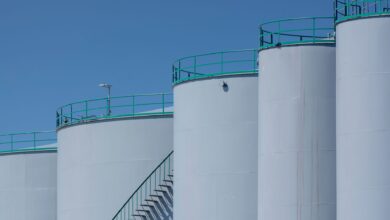
The physical asset itself also depreciates slowly and requires relatively modest ongoing capital expenditure compared to, say, a power plant or a refinery. Cryogenic CO2 storage infrastructure has a long functional life, and maintenance obligations are typically passed back to operators under triple-net lease structures. For a pension fund, this means the asset behaves more like a long-term bond with a real asset backstop than a volatile equity stake. The inflation linkage – often built into lease escalation clauses tied to the producer price index or energy cost indices – adds another layer of appeal at a time when liability-driven investing still shapes how most large defined-benefit plans think about their fixed-income and real-asset blend.
The Industrial Demand Side Is Solidifying
One reason this asset class is attracting institutional capital now, rather than five years ago, is that the demand base for liquid CO2 has become more structurally diverse. The food and beverage sector has always been the anchor tenant for CO2 infrastructure – carbonation, flash freezing, modified atmosphere packaging – but that market alone was never large enough to justify the scale of terminal infrastructure that developers are now proposing. What changed is the addition of industrial offtakers connected to CCUS mandates and enhanced oil recovery operations, alongside a growing cluster of emerging uses: concrete curing, greenhouse agriculture, e-fuel synthesis, and blue hydrogen production chains that vent captured CO2 into transport-ready liquid form.
Fertilizer manufacturers represent a particularly interesting category. Ammonia production generates CO2 as a byproduct, and some of that CO2 is already captured and sold into the merchant liquid CO2 market. As those producers face regulatory pressure to account for their emissions, some are exploring arrangements where the captured CO2 is transferred directly to a terminal operator under a long-term agreement, generating revenue from what was previously a waste stream. Terminal operators positioned along fertilizer production corridors – inland river systems, Gulf Coast port clusters – are drawing lease interest from pension infrastructure managers for exactly this reason.
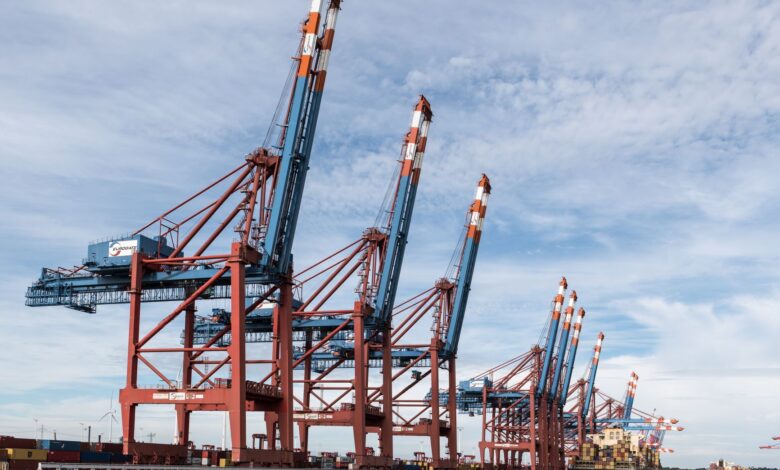
The shipping dimension adds another layer. Liquid CO2 carriers, a nascent but growing vessel class, require port-side storage infrastructure to load and discharge cargo. Norway’s CO2 shipping corridors, the proposed North Sea CO2 transport networks, and Gulf of Mexico sequestration projects all require terminal nodes with cryogenic storage capacity. A terminal that can serve both the domestic merchant market and an emerging marine CO2 logistics chain is more versatile than a single-use facility, and that versatility reduces occupancy risk across a multi-decade lease horizon – exactly the risk profile pension managers want to minimize.
It is also worth understanding what pension funds are not doing here. They are generally not taking construction risk or development equity. The pattern emerging across institutional infrastructure mandates is one of sale-leaseback arrangements or forward lease commitments on facilities that are already operational or near completion. A terminal developer builds the asset, then sells it to a pension-backed infrastructure vehicle and leases it back under a long-term operating agreement. The pension fund captures the income stream; the developer recycles capital into the next project. This structure has worked in LNG infrastructure – hedge funds have built similar positions in LNG regasification terminal slots using comparable mechanisms – and it is being replicated in liquid CO2 with some modifications to account for the smaller per-facility capital values.
How Pension Funds Are Accessing the Market
Direct ownership of a CO2 terminal is beyond the operational appetite of most pension funds. The typical access route runs through an infrastructure manager – a specialist firm that pools capital from multiple institutional investors, acquires or develops assets, and manages operations. Several large infrastructure managers with existing energy transition mandates have begun adding CO2 infrastructure to their portfolio targets, and pension fund commitments to those vehicles are the practical mechanism through which this exposure is being built. The pension fund sees a line item in its infrastructure allocation; the actual terminal lease sits two or three legal entities below that.
Some larger plans with internal infrastructure teams are exploring co-investment rights alongside infrastructure fund positions, which would give them direct exposure to specific terminal leases at lower fee loads. This is the same model that large Canadian and Australian pension funds have used to build direct infrastructure books in toll roads, airports, and regulated utilities over the past two decades. The CO2 terminal play is smaller in scale but follows the same institutional logic: identify a long-duration, contract-backed cash flow, negotiate around construction and commodity risk, and hold for the full lease term.
Risks That Are Not Being Ignored
Regulatory risk is the most discussed concern among infrastructure managers evaluating this space. The economic case for many CO2 terminal projects depends on policy support – tax credits for carbon capture under frameworks like the U.S. Inflation Reduction Act, emissions trading systems that create a price for CO2 avoidance, or government-backed transport and storage contracts in European CCUS networks. If those policy supports weaken or are reversed before a terminal lease matures, the creditworthiness of the counterparty – the lessee paying the throughput fee – could deteriorate. Pension funds are not immune to that scenario, and structuring protections against policy change are a significant part of lease negotiation at the moment.
Technological substitution is a less discussed but real risk. If point-source carbon capture technologies become significantly cheaper, or if direct air capture scales to a point where distributed micro-facilities reduce demand for centralized liquid CO2 logistics, the throughput assumptions underpinning terminal lease valuations could shift. A 25-year lease signed today runs to 2050, by which point the CO2 transport landscape could look materially different. Most infrastructure managers argue that the physical asset retains value even under demand disruption – cryogenic storage tanks and port berths can be repurposed – but that argument has limits.
What makes this moment particularly interesting for pension capital is that the asset class is still early enough that entry pricing has not been bid up by competition. Once a category of infrastructure asset becomes well-understood across institutional markets – once it appears in consultant recommendation lists and benchmark indices – cap rates compress and return expectations moderate. CO2 terminals are not yet in that category. The funds moving now are doing so ahead of a potential reclassification of this infrastructure type as mainstream, and whether that reclassification happens depends significantly on whether the CCUS policy architecture in the U.S. and Europe holds through the next several years of political pressure.