Pension Funds Quietly Build Exposure to Crude Oil Terminal Throughput Agreements

The Quiet Infrastructure Play Reshaping Pension Portfolios
Pension funds managing retirement savings for teachers, firefighters, and municipal workers are steadily moving capital into a corner of the energy market that most retail investors have never heard of: crude oil terminal throughput agreements. These contracts, which guarantee fees for the movement and storage of oil through port facilities regardless of commodity price swings, are drawing serious institutional attention as funds hunt for income streams that hold up when equity markets falter.
What Throughput Agreements Actually Are
A throughput agreement is essentially a long-term contract between a terminal operator and a shipper – typically an oil company or trading house – that obligates the shipper to pay fees for a minimum volume of crude to pass through a specific terminal over a defined period. Whether oil prices are at $60 or $100 a barrel, the terminal operator collects its fee. The shipper takes the commodity risk; the terminal operator takes the volume risk, which in practice is far more predictable over a 10- or 15-year contract horizon.
This structure is what makes throughput agreements attractive to pension funds, whose liabilities extend decades into the future and whose investment committees generally penalize volatility more than they reward upside. The fee-based model strips out the part of energy investing that pensions have historically avoided – direct exposure to oil price cycles – while preserving access to the infrastructure cash flows that energy generates at industrial scale. The logic runs parallel to why pensions have long favored toll roads and airports: the asset gets used regardless of broader economic conditions, and the contractual framework protects revenue.
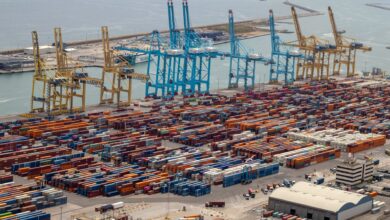
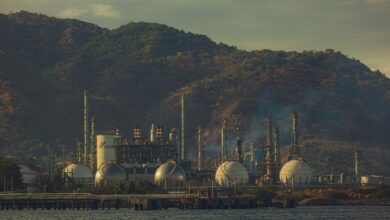
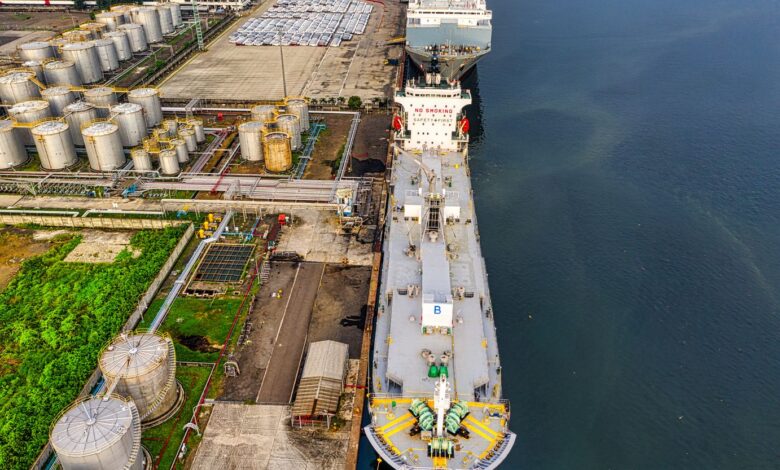
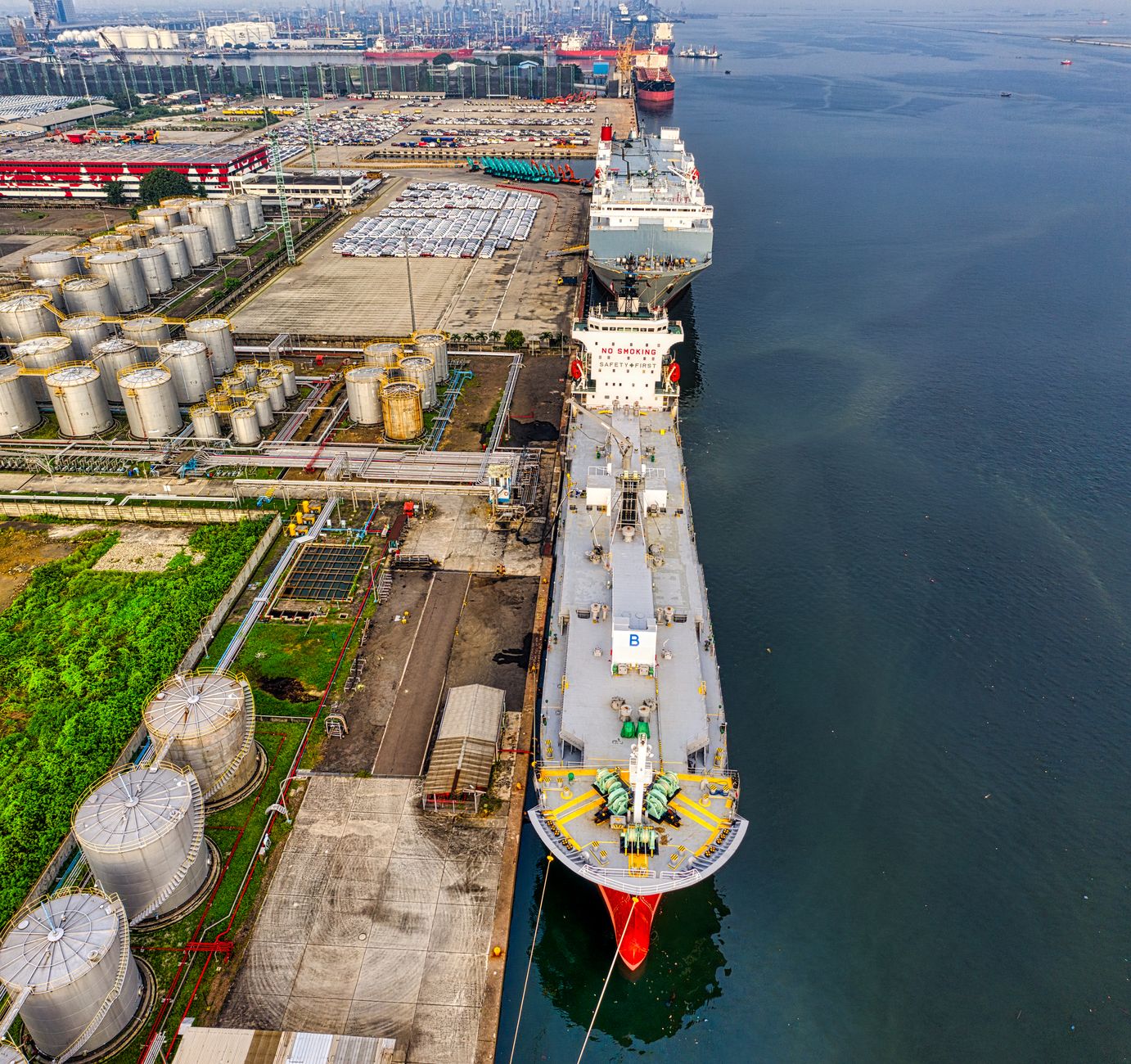
Crude terminals sit at chokepoints in the supply chain. Oil pumped from inland basins has to move somewhere before it reaches a refinery, and in many regions that means passing through marine terminals capable of loading supertankers. The Gulf Coast of the United States, Rotterdam in Europe, and several terminals along the Middle Eastern coast handle volumes so large that even modest per-barrel fees generate substantial annual revenue. Owning or financing a stake in those cash flows, locked in through long-term contracts, looks very different from buying oil futures or energy equities.
The agreements also carry a feature that pension fund managers find genuinely useful: inflation linkage. Most throughput contracts include escalation clauses tied to producer price indices or general inflation measures, meaning the fee income grows over time without requiring any active management. For a pension fund running a 30-year liability schedule, that kind of built-in purchasing power protection is worth paying a premium for, and funds have shown willingness to accept lower initial yields in exchange for the escalation mechanics.
Why Pension Capital Is Moving Now
The current positioning push is not accidental. Years of compressed yields in fixed income left pension funds structurally short on income, and while rate increases have helped, many funds still carry funding gaps that demand higher-returning alternatives. Infrastructure debt and equity have absorbed a large portion of that reallocation, but the most obvious infrastructure categories – regulated utilities, toll roads, airports – have gotten crowded enough that entry prices have risen substantially. Crude terminal throughput agreements represent a less trafficked part of the same infrastructure universe, and the pricing still reflects that relative obscurity.
There is also a strategic dimension tied to energy transition timelines. Some pension fund investment committees have faced pressure to reduce fossil fuel exposure broadly, but throughput agreements offer a defensible middle position. The argument made internally at several large funds runs roughly like this: terminal infrastructure serves whatever crude volumes the market demands, and global oil consumption is not expected to decline sharply enough within a 10-year contract window to threaten cash flows materially. The fund is not betting on oil prices or drilling activity – it is betting that oil will continue to move through pipes and onto ships for the foreseeable future, which is a considerably less controversial position than owning oil company equity.
Access to these agreements has historically required either direct equity ownership in terminal operators or participation in project finance deals arranged by investment banks for specific terminal expansions. Both routes demanded large minimum commitments and significant due diligence capacity that smaller pension funds simply did not have. That access problem is changing. A growing number of infrastructure-focused fund managers have built vehicles specifically designed to aggregate throughput agreement exposure across multiple terminal assets, allowing pension funds to buy in at lower minimums with portfolio-level diversification already built in. This is the structural change driving current activity – the product has become accessible, not just attractive.
The credit quality of counterparties matters enormously in this market, and it deserves scrutiny. A throughput agreement is only as good as the shipper on the other side of it. When the shipper is a major integrated oil company or a national oil company with sovereign backing, the credit risk is manageable. When it is a smaller independent producer or a trading firm with thin capital, the agreement carries default risk that can erode the yield advantage quickly. Funds moving into this space are spending considerable due diligence time on counterparty analysis, and the better-structured fund vehicles specifically screen for investment-grade or near-investment-grade counterparties as a condition of inclusion. This mirrors the approach that similar royalty-stream strategies have used to manage credit exposure across energy infrastructure deals.
Geographic concentration is the other risk factor that comes up repeatedly. A fund that builds throughput exposure concentrated in a single regional terminal network – say, Gulf Coast crude export facilities – takes on regulatory, weather, and political risk that a globally diversified portfolio would spread across multiple jurisdictions. Hurricanes, port strikes, and shifting export policy can all interrupt throughput volumes in ways that trigger force majeure clauses and temporarily suspend payments. Funds building positions in 2024 and 2025 are paying attention to this, pushing managers toward portfolios that combine U.S., European, and Middle Eastern terminal assets to reduce single-geography exposure.
The Structural Tension Funds Have Not Fully Resolved
There is a timing mismatch sitting at the center of this strategy that pension fund boards are not always willing to discuss openly. The contracts being acquired now run 10 to 20 years in many cases, and they assume continued robust crude throughput volumes well into the 2030s and beyond. Global energy forecasts genuinely diverge on whether crude demand will plateau, slowly decline, or hold steady during that window depending on electrification rates, policy responses, and economic growth trajectories in Asia. A fund signing into a 15-year throughput agreement in 2025 is making an implicit bet on a demand scenario, even if the contractual structure insulates it from price volatility. The infrastructure wrapper does not eliminate that underlying assumption – it just makes it less visible in quarterly reporting.

What makes the current moment interesting is that the funds most aggressively building throughput exposure are not the ones with the most aggressive energy transition commitments – they are the mid-sized public pension funds in energy-producing states that have both political latitude to hold energy infrastructure and genuine funding pressure that makes the yield attractive enough to justify the scrutiny. The calculation they are making is that a 15-year contract paying an inflation-linked fee on crude volumes is a better bet for their beneficiaries than reaching for yield in corporate credit markets that are currently pricing in near-perfection. Whether that judgment looks correct in 2035 will depend heavily on demand numbers that nobody can model with real confidence today.