
The Quiet Accumulation of a Hard Asset Class Most Investors Ignore
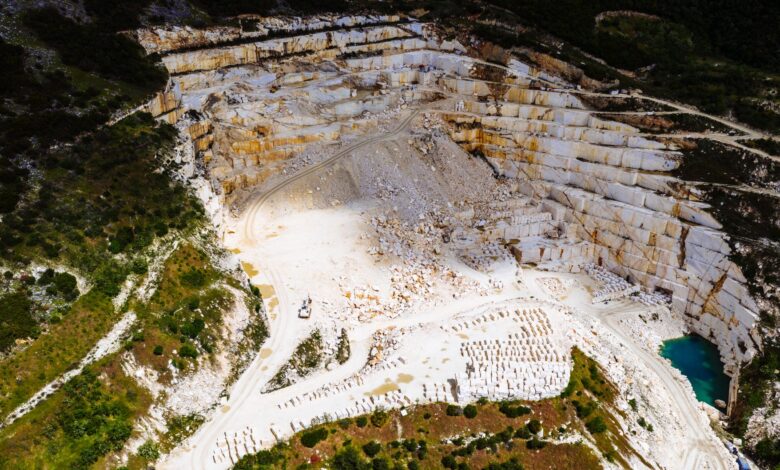
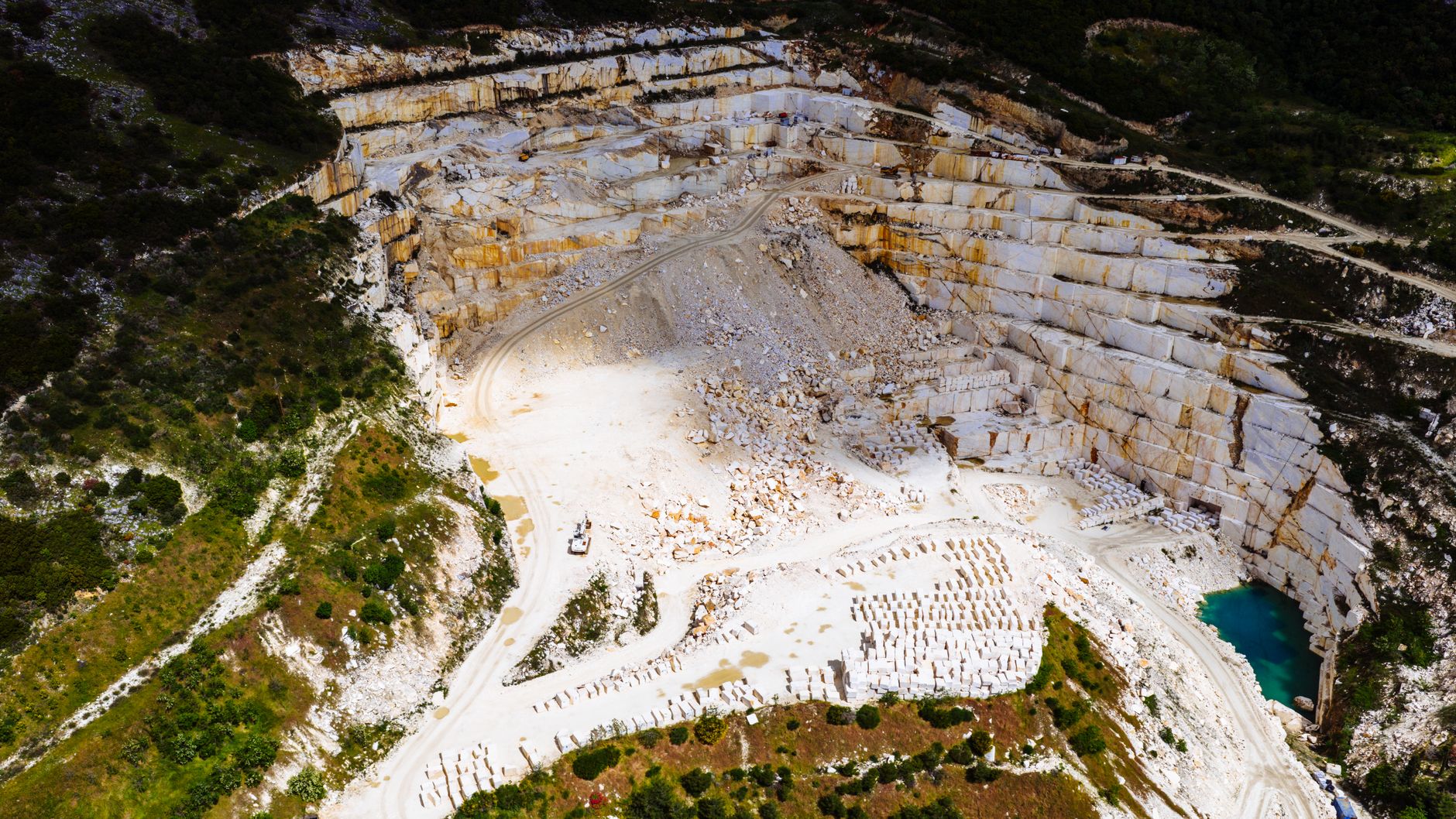
Quarry land leases sit at an unusual intersection of real estate, natural resources, and infrastructure – generating steady royalty income from the extraction of crushed stone, sand, gravel, and limestone that goes into roads, bridges, and buildings. For decades, this asset class was almost entirely controlled by industrial operators and private landowners. Now, university endowments and nonprofit investment pools are quietly building positions in these leases, drawn by income streams that carry almost no correlation to equity markets and very little public scrutiny.
The appeal is structural. Quarry leases pay royalties per ton of material extracted, meaning income rises when construction activity is high and falls when it slows – but rarely drops to zero, because demand for aggregates is spread across maintenance contracts, state highway budgets, and private development that don’t all move in the same direction at once. For an endowment managing a perpetual pool of capital, that kind of durable, commodity-backed income looks very different from a dividend stock or a corporate bond.
Why Endowments Are Looking Beneath the Surface
The endowment model, built on the framework popularized by large university investment offices over the past four decades, has always favored illiquid alternatives when the return premium justifies locking up capital. Timberland, farmland, and infrastructure have long occupied that space. Quarry leases are, in practical terms, a natural extension of that thinking. They are real property rights attached to a physical resource, with long lease terms, contractual royalty minimums, and – in many cases – reclamation bonds that provide a layer of financial protection if an operator walks away.
What makes quarry leases particularly interesting to perpetual capital is the supply constraint. A quarry cannot be relocated. Permits to open new aggregate sites near population centers have become nearly impossible to obtain in many states because of zoning restrictions, community opposition, and environmental review processes that can stretch years. The aggregate industry calls this “urban encroachment” – as cities grow outward, the quarries that once sat on the suburban fringe become surrounded by residential development, making expansion or new permitting politically toxic. The result is that existing permitted quarry land becomes more valuable simply because replacement supply is constrained.
How the Lease Structure Works
A quarry land lease is not the same as owning a quarry. The landowner – or in this case, the endowment holding the lease position – does not operate the extraction business. An industrial operator takes on that role under a lease that typically runs ten to forty years, paying a royalty per ton of material removed and sometimes a fixed minimum annual payment regardless of extraction volume. The endowment’s role is purely financial: collect income, monitor tonnage reports, and manage lease renewal or sale at the end of the term.
The royalty rate is usually negotiated as a percentage of the market price for the aggregate type being extracted, or as a fixed dollar amount per ton that escalates with inflation indices. Crushed limestone used in road base might generate a different rate than specialty silica sand used in industrial processes, but both produce income without the endowment needing to employ a single machine operator or maintain a single piece of equipment. That asset-light exposure to a physical commodity is a significant draw.
Due diligence on these leases requires understanding geology, permit status, operator financial health, and local aggregate market pricing – none of which are standard competencies inside a university investment office. That gap has driven the formation of specialized managers who package individual quarry leases into portfolio vehicles, providing endowments with diversified exposure across operators, geographies, and aggregate types. The manager handles site-level oversight while the endowment holds a fund interest that pays quarterly distributions from aggregated royalty income.
The fee structures for these vehicles tend to run higher than a traditional real estate fund because the operational monitoring is genuinely more complex. Tracking tons, verifying royalty calculations against production records, and managing lease compliance with environmental regulators requires dedicated expertise. Endowments willing to pay for that expertise generally find that the net yield still compares favorably to what they can earn in investment-grade fixed income, often with lower volatility because the income source is tied to physical extraction rather than credit spreads.

The Risk Side of the Ledger
Quarry leases are not without meaningful risk. The most direct threat is operator default – if the extraction company running the quarry goes bankrupt or walks away from the lease, the landowner loses royalty income and may inherit remediation liability depending on how the lease indemnification language is structured. Careful drafting of lease agreements, combined with reclamation bonding requirements imposed by state regulators, can limit this exposure, but it does not eliminate it.
A subtler risk is demand collapse in specific aggregate markets. Regional construction downturns can reduce extraction volumes sharply, and if the lease has low minimum royalty requirements, income can fall significantly. Endowments building diversified positions across multiple quarry sites and geographies are essentially hedging against this by betting that aggregate demand does not decline everywhere at once. That is historically a reasonable bet, but local concentration – a single major endowment holding multiple leases in one metro area – creates exposure that diversification at the portfolio level cannot fully offset.
Positioning Within the Broader Alternative Allocation
Within an endowment’s alternative asset portfolio, quarry leases typically sit alongside timberland, farmland, and sometimes toll bridge concessions – assets that share the characteristic of generating income from the use of real property rather than from business operations. The common thread is that these assets tend to hold value during inflationary periods because the underlying resource or right is scarce and the income stream is often contractually indexed.
Position sizes in quarry leases remain small relative to total endowment assets. Most allocations are experimental at this stage, occupying a sub-allocation within the real assets bucket rather than standing as a distinct category. That will likely change as more specialized managers build track records and as endowments with early positions demonstrate realized returns that can be benchmarked. The asset class is, in that sense, in approximately the same position that timberland occupied in institutional portfolios thirty years ago – credible in theory, limited in practice by the number of managers capable of executing properly.
The irony is that the quarry industry itself has consolidated heavily over the past two decades. Large public companies now control a significant share of aggregate production in the United States, which means that the quarry land those companies operate on is increasingly owned by someone else under a lease arrangement. That separation of land ownership from operating business is exactly the structure endowments want – and it means the supply of leasable quarry land in institutional form is growing as operators choose to monetize land assets and redeploy capital into equipment and logistics. The endowments buying those lease positions are, in effect, providing the aggregate industry with a quiet form of off-balance-sheet financing, while collecting royalty checks on every ton of crushed stone that moves out the gate.