
The Quiet Land Play Reshaping Institutional Portfolios
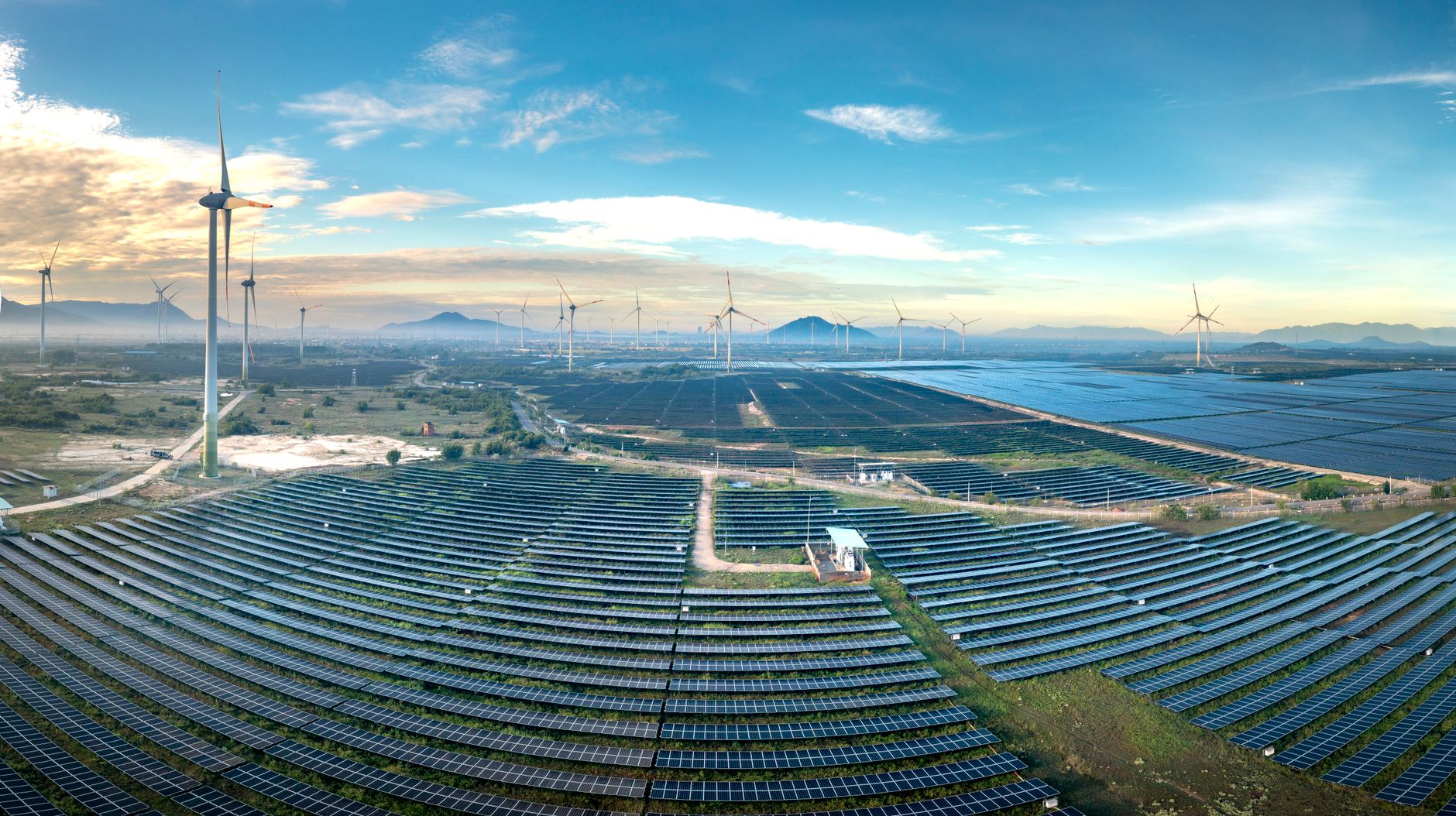
University endowments and large charitable foundations have spent the last several years building positions in an asset class most retail investors have never heard of: solar land easements. These are long-term legal agreements that give solar developers the right to use private or agricultural land for photovoltaic installations, often spanning 25 to 40 years, with options to renew. The landowner receives fixed annual payments. The investor, sitting between the developer and the landowner, collects a spread on the lease income stream while holding a real asset backed by both land and contractual cash flows.
What makes this strategy particularly attractive to endowments is the combination of inflation linkage, low correlation to public markets, and duration that matches the long-horizon liabilities that define institutional investing. Unlike a direct solar equity play, the easement itself does not require an endowment to take on development risk or operational exposure. The land rights are the product, and they can be bought, bundled, and held with relatively modest overhead.
Why Endowments Are Built for This Trade
Endowments operate on a permanent capital model. They do not face the redemption pressure that constrains hedge funds or the quarterly reporting demands that push corporate treasurers toward liquid assets. That structural patience is exactly what solar land easements require. A 30-year easement on a rural parcel in a sun-belt state generates income that compounds quietly, but it cannot be unwound in a hurry without significant discount. Most institutional investors outside the endowment model would struggle to absorb that illiquidity. Endowments treat it as a feature rather than a defect.
There is also a mission alignment argument that several university endowments have used internally to justify the allocation. Solar infrastructure directly supports decarbonization targets that many universities have formally committed to, which makes it easier to get investment committee approval without the friction that accompanies purely financial plays in fossil fuels or extractive industries. This is not simply a values argument – it materially reduces governance friction, which speeds up deployment and allows portfolio managers to accumulate positions faster than they could in assets that require repeated ethics review cycles.
The Mechanics of Accumulating Easement Positions
Building a meaningful position in solar land easements is not as simple as buying shares in a fund. The market is fragmented, largely private, and populated by regional brokers, agricultural land consultants, and specialized legal intermediaries who have spent years cultivating relationships with landowners. Endowments typically access the market through one of three channels: direct acquisition platforms that aggregate individual easements into portfolios, co-investment arrangements with solar developers who need to monetize their land pipeline before construction, or secondary market purchases from developers who have already locked in easements but need liquidity to fund the next phase of a project.
The secondary market channel is worth examining in detail because it represents the faster-growing entry point. As utility-scale solar development accelerated over the past several years, many mid-size developers found themselves holding large easement portfolios they had assembled speculatively, without the balance sheet to take every project to completion. Endowments stepped in as buyers, acquiring these portfolios at discounts that reflected both the developer’s liquidity need and the uncertainty around specific project timelines. The endowment does not need the project to close on any particular schedule – it simply needs the underlying land rights to remain valid and the cash flows to arrive as contracted.
Pricing in this market is driven by a combination of solar irradiance data, proximity to transmission infrastructure, state-level permitting environments, and the creditworthiness of the developer counterparty. Parcels in high-irradiance states with streamlined permitting – parts of Texas, the Southwest, and the Southeast – command the strongest multiples. Transmission access is often the binding constraint; an easement on high-irradiance land that sits 50 miles from the nearest interconnection queue has materially different value than one that can be plugged into existing grid capacity within 18 months.
The income structure itself is relatively straightforward. Landowners typically receive annual payments that escalate at a fixed rate, often tied to a consumer price index or a fixed percentage. The endowment, if it holds the easement as an intermediate party rather than as the ultimate developer, earns the spread between what the developer pays and what passes through to the landowner. That spread can be modest on any individual parcel, but across a portfolio of hundreds of acres, the aggregate yield becomes competitive with other real asset income streams, including farmland and timberland, which endowments have held for decades.

Risk Factors That Don’t Show Up in the Pitch Deck
The asset class is not without structural risks. Permitting volatility is the most immediate concern. State-level regulatory environments for solar development can shift with election cycles, and an easement that assumed a 24-month path to construction can become stranded if a new administration freezes interconnection approvals or imposes new setback requirements. The endowment holds the land right regardless, but the income it expected from a producing project gets deferred indefinitely, which changes the return profile significantly.
There is also a concentration risk that portfolio managers do not always flag clearly. Because transmission access drives so much of the value, easement portfolios often cluster geographically around specific grid corridors. An endowment that believes it is diversified across 200 individual parcels may actually have 60 percent of its exposure tied to the capacity of a single regional transmission organization’s interconnection queue. When that queue backs up – as several have in recent years due to the sheer volume of renewable energy applications – the entire portfolio feels the impact at once. This is the kind of correlated risk that looks invisible in a spreadsheet until it isn’t.
Comparison to Pension Fund Strategies
Endowments are not alone in this space. Pension funds have been building exposure to adjacent long-duration energy infrastructure, including storage lease structures, using similar logic around inflation protection and duration matching. The difference is that pension funds operate under stricter fiduciary frameworks that require more explicit return benchmarking, which slows their accumulation pace and pushes them toward larger, more standardized transactions. Endowments can move faster, accept more idiosyncratic risk, and build positions in corners of the market that pensions would find too cumbersome to underwrite.
That speed advantage has allowed some endowments to establish meaningful positions before the institutional herd fully arrives. The window for below-market entry is narrowing as more capital chases the same fragmented supply of quality easements. Developers who once had no institutional buyers for their pre-construction land pipelines now have multiple endowments competing for the same assets, which is already compressing the discounts available in the secondary market.
The strategic implication is that early movers in this space are accumulating not just income-producing assets, but the relationships and deal flow infrastructure – the regional brokers, agricultural attorneys, and developer contacts – that determine who sees the best opportunities before they are widely marketed. Once those networks are built, they compound just like the easement income itself. An endowment that spent three years cultivating a sourcing pipeline in the Southeast has an advantage that a new entrant cannot replicate by simply writing a larger check.

The more interesting question may be what happens when a major transmission buildout actually resolves the interconnection bottleneck. Easement values that have been suppressed by queue uncertainty could reprice sharply upward, and endowments holding large portfolios would see mark-to-market gains on assets they acquired at distressed valuations. Whether that scenario materializes on a 5-year horizon or a 15-year one depends almost entirely on federal grid investment that remains subject to political negotiation – which means the endowments best positioned to benefit are the ones patient enough not to need the answer anytime soon.