

The Quiet Land Grab Happening Below the Surface
Water rights have always been valuable in the American West, but a more specific and legally complex asset has started attracting serious capital: farmland water easements. These are not the farmland itself, nor the water rights in the traditional sense. They are the recorded legal instruments that govern how water moves across, under, or adjacent to agricultural land – who controls access, who bears maintenance costs, and crucially, who collects when that access becomes commercially indispensable. Family offices, the private investment arms managing wealth for ultra-high-net-worth families, have been quietly building positions in these instruments for several years.
The appeal is structural rather than speculative. Water easements tied to productive farmland sit at the intersection of two scarcity dynamics that are only intensifying: the physical scarcity of freshwater in key agricultural regions, and the legal scarcity created by century-old water law frameworks that make new rights nearly impossible to create from scratch. Buying into existing easements sidesteps the political and regulatory friction of acquiring new water rights entirely.
This is not a strategy most investors are even aware exists.

Why Easements, Not the Land Itself
Direct farmland ownership has attracted institutional capital openly and aggressively for over a decade. Real estate investment trusts, pension funds, and endowments have bid up per-acre prices across the corn belt, the Central Valley, and the Pacific Northwest. The result is that entry prices for productive farmland are now high enough to compress returns on the underlying agricultural operation. Water easements offer a different entry point – one layer removed from the physical commodity, but arguably more durable in value terms. An easement attached to an irrigation system on a farm that produces almonds or pistachios in a water-stressed county is not going away when commodity prices dip. The operational dependency on that easement persists regardless of what almonds sell for.
The legal architecture of water easements also provides something most alternative assets cannot: priority. In states operating under prior appropriation doctrine – the “first in time, first in right” system that governs most of the western United States – senior water rights attached to easements take precedence over junior rights during shortage conditions. A family office holding a position in a senior easement tied to an active farm operation holds something that junior rights holders, municipalities, and even some industrial users cannot legally displace. During drought years, that seniority is not a minor technical advantage. It is the entire ballgame.
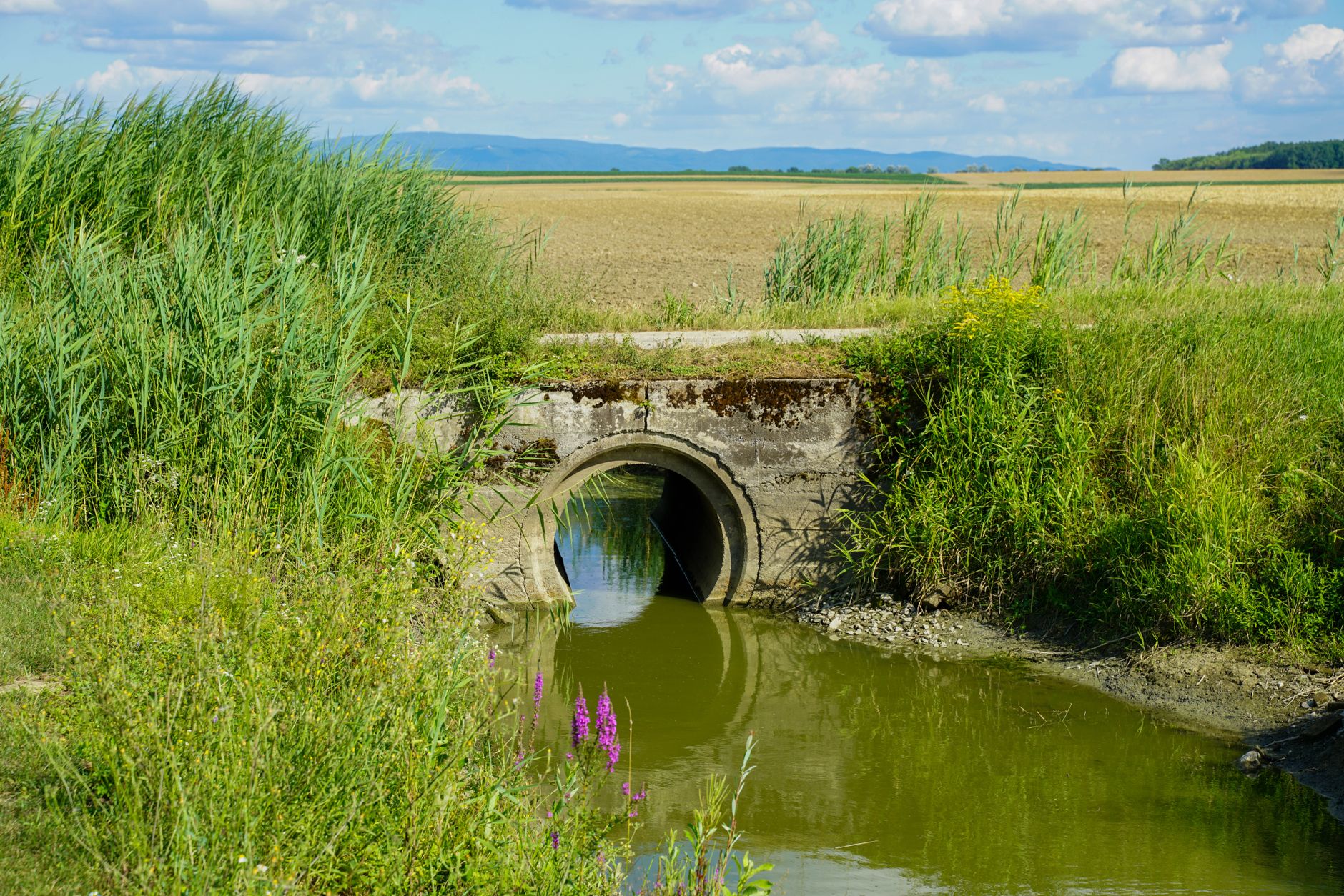
There is also a cash flow dimension that gets overlooked in most discussions of this asset class. Water easements can generate income through licensing arrangements when adjacent landowners or operators need access to the infrastructure the easement governs. Irrigation canals, pump stations, and drainage infrastructure covered by easements become toll-like assets when neighboring operations require access. Some family offices have structured these positions specifically to capture that recurring income rather than banking purely on appreciation.
How Positions Are Being Built
The accumulation strategy typically involves working with specialized agricultural attorneys and water law firms to identify easements attached to farms that are changing ownership. When a farm sells, the easements attached to it can sometimes be separated from the title transaction, acquired by a third party, and recorded independently. This requires careful navigation of state-specific property law and sometimes involves negotiation with sellers who do not fully understand what they hold. That information asymmetry is a significant part of why family offices find this attractive – the market for these instruments is thin, fragmented, and not well understood by most parties on the selling side.
A growing number of family offices are also approaching this through conservation easement structures with water-specific carve-outs. Conservation easements, which restrict development on agricultural land in exchange for tax benefits, frequently include provisions governing water use and infrastructure access. Sophisticated buyers have identified that the water-specific clauses within conservation easements can be structured to preserve – or even expand – private control over water conveyance infrastructure while still qualifying for favorable tax treatment. The conservation finance world and the water rights investment world are converging in ways that have not yet drawn much regulatory attention. This pattern is not entirely unlike what family offices have done with subsea power cable easements, where legal complexity becomes the moat.
Geography matters enormously. The concentration of activity is highest in California’s San Joaquin Valley, the Colorado River Basin, and parts of the Texas Panhandle where groundwater depletion from the Ogallala Aquifer has created acute pressure on surface water access. These are not random bets on water as an abstract commodity. They are targeted positions in regions where the gap between water demand and legally available supply is already visible on a ten-year planning horizon, not a hypothetical future.

The Risk Profile Nobody Is Advertising
Water law in the United States is a patchwork of state doctrines, interstate compacts, federal reserved rights, and tribal water settlements that has been evolving through litigation for over 150 years and shows no sign of stabilizing. A family office that builds a position in farmland water easements in a given basin is implicitly making a bet that the legal framework governing those easements will remain favorable – or at least not actively hostile – to private holders. That is not a safe assumption in every jurisdiction. Several western states have considered or enacted legislation that limits the commodification of water rights, and federal action around tribal water settlements has repeatedly disrupted private water claims that seemed settled. The seniority of a water right provides protection against other private claimants. It provides no protection against a regulatory taking or a legislative rewrite of the underlying framework.
Liquidity is the other honest concern. These positions are not publicly traded. They do not have a ready secondary market. Exiting a portfolio of farmland water easements requires finding a counterparty who understands the asset, has done the legal due diligence, and has capital committed to agricultural infrastructure at a specific price point. That pool of buyers is currently small. Family offices entering this space at scale may find, a decade from now, that their exit options are limited to other family offices pursuing the same strategy – which is either a self-sustaining market or a closed loop, depending on how the regulatory environment around water privatization develops by then.
Whether or not this becomes a crowded trade, the underlying scarcity is real. The Colorado River Compact allocates more water than the river currently carries in most years. California’s groundwater legislation is still in early implementation, and its long-term effect on surface water easement values has not yet been tested through a full drought cycle under the new rules. Those unresolved tensions are exactly the conditions where patient capital with strong legal teams tends to find its edge.