


The Quiet Scramble Beneath the Salt Flats
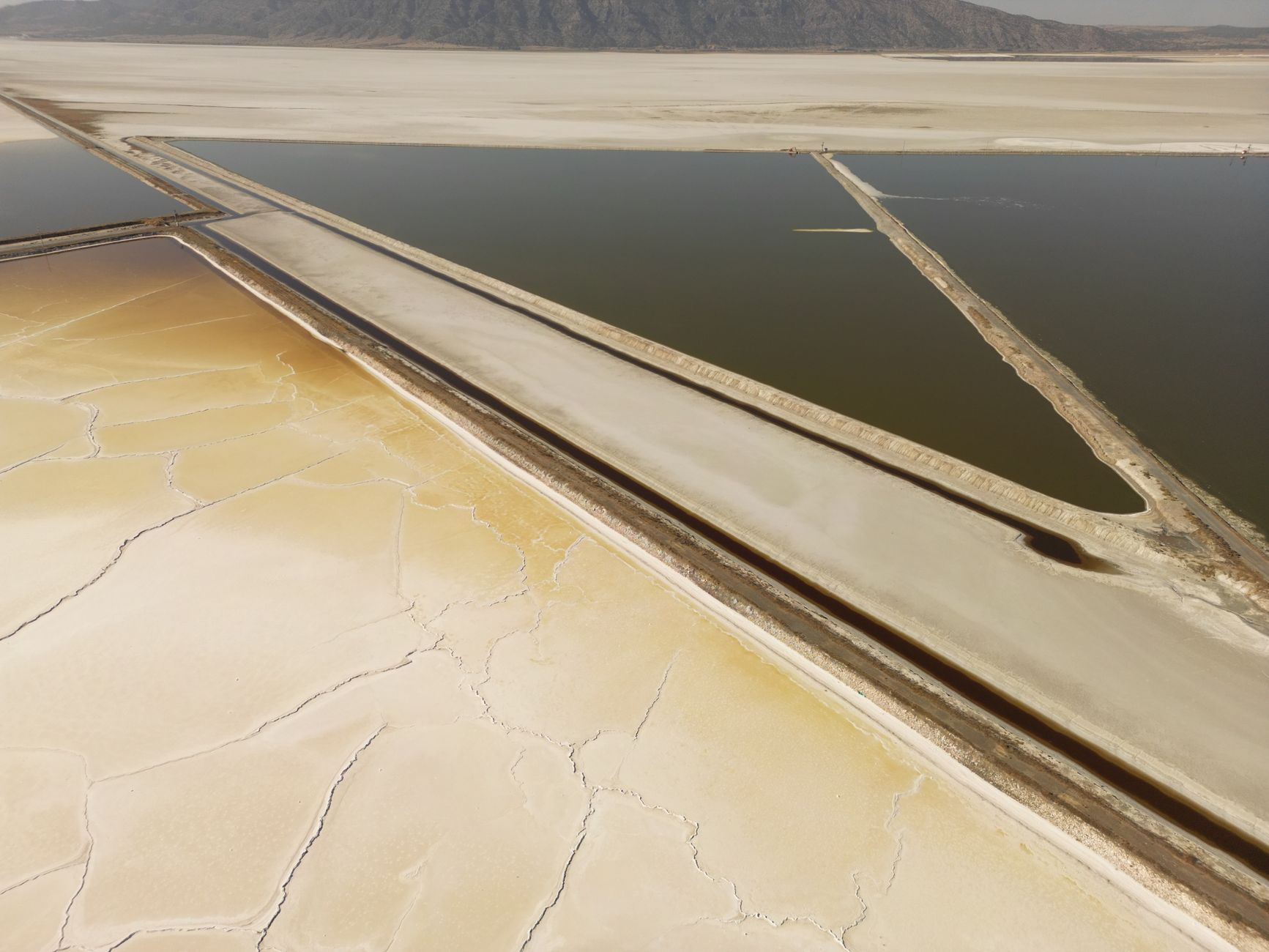
Lithium brine extraction rights – the legal claims to underground saline water deposits rich in lithium content – have started attracting serious capital from an unexpected source. Family offices, the private investment vehicles managing wealth for ultra-high-net-worth families, are moving into this space with a deliberateness that contrasts sharply with the noise surrounding public lithium stocks and ETFs. While retail investors chase battery metal miners listed on major exchanges, a different class of capital is going further upstream, acquiring rights to the raw resource itself before it ever reaches a processing facility.
The strategy follows a logic that runs deeper than commodity speculation. Brine extraction rights are not equities – they don’t trade on screens, they don’t get shorted, and their value doesn’t reset at market open. They are property interests, often structured as long-term leases or royalty agreements tied to specific geological formations in places like the Lithium Triangle of South America, Nevada’s Clayton Valley, or the salt lakes of Western Australia. For families building multigenerational wealth, that distinction matters enormously.
Why Rights, Not Stocks
The case for holding extraction rights rather than equity in a mining company comes down to structural insulation. When a lithium mining company hits operational trouble – permitting delays, labor disputes, cost overruns – its stock can fall sharply while the underlying brine deposit remains entirely unaffected. The rights holder, depending on how the agreement is structured, may continue collecting royalties or simply wait out the disruption with the asset intact. That separation between operational risk and resource ownership is exactly what family office investment committees tend to favor.
Brine-based lithium also differs from hard-rock lithium mining in ways that affect long-term asset quality. Extracting lithium from underground brines is generally less energy-intensive than blasting and processing spodumene ore. As environmental compliance costs rise globally and carbon accounting becomes a more serious factor in corporate supply chains, brine-sourced lithium carries a lower-friction profile. Rights to premium brine formations – those with high lithium concentration and favorable hydrology – are becoming scarce, and scarcity is exactly what drives the asset class that family offices have historically favored: timberland, farmland, water rights. Lithium brine rights fit that same template. In fact, the broader pattern of families acquiring stakes in natural resource access rights has been building across multiple asset categories for several years now.
Deal structures in this space are varied enough to accommodate different risk appetites. Some families are acquiring royalty interests, meaning they receive a percentage of revenue whenever a brine deposit is produced, without bearing any extraction cost. Others are taking working interests in joint ventures alongside junior mining companies, accepting more operational exposure in exchange for higher upside. A smaller group is going further still, purchasing surface and subsurface rights outright in jurisdictions where foreign ownership is permitted, essentially becoming the landlord of a future lithium supply chain node.
The Regulatory Layer No One Talks About
Brine extraction rights exist within a complex web of water law, mining law, and environmental regulation that varies dramatically by jurisdiction. In Chile, for instance, lithium brine sits beneath the Atacama Salt Flat and is constitutionally classified as a strategic resource, meaning the state retains significant control over who extracts it and under what conditions. Argentina operates under a provincial system where extraction rights are governed at the regional level, creating a patchwork of regulatory environments within a single country. These distinctions are not footnotes – they are the core due diligence challenge that separates sophisticated family office deals from poorly structured ones.
Legal counsel specializing in Latin American mining law has reportedly become harder to book as deal flow in this space increases. The technical complexity of subsurface water rights, particularly where lithium brine intersects with freshwater aquifer systems, requires overlapping expertise in environmental law, indigenous land rights, and hydrological science. Families entering this space without that infrastructure have, in some cases, found their rights challenged or devalued after acquisition – a lesson that has pushed more family offices toward co-investment structures where due diligence costs are shared.
Demand Pressure and the Long Runway
Battery demand from electric vehicles, grid-scale energy storage, and consumer electronics creates a structural floor under lithium pricing that is difficult to argue against over a 15-to-20-year horizon. The disagreement is not about whether lithium will be needed – it clearly will be – but about which extraction methods, geographies, and companies will dominate supply. Family offices are essentially betting that controlling a piece of the raw resource itself hedges against that uncertainty. Whatever company ends up producing the lithium, whatever technology ends up processing it, the brine deposit still needs to be accessed.
Sodium-ion battery technology and lithium recycling programs are sometimes cited as demand risks, and they are worth taking seriously. If recycled lithium from end-of-life batteries eventually supplies a meaningful share of new battery production, the need for virgin brine extraction moderates. Sodium-ion, if it scales successfully for stationary storage applications, could displace lithium in a portion of the market. Family offices that have stress-tested their positions against these scenarios tend to focus on rights in high-concentration brine formations where extraction costs are low enough to remain competitive even in a softer price environment.
The timeline advantage that family offices hold over institutional funds is real. A pension fund or endowment facing quarterly reporting pressure cannot comfortably sit in an illiquid resource right for a decade while permitting processes grind forward. A family office managing capital for a multigenerational mandate has no such constraint. That patience premium – the willingness to hold an asset through its ugly middle years before it produces returns – is one of the few genuine structural edges that private capital retains over institutional capital. Lithium brine rights, with their long permitting cycles and slow development timelines, are tailor-made for it.

Deals that closed quietly two or three years ago at valuations few institutional buyers would have approved are now being marked up as battery supply chain anxiety has pushed corporate buyers – automotive manufacturers, battery cell producers, technology companies with energy storage ambitions – to look further upstream for security of supply. Some of those corporate buyers are now approaching rights holders that family offices control, and the conversations are no longer about if a deal might happen, but at what price the rights holder is willing to exit – or whether they want to exit at all.