
Wind Easements Enter the Institutional Portfolio
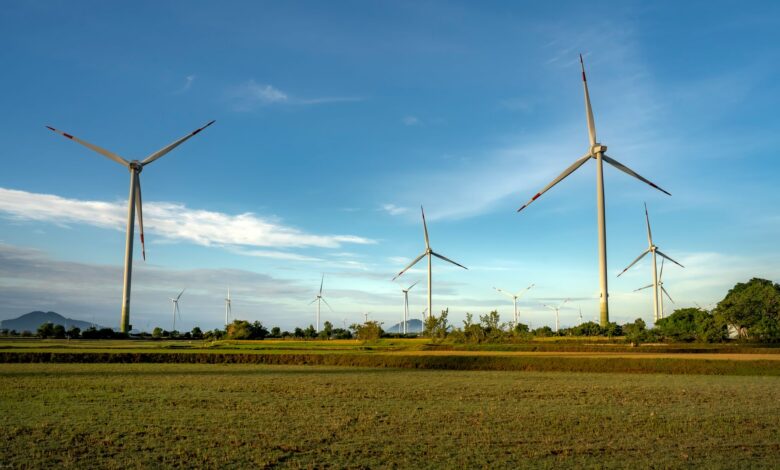
Pension funds managing retirement savings for millions of public workers have started quietly adding wind easement streams to their alternative asset holdings. These are not investments in wind turbines or energy companies directly – they are contractual rights attached to land, typically paying rural landowners a fixed or royalty-based fee in exchange for allowing wind energy infrastructure to operate on their property for decades. The pension fund, as buyer of that income stream, steps into the position of the easement holder and collects payments as long as the turbines spin.
The appeal is structural rather than speculative. Wind easement payments are embedded in long-term lease agreements, often 25 to 40 years, with built-in escalation clauses tied to inflation or fixed annual increases. For a pension fund carrying liabilities that extend decades into the future, that kind of duration match is genuinely rare in private markets. Most yield-generating assets either reset frequently or carry significant credit risk. A wind easement stream backed by an operational wind farm with a power purchase agreement in place carries neither of those problems in the same way.
Why Pension Funds Are Drawn to This Structure
The mechanics of a wind easement acquisition work differently from buying a piece of a wind project outright. The pension fund is not taking on development risk, construction cost overruns, or technology obsolescence. The turbines are already built and generating revenue. The fund is purchasing the ground-level contractual right to receive lease payments – a layer of the capital stack that sits closer to real property than to infrastructure equity. That distinction matters for regulatory treatment, portfolio classification, and volatility measurement.
Pension funds face internal constraints that private equity funds do not. They must justify allocations to boards, investment committees, and in some cases state legislatures. Wind easement streams fit neatly into existing “real assets” or “inflation-linked” categories, avoiding the longer approval cycles that genuinely novel asset classes trigger. The fact that they look and behave like ground leases – a well-understood structure in pension real estate portfolios – makes them easier to underwrite and explain. A chief investment officer presenting to a board can describe the investment in plain language without needing to explain energy derivatives or power markets.

The Secondary Market Taking Shape
Until recently, wind easements rarely changed hands after initial execution. A landowner signed a lease with a wind developer, collected payments, and that arrangement stayed in place until expiration or renegotiation. The secondary market for these streams was essentially nonexistent. That has changed as wind capacity has expanded across the central United States and institutional capital has started looking for ways to access the income without building new projects.
Aggregators – typically smaller private equity firms or specialty real asset managers – have begun acquiring portfolios of individual easements from original landowners who prefer a lump-sum buyout over decades of annual payments. They package those streams into pooled vehicles, provide institutional-grade documentation, and bring them to pension funds as diversified bundles rather than single-property contracts. This intermediary step solves the scale problem that kept pensions away earlier: no institution managing tens of billions can spend resources underwriting individual farm leases in Kansas or Iowa one at a time.
The legal complexity of these transactions is real. Wind easements attach to real property, meaning title searches, environmental reviews, and state-specific recording requirements all apply. A portfolio of easements spread across multiple states multiplies that complexity significantly. Pension funds entering this market are building out legal and operational infrastructure alongside their financial analysis, or outsourcing it to fund managers who specialize in the space. This creates a meaningful barrier to entry that, paradoxically, works in favor of early movers – once a pension fund has built the capability to analyze and hold these assets, it becomes harder for new entrants to compete for the same deals.
Pricing in this nascent secondary market reflects that complexity. Easement streams trade at capitalization rates that imply higher yields than comparable-duration municipal bonds or infrastructure debt, compensating buyers for illiquidity and the effort required to underwrite each transaction. Whether those spreads compress as more institutional capital enters is the central question that will determine how attractive these instruments remain over the next five to ten years.
How This Compares to Similar Institutional Moves
The pattern here is not entirely new. Pension funds have previously built exposure to other infrastructure-adjacent income streams through similarly quiet accumulation strategies. Pension funds building exposure to crude oil terminal throughput agreements followed a comparable logic: long-duration contractual cash flows, real asset classification, and lower headline volatility than public equities. Wind easements occupy a different position on the energy transition spectrum, but the structural reasoning behind both moves is nearly identical.
The difference is political texture. Terminal throughput agreements are tied to fossil fuel infrastructure, which creates ESG complications for public pension funds operating under increasing pressure from beneficiaries and elected officials. Wind easements carry no such friction. They read as clean energy adjacent without requiring the fund to take any view on power prices, grid policy, or technology development. The income comes from the land rights, not from the energy output itself, which gives portfolio managers a degree of separation from the regulatory and reputational debates surrounding energy markets generally.

What Could Go Wrong
The risks in this strategy are worth being direct about. Wind projects can be decommissioned early if power purchase agreements expire and are not renewed, if turbine technology becomes uneconomical relative to newer alternatives, or if transmission constraints make a given location nonviable. An easement tied to a mothballed wind farm stops generating income regardless of how the underlying contract is written. Pension funds holding these streams have no control over the operator’s decision to continue running the project, and the remedies available in an easement agreement may not fully compensate for lost income over the remaining contract term.
There is also a concentration risk specific to geography. The best wind resources in the United States are clustered in a relatively narrow band running from Texas through the Great Plains and into the Midwest. A portfolio of wind easement streams that looks diversified by number of properties may actually carry significant exposure to regional weather patterns, state-level energy policy, and a handful of large wind operators who control much of the generating capacity in those corridors. If Texas or Iowa dramatically changes its renewable energy incentive structure, a pension fund with heavy easement exposure in either state has limited ability to adjust quickly given the illiquid nature of the holdings.
Valuations present their own challenge. Because there is no public market for wind easement streams, the quarterly marks that pension funds report to their boards rely on internal models or third-party appraisals that use comparable transaction data – data that is itself sparse and inconsistently reported. This creates the appearance of stability in the portfolio that may not reflect actual market conditions. When interest rates move sharply, as they did between 2022 and 2024, the implied value of long-duration fixed income streams changes materially, but that repricing shows up slowly and imprecisely in illiquid asset valuations. A pension fund that believes it is holding a stable-valued asset may find the mark considerably lower the next time it needs to liquidate a position.
Frequently Asked Questions
What is a wind easement stream?
A wind easement stream is a contractual right to receive lease payments from landowners who host wind energy infrastructure, purchased by investors as a long-term income asset.
Why are pension funds buying wind easement streams instead of wind energy stocks?
Wind easement streams offer long-duration, inflation-linked cash flows with real asset classification, avoiding the volatility and development risk that come with direct equity in wind energy companies.