

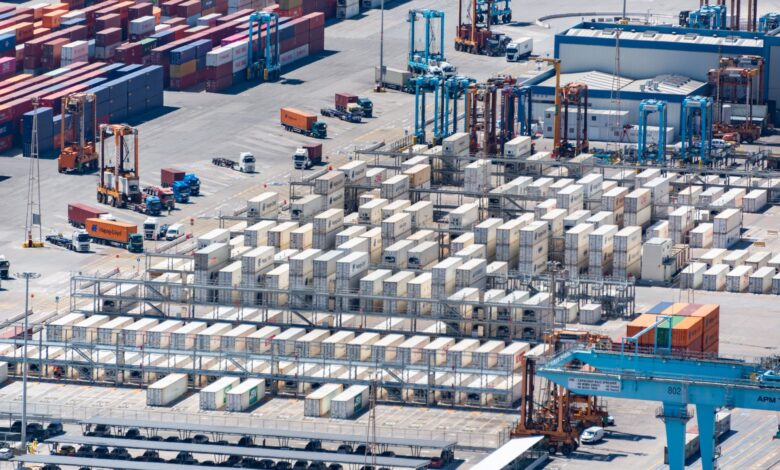
Deepwater port leases have become the quiet obsession of some of the world’s largest state-backed investment vehicles. Sovereign wealth funds – managing trillions in national reserves – have been building positions in port infrastructure at a pace that has gone largely unnoticed outside of shipping industry circles and infrastructure finance desks.
The Strategic Logic Behind Port Lease Accumulation
Sovereign wealth funds are drawn to deepwater port leases for a simple reason: these assets generate revenue regardless of which goods move through them or which shipping companies are ascendant at any given moment. A deepwater port capable of handling ultra-large container vessels or liquefied natural gas carriers collects fees from operators, terminal lessees, and cargo handlers in a structure that functions more like a toll road than a commodity bet. The cash flows are long-dated, often underpinned by 30- to 50-year concession agreements, and indexed in many cases to cargo volume or inflation benchmarks.
The funds most active in this space tend to be those from Gulf Cooperation Council nations, Norway, Singapore, and several Asian export economies. Their mandates typically require diversification away from domestic resource revenue, and infrastructure with genuine physical scarcity fits that mandate precisely. A deepwater berth capable of accommodating vessels with drafts exceeding 15 meters cannot simply be replicated by a competitor across the bay – the geological requirements alone make new supply extraordinarily slow and expensive to develop.
What makes the current accumulation cycle notable is the way these funds are acquiring exposure. Rather than taking headline-grabbing majority stakes, many are entering through minority positions in port operating companies, participation in infrastructure debt instruments tied to lease revenue, or co-investment agreements with established port operators who retain day-to-day management. This structure keeps the sovereign fund’s involvement below the threshold that would typically trigger regulatory scrutiny or public attention, while still providing direct economic participation in the underlying lease cash flows.
The preference for lease rights specifically – as opposed to outright ownership of port land or physical infrastructure – reflects a considered approach to liability and political risk. Lease positions can be structured across multiple jurisdictions, held through intermediate entities, and transferred without the same degree of regulatory friction that attaches to direct real property ownership in sensitive port zones. In several cases, sovereign funds have quietly acquired secondary-market positions in lease agreements originally structured by pension funds or infrastructure managers who needed liquidity. This secondary acquisition channel has been particularly active in U.S. Gulf Coast terminals and Southeast Asian transshipment hubs.
Where the Capital Is Flowing and Why It Matters
The geographic concentration of sovereign fund activity tells its own story. U.S. Gulf Coast deepwater terminals have attracted interest partly because American deepwater infrastructure has been underinvested relative to the growth in LNG export capacity and container throughput over the past decade. The gap between existing terminal capacity and projected cargo volumes creates a durable argument for lease revenue growth, and sovereign funds understand that argument better than most because their home economies are often on the other end of those cargo flows as exporters or importers.
East African port corridors have drawn a separate wave of interest, particularly from Gulf-state sovereign vehicles that view the region as both a commercial opportunity and a geographic asset in the context of Indian Ocean trade route development. Deepwater port concessions in countries along that corridor are frequently structured with national governments as the counterparty, which introduces political risk but also creates a layer of sovereign-to-sovereign relationship that a private fund cannot replicate. For a state-backed investor, that relationship can be a feature rather than a risk – a form of diplomatic capital that sits alongside the financial return.
Southeast Asian transshipment hubs present a different dynamic. Several of the busiest deepwater ports in the region operate under concession structures that are approaching their original term limits, triggering renegotiation processes in which lease rights are effectively being repriced and redistributed. Sovereign wealth funds have positioned themselves as preferred partners in these renegotiations by offering longer-term capital commitments and lower return hurdle rates than private equity infrastructure funds, which face pressure to exit within a defined fund cycle. A sovereign fund with a perpetual investment horizon can credibly commit to a 40-year concession in a way that a 10-year closed-end fund structurally cannot. This has given sovereign vehicles a meaningful competitive advantage in lease acquisition at the renegotiation table. This pattern is worth watching as similar concession renewals are scheduled across the Mediterranean and Latin American port systems over the next several years.
The competitive dynamic with private capital is sharpening. Traditional infrastructure fund managers – including some of the largest names in the asset class – have found themselves outbid or outmaneuvered in several recent lease transactions where sovereign funds were willing to accept returns that private capital could not justify to its own investors. The result is a gradual repricing of deepwater port lease assets that benefits current holders and raises the cost of entry for late arrivals. Some pension funds pursuing LNG regasification terminal leases have encountered a similar dynamic in adjacent infrastructure categories, where sovereign capital’s lower cost basis creates a structural headwind for private buyers.
Regulatory attention to sovereign wealth fund accumulation in port infrastructure has been inconsistent across jurisdictions. The United States has tightened Committee on Foreign Investment in the United States review processes for port-adjacent transactions, but the scope of that review is not uniform across all lease structures, particularly those involving minority economic interests without operational control. In Europe, national security frameworks for critical infrastructure review vary significantly from one member state to the next, creating arbitrage opportunities for sophisticated acquirers who understand which entry structures require notification and which do not.
The Valuation Question No One Is Answering Cleanly
Pricing deepwater port lease stakes in a secondary market context is genuinely difficult. The underlying concession agreements are negotiated privately, cash flow projections depend on trade volume assumptions that span decades, and the illiquidity premium appropriate for assets that rarely trade is a matter of significant debate among infrastructure valuation practitioners. Sovereign funds entering at current prices are making a long-duration bet that global trade volume growth justifies today’s entry multiples, that climate-related disruption to shipping routes will not fundamentally redirect cargo away from the specific ports in question, and that the host governments or port authorities on the other side of the lease agreement will honor the terms of concessions through political cycles that neither party can fully anticipate.

None of those assumptions is unreasonable, but none is guaranteed either. The funds accumulating these positions are doing so with the quiet confidence of investors who believe their time horizon is the decisive competitive advantage – and in infrastructure, that confidence has historically been well-placed. What remains genuinely unresolved is whether the current pace of accumulation, spread across multiple geographies and legal structures, is creating a concentration of control over global port infrastructure that regulators have not yet found the framework to evaluate. The question of who effectively controls the world’s deepwater cargo chokepoints may not become politically urgent until a specific transaction forces it into view.